Swiss caviar: black gold raised in the pure waters of the Alps
🚀 Key Takeaways
- Key concept : Swiss caviar is produced in land-based farms using clean alpine water and modern recirculating systems (RAS).
- Practical tip : Taste it chilled, on a mother-of-pearl spoon, paired with Swiss Chasselas or a dry sparkling wine.
- Did you know : Most Swiss producers favor Siberian (Acipenser baerii) and white sturgeon, chosen for their adaptation to controlled farms.
Silence, then a soft pop as the tin opens.
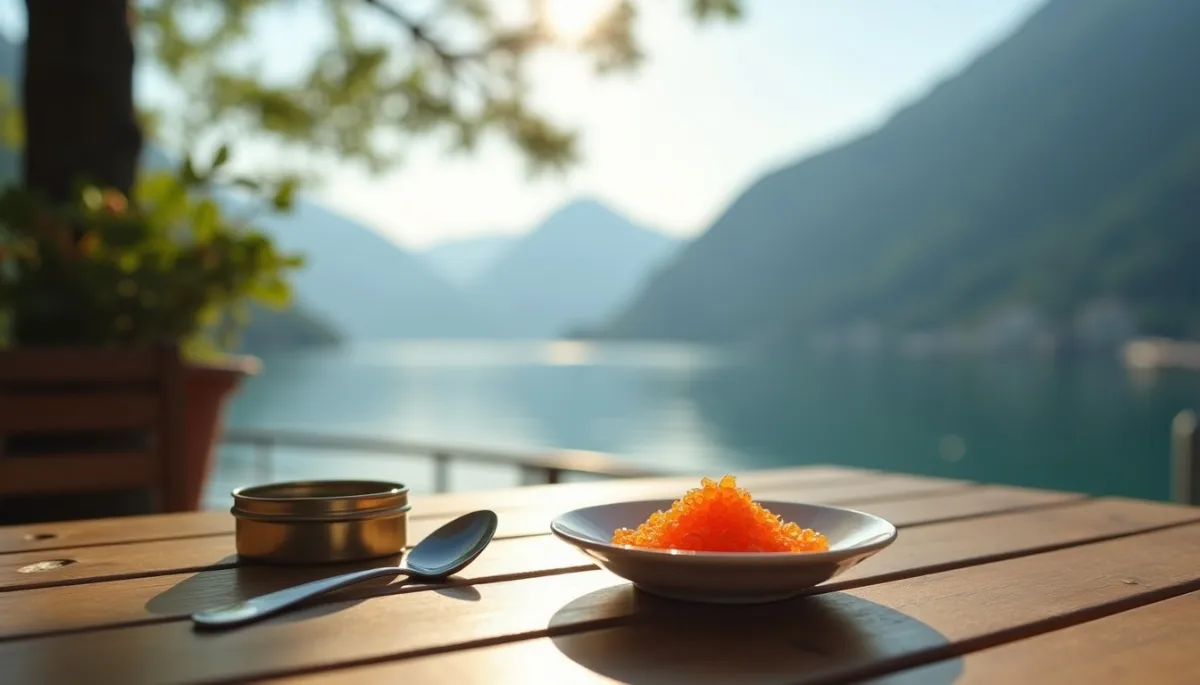
Imagine a small table on a terrace above Lake Léman, the air carrying a cool, mineral note. A chef places a shallow porcelain dish: pearls of black and deep umber catch sun and sky. Around you, glaciers feel nearby even if they are miles away, because the water that fed these fish once ran down from the Alps.
Rivage d'or
Swiss caviar is no longer an exotic import, it is a local luxury. Across the French-speaking Riviera and farther into Valais and central Switzerland, producers have developed farms, sometimes modest operations, sometimes high-tech facilities, that raise sturgeon for their roe.
The trend accelerated since the early 2000s. As wild sturgeon stocks in the Caspian and Black Sea regions declined under the pressure of overfishing and illegal trade, chefs and consumers looked for alternatives. Switzerland offered pristine water, strict regulation, and a tradition of precision farming.
Today, many restaurants in Geneva, Lausanne and Zürich source Swiss caviar directly from nearby farms. The product is pitched as terroir-driven: not wine terroir exactly, but a sense that water quality, temperature control and careful feed create a distinct profile.
Eau alpine
Why alpine water matters: cold, oxygen-rich water slows fish metabolism, which affects the texture and flavor of the eggs. Swiss farms often use spring or well water, filtered and circulated in closed-loop systems.
These systems are commonly called RAS (recirculating aquaculture systems). RAS allows producers to control temperature, oxygen levels and waste, reducing environmental impact compared with open-net pens in seas or lakes. In practice, RAS reduces the farm’s footprint, and makes traceability easier, from egg to tin.
Producers typically raise Siberian sturgeon (Acipenser baerii) and white sturgeon (Acipenser transmontanus), species that adapt well to controlled farming and yield varied caviar textures, from creamy to firm. Labels and audits, often voluntary, help reassure chefs and consumers about animal welfare and feed origin.
Goûter l'avenir
Tasting Swiss caviar is learning a new vocabulary. Expect smaller pearls than classic beluga, with nutty, buttery notes and a clean mineral finish. Texture is central: a good caviar must pop gently, releasing aroma without disintegrating.
Practical tips: serve between 2 and 4 °C, avoid metal spoons which can alter taste, and start with a small amount to let the palate adjust. Pairings: local Chasselas or a dry sparkling wine works beautifully, as does an ice-cold Polish or neutral vodka for a classic contrast.
Beyond taste, Swiss caviar is a conversation starter. It speaks of changing supply chains, of chefs seeking local sources, and of consumers willing to pay a premium for traceability and low environmental risk. For travelers it offers an unusual day trip: visit a farm, see the tanks, taste the product where it is made, then continue along the lakeside.
Challenges remain. Costs are high, because sturgeon take years to reach roe-production size, and RAS infrastructure is capital intensive. Scaling up without losing quality is a delicate balance. Also, an identifiable “Swiss caviar” identity is still forming; producers emphasize provenance, but the market is competitive.
Still, the movement from foreign import to local refinement is clear. Swiss caviar is not a replacement for traditional origins, it is a different statement: luxury through stewardship, Alpine water and meticulous technique.
If you are curious, ask your local chef where their caviar comes from, book a farm visit in Vaud or Valais, and taste the contrast. It is both a gustatory pleasure and a small lesson in how terroir can travel beyond vineyards.
Thanks for reading, and don't forget, Enjoy Life Moments!