Mineral water at the source: a wellness journey to the region's thermal springs
🚀 Key Takeaways
- Core concept : Natural thermal waters, at the source, combine heat and minerals for balneotherapy benefits.
- Practical tip : Visit Bains de Lavey from Montreux or Vevey for the hottest Swiss source; carry a refillable bottle and flip-flops.
- Did you know : The Riviera has long attracted artists like Charlie Chaplin and musicians who prized the region's restorative atmosphere.
Close your eyes, and you can hear the quiet of water rising from the rocks.
Imagine stepping off the train in Montreux, the lake glittering, the air smelling faintly of lime trees, then driving inland through vineyards and chestnut woods until a steam plume marks the parking lot of a thermal complex. Families in terry robes, an elderly couple sharing a bench, and a group of cyclists putting their feet up after a long ride, all drawn to the same promise: mineral water at the source, warm and mineral-rich, to soothe the body and reset the mind.
Sources et héritage
The region's thermal story is both ancient and living. Lavey-les-Bains, less than an hour from the Riviera, boasts the hottest thermal springs in Switzerland, with water emerging near 69°C at the source. Towns that carry the title "les-Bains," like Yverdon-les-Bains, recall centuries of bathing tradition and local uses of mineral springs.
These sites were shaped in the 19th century by the rise of European spa culture, when railways made alpine and lakeside retreats accessible to city dwellers. Montreux and Vevey became cultural hubs in the same era, attracting artists and visitors who valued the landscape and the restorative options nearby.
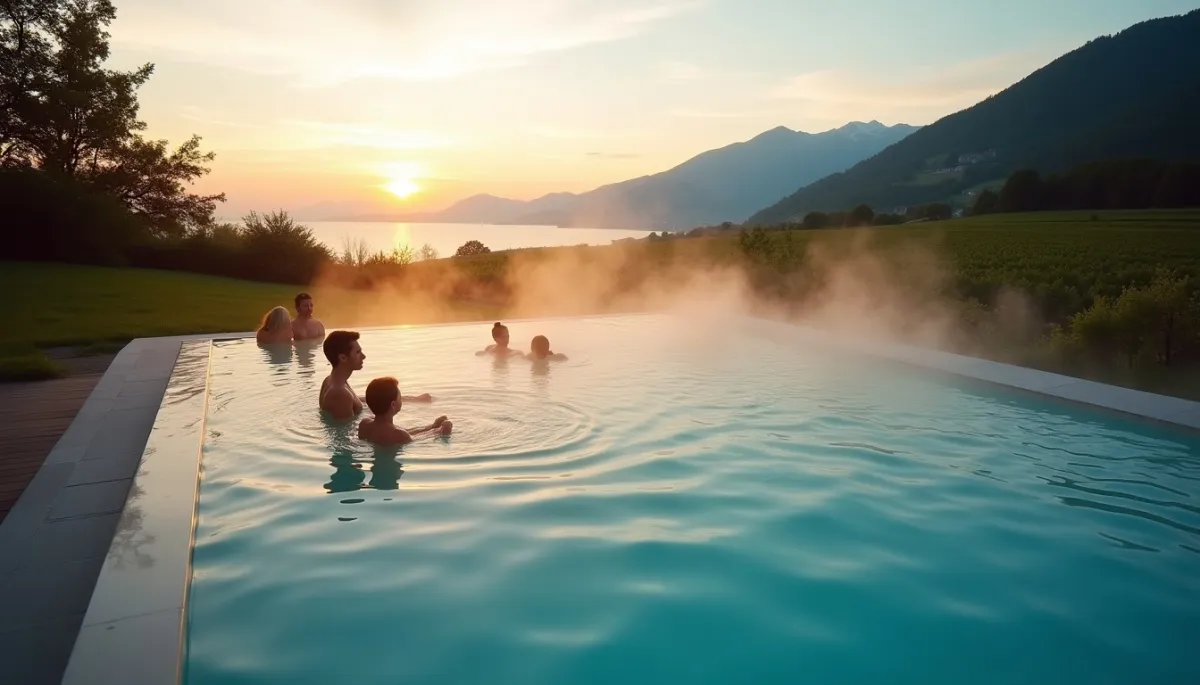
Today, thermal resorts combine modern architecture and centuries-old practice. Pools, steam baths, and outdoor basins allow visitors to experience water often piped directly from the source, with signage explaining mineral composition and recommended uses.
Vertus et science
At the heart of the appeal is a simple chemistry: mineral waters contain dissolved ions, such as calcium, magnesium, bicarbonates and sometimes sulphates or trace elements. Combined with heat, these minerals can help circulation, relax muscles, and support skin hydration. The technique of bathing for health is called balneotherapy, a term that covers hot baths, inhalations, mud wraps and gentle aquatic exercise.
Studies show symptomatic relief for some chronic conditions, for example osteoarthritis and certain dermatological issues, when thermal therapies are part of a broader care plan. Swiss clinics and wellness centres often offer medically supervised cures ("cures thermales") tailored to individuals, spanning a few days to several weeks.
Practical benefits are immediate. After a long hike in the Vaud hills or a rainy meeting day in Lausanne, a 20 to 40-minute warm soak improves mood and eases muscle tension. Locals note that sipping cold mineral water at the fountain can be a refreshing ritual, but always observe signage before drinking; not all thermal outflows are for consumption.
Choix et contradictions
Despite the popularity of thermal experiences, choices can be confusing. Some springs are fully commercialized with elaborate complexes, while others remain modest, with a single public fountain or a small pool. Access, opening hours, and pricing vary widely, and not all sources are scientifically profiled for drinking.
Environmental concerns add a new layer. Managing thermal resources requires balancing tourist demand and groundwater preservation. In some areas, temperature and flow monitoring are now routine, ensuring sustainable use and protecting local ecosystems.
For visitors, the best approach is curiosity and respect. Ask at the local tourist office in Montreux, Vevey or Aigle for up-to-date information, book treatments in advance during high season, and combine a spa day with a lakeside walk or a vineyard tasting for a full Riviera experience.
Practical checklist: bring a reusable bottle, flip-flops, a light robe, and leave electronics in the locker to savor the moment. If you have cardiovascular issues or are pregnant, consult a physician before long hot baths.
Thanks for reading, and don't forget, Enjoy Life Moments!