Golden autumn in Lavaux: the science behind the vineyards' fiery colors
🚀 Key Takeaways
- Core concept: Leaf pigments (chlorophyll, carotenoids, anthocyanins) and weather drive the color change.
- Practical tip: Visit between late September and mid-October, during golden hour, and taste a Chasselas in Saint-Saphorin.
- Did you know: Lavaux, listed by UNESCO in 2007, preserves terraces cultivated since the Middle Ages.
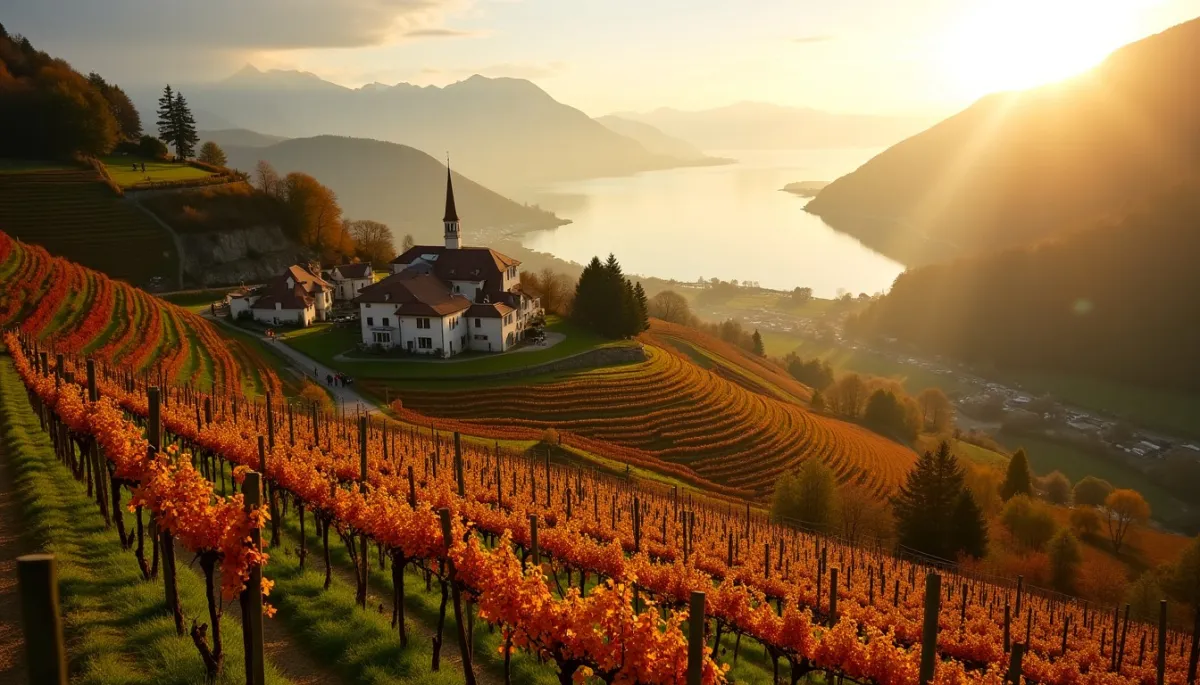
Light pours across the terraces. Imagine warm sun on your face and a patchwork of gold stretching to the lake.
Vines in gold
The spectacle is immediate: long slopes of terraces, villages like Lutry, Rivaz and Saint-Saphorin, and the ribbon of Lake Geneva reflecting ochres. Each year, from late September to October, visitors walk the wine trail to see the change.
Lavaux is not only beautiful, it is historic. The terraced landscape, shaped by generations of vignerons since the Middle Ages, was inscribed on the UNESCO World Heritage list in 2007 for its cultural and agricultural continuity.
There is also a local economy behind the view. The canton of Vaud is the leading wine region of Switzerland, and Chasselas, the pale grape that makes the region's signature wines, ripens early and influences the autumn palette.
The chemistry of leaves
At the leaf level, the show is chemistry. During summer, chlorophyll (the green pigment) masks other pigments. As days shorten and nights cool, chlorophyll breaks down, revealing carotenoids (yellows and oranges).
Red and purple hues come from anthocyanins, pigments that vines produce in response to sugars in the leaf and specific weather conditions: sunny days and cool nights favor their synthesis. Red varieties show richer crimsons; white varieties such as Chasselas tend to turn golden.
Physically, the vine reallocates resources. As ripening ends, sugars move to the grapes and leaves undergo senescence (the natural aging process). This controlled shutdown is what creates the mosaic of colors along the terraces.
Between heritage and climate
The autumn display is not only aesthetic, it is vulnerable. Climate change alters the rhythm: warmer summers and milder nights can speed ripening and reduce the contrast between day and night, which can limit anthocyanin formation.
Practically, terraced viticulture is labor-intensive. Many slopes can only be worked by hand, which preserves traditional practices but raises costs. Since the UNESCO listing in 2007, local communities and authorities have combined conservation measures with tourism management to balance use and preservation.
Looking ahead, some vignerons adapt by changing canopy management, adjusting harvest dates, or experimenting with different clones. The challenge is to keep the cultural landscape intact, while maintaining wine quality and the autumn spectacle that draws thousands every year.
Tips for visitors: take the lake-side train to Lutry or Vevey, walk the wine route in late afternoon for the best light, register for a small domaine tasting, and respect the terraces during vendanges (harvest) in September and October.
Thanks for reading, and don't forget, Enjoy Life Moments!