The mystery of the man in the iron mask on Île Sainte-Marguerite
🚀 Key Takeaways
- Key concept : A mysterious prisoner guarded by Saint-Mars, linked to Île Sainte-Marguerite between 1698 and 1703.
- Practical tip : Take the 15–20 minute ferry from Cannes early, visit the Musée de la Mer and the cell reputed to be his.
- Did you know : Voltaire and Alexandre Dumas shaped the legend, but archival names like Eustache Dauger appear in records.
Silence, salt and stone.
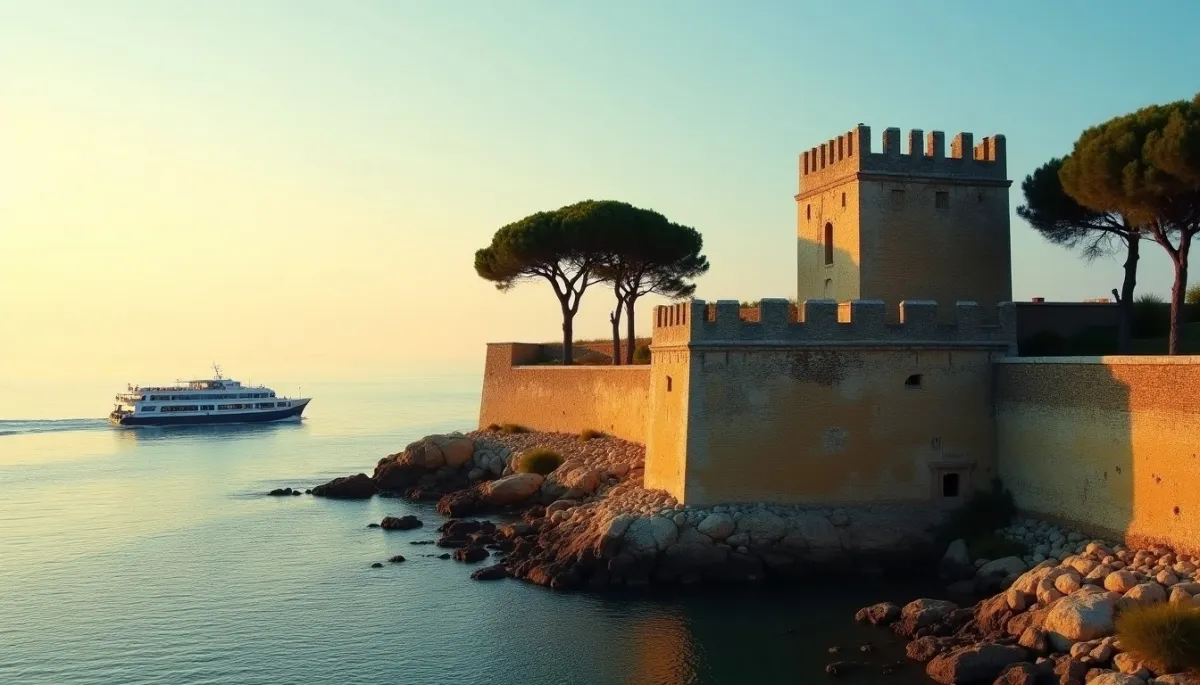
Imagine stepping off a small ferry from Cannes, the Mediterranean breeze carrying the scent of pine and seaweed, and turning toward a stern 17th century fortress. The Fort Royal rises from a narrow cove, its outer walls pitted with history. Tourists pause by the Musée de la Mer, but for many the true draw is the idea of a prisoner kept in near-total secrecy, face hidden from the world.
île des gardiens
The story takes shape in the records of a man who was never officially named to the public, but who appears repeatedly in the paperwork of a royal jailer. Bénigne Dauvergne de Saint-Mars, governor and custodian of high-security prisoners, first supervised a mysterious captive at Pignerol in Piedmont. Later Saint-Mars moved his charge with him to other posts.
Archival traces place the masked prisoner at Fort Royal on Île Sainte-Marguerite from about 1698 until 1703. These dates come from correspondence and prison ledgers, not from flamboyant proclamations. They show a man under close watch, subject to strict orders. The rules emphasised silence and discretion above all.
The Musée de la Mer on the island preserves this atmospheric past. Visitors can see cells attributed to the period, replica objects, and explanatory panels that map the path from Pignerol to Sainte-Marguerite and then to the Bastille in Paris, where the prisoner later appears in records. The museum combines local archaeology with the enduring human story of confinement.
murmures et récits
The consequence of those sparse records is a legend that grew over centuries. Voltaire, in the mid 18th century, revived the tale by suggesting the prisoner might be an elder brother of Louis XIV, stripped from history to protect the monarchy. Alexandre Dumas cemented the public image in the 19th century, turning the masked man into a dramatic figure of intrigue in his novel sequence "The Vicomte de Bragelonne".
Popular works amplified details that archival sources do not confirm. The metal mask, for example, likely owes more to romantic imagination than to documented reality. Some 19th and 20th century historians argued the mask was velvet or cloth, used to muffle speech or hide identity, rather than iron. Still, the image of the shining mask proved irresistible.
Today the island benefits from the legend. Sainte-Marguerite receives hundreds of thousands of visitors each year, many arriving specifically for the mystery. The local economy links heritage, nature and tourism, offering guided tours, boat trips and interpretative displays that blend fact and myth while inviting debate.
ombres et preuves
Why does the mystery persist? Because archival facts leave gaps, and gaps invite stories. Documents name a prisoner associated with Saint-Mars, sometimes under the name Eustache Dauger. They show transfers, orders for secrecy, and final entries that place the man at the Bastille, where a death is recorded in November 1703. Historians still study notarial archives, prison lists and correspondence to piece together a coherent identity.
Scholars have proposed dozens of candidates across three centuries, from disgraced ministers to royal relatives and political rivals. Each hypothesis faces obstacles: lack of direct proof, conflicting dates, or the improbability of certain scenarios. Modern historians tend to prefer explanations grounded in paperwork, while novelists and the public often prefer the grander conspiracies.
That tension shapes the future of the island as much as its past. Curators must decide how much to privilege rigorous scholarship and how much to allow the romantic aura that draws visitors. Events, exhibitions and educational programmes on Île Sainte-Marguerite increasingly try to balance both, encouraging critical curiosity alongside wonder.
Practical advice for visitors: take an early ferry from Cannes when the light is soft, buy tickets for the Musée de la Mer in advance during high season, and follow the coastal path for views of the ramparts. Bring water and a hat, the island can be exposed in summer. For those seeking archives, the departmental archives in Aix-en-Provence and Paris remain the best places to consult original documents.
For lovers of stories, the masked man offers something rare: a historical puzzle that lives in stone, paper and imagination, all within a short boat ride of the Riviera's sunlit coast.
Thanks for reading, and don't forget, Enjoy Life Moments!