Slow sailing: explore the Esterel coves under sail, without engine and without hurry
🚀 Key Takeaways
- Core concept : Sail-only exploration of the Esterel favors calm, low-impact travel.
- Practical tip : Favor May-June or September, check anchoring rules and avoid Posidonia meadows.
- Did you know : The ochre island of Île d'Or near Saint-Raphaël inspired local artists and possibly Hergé.
Silence, only the wind and the water.
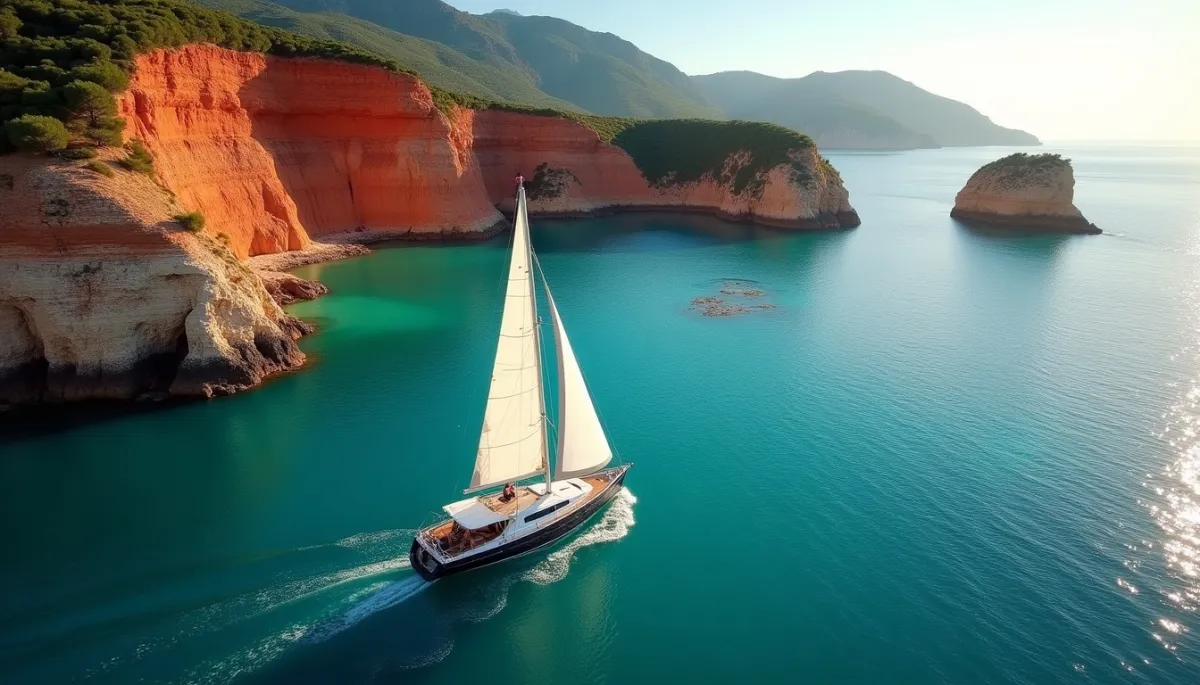
A small cutter slips along the Corniche d'Or, the red rock of the Massif de l'Estérel glowing in late afternoon. A couple trims the sails, laughter muffled by the soft hiss of the bow through clear water. Coves open like secret rooms: Anse du Dramont, Anse du Petit Pinet, Plage d'Agay. The engine sleeps in its locker. Navigation is slow, intentional, and intimate.
Rythme salé
Slow sailing is a response to a wider trend: since the 2010s, travelers have sought experiences that trade speed for presence. On the French Riviera, this translates into sail-only days exploring calas and criques of the Esterel instead of ticking off ports at high speed.
Practically, a sail-only day changes the itinerary. Instead of transiting a 40-nautical-mile loop, skippers plan short hops of 3 to 10 miles, anchoring early to swim, snorkel and walk the shore. That rhythm lets you watch the light on the porphyry cliffs, and linger in a single bay until sunset.
There is a measurable impact. Studies on Mediterranean anchoring show that motorized, high-frequency anchoring degrades Posidonia oceanica meadows (seagrass that stores carbon and shelters biodiversity). Using sail and mooring buoys reduces disturbance to these habitats.
Souffle des voiles
Why now? Part of the answer is cultural, part practical. The Riviera’s tourism shifted after 2020, with more demand for low-density experiences and outdoor activities. Sail training schools in Cannes and Saint-Raphaël reported increased bookings for pure-sail lessons between 2021 and 2024.
Technological changes also help. Modern sailboats are easier to handle short-handed thanks to furling systems, electric winches (used only when necessary), and reliable weather apps like Météo France Marine and Windy. These make pure-sail cruising accessible to couples and small crews.
Local operators embraced the trend. In 2023, a small charter company in Agay launched a fleet of daysailers promoted explicitly as 'no-engine' options, combining traditional seamanship with modern safety. The idea appeals to sailors and to those discovering sailing for the first time.
Écume et règles
However, slow sailing raises practical and regulatory questions. Anchoring is regulated along the Esterel coastline. Many bays lie near marine protected areas and seagrass beds. It is essential to consult local port authorities and use marked moorings when available.
Safety remains central. A sail-only plan requires contingency thinking: carry an emergency outboard if regulations allow, or ensure you have a tow plan with a nearby marina. Weather can shift quickly on the Riviera; afternoon sea breezes are typical, but occasional stronger winds arrive from the northwest.
Finally, etiquette matters. When you anchor in small coves, respect swimmers, do not play loud music, and avoid dropping anchors where Posidonia grows. A small gesture, like using a stern anchor and shallow approach, preserves these fragile places for future sailors.
Thanks for reading, and don't forget, Enjoy Life Moments!