Cannes off the red carpet: the charm of Le Suquet
🚀 Key Takeaways
- Concept key : Le Suquet is Cannes' old quarter on a hill, known for its medieval atmosphere and panoramic views.
- Practical tip : Climb early morning to enjoy the viewpoints and local cafés before the midday heat and tourist flows.
- Did you know : From the Castre terrace you can see the Lérins islands and the sweep of Cannes Bay, a favorite spot for painters and photographers.
Light, stone and sea.
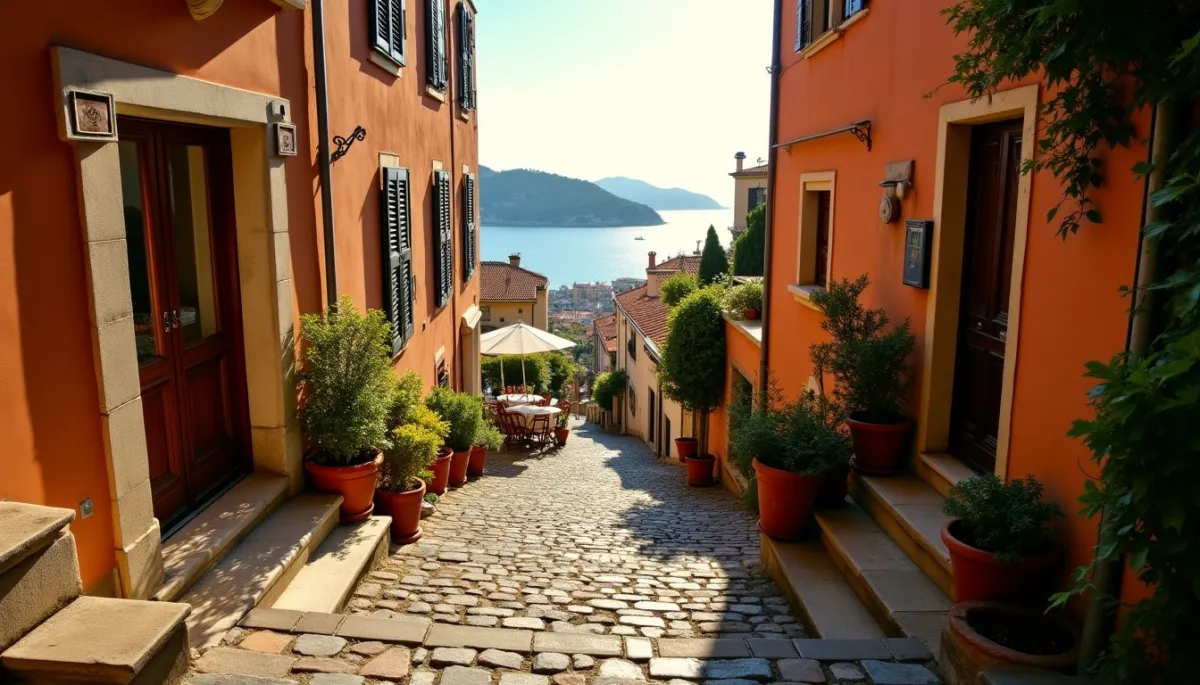
Imagine climbing a narrow cobbled alley, the click of footsteps mixing with the smell of baking bread, until you reach a small square where an old church and a tower frame a view across the bay. Small tables, bicycles against ochre walls, a fisherman’s jacket hung outside — this is Le Suquet, Cannes' lived-in memory perched above the old port.
Village perché
Le Suquet is the pulse of Cannes before the Croisette existed. On the hill that dominates the old port, houses sprout from steep streets and stairways, their façades punctuated by wooden shutters and wisteria in spring. The neighborhood feels intimate: lanes are so narrow that two people must often turn to let a scooter pass.
The Musée de la Castre, housed in the former castle enclosure, is one of the neighborhood’s anchors. Its terrace offers one of the most photographed panoramas of the bay and the Lérins islands. Below, the Port Vieux holds the city's fishing boats and small restaurants where seafood feels freshly landed.
At dawn, the Forville market, a short walk from Suquet’s base, transforms the quarter. Farmers and fishmongers unpack crates, and residents come for produce and conversation. The market, with roots in the 19th century, keeps the Provençal rhythm of daily life alive, a counterpoint to the glamour found a few streets away.
Origines et mémoire
The hill of Suquet has guarded Cannes for centuries. Its watchtower and church recall a time when the coastline needed defending, and when the sea was principally a means of livelihood. Over time, the quarter maintained a compact urban fabric that resisted wide boulevards and large-scale tourism development.
From the 19th century, as aristocrats and vacationers discovered the bay and the Croisette filled with grand hotels, Suquet kept its identity as a fishermen’s and artisans’ enclave. This history explains why the quarter today still feels rooted: narrow plots, communal courtyards and the imprint of generations who worked by sea.
Artists and writers have long been enamored of the view from Suquet. Painters came to capture the light on the islands. The simple fact that the Festival de Cannes began in 1946 has pulled international attention to the city, yet the hill remains a quieter witness to earlier layers of Cannes' history.
Entre pierres et renouveau
Popularity has a double face. The proximity to the Festival and to the Croisette makes Le Suquet attractive to visitors seeking authenticity. That popularity brings economic opportunities: small cafés, artisan shops and guided walks have flourished, offering slow tourism experiences and local gastronomy.
At the same time, pressure from short-term rentals and boutique hospitality can strain daily life. Long-time residents sometimes see traditional shops replaced by themed boutiques. Local associations and the municipal heritage services have worked on restoration projects to preserve façades and limit intrusive reconstructions.
Today, Suquet balances tradition and modernity. Seasonal concerts on the museum terrace, intimate restaurants serving Mediterranean flavors, and curated walking tours show how the quarter renews itself while keeping its soul. For a visitor, the best experience is pedestrian: lose the map, follow the stairs, and let the view decide the next pause.
Thanks for reading, and don't forget, Enjoy Life Moments!