The bise wind: how a northeasterly sculpts lake life
🚀 Key Takeaways
- Key concept: A dry, cold wind from the northeast, frequent in autumn and winter.
- Practical tip: Check MeteoSwiss forecasts and dress in layers when the bise blows; great light for photos at sunrise.
- Did you know: The bise can completely clear fog from the Swiss plateau, revealing bright, sharp views across the lake.
Cold and crystalline.
Imagine standing on the Quai in Geneva on a November morning, scarf tightening around your neck, while a relentless northeasterly lifts fine spray off the water. The sky is a hard blue, sunlight cuts like a blade, and the surface of Lac Léman ripples in ridges that run for hundreds of metres toward the French shore.
Water and shore
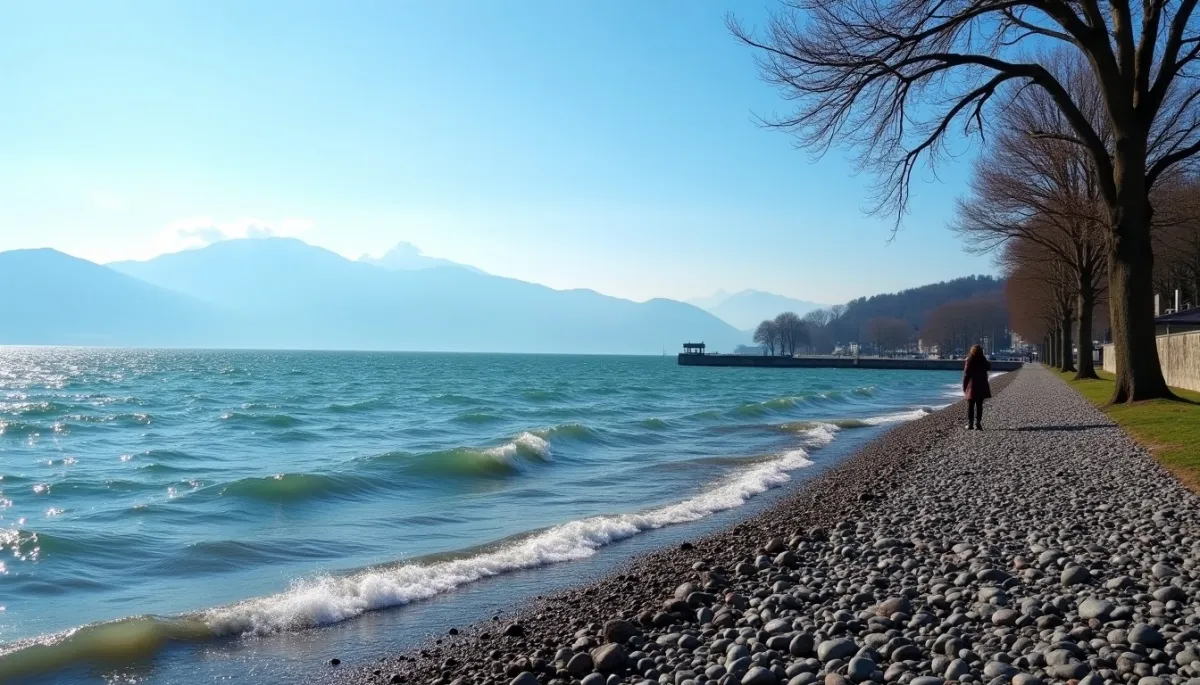
The most visible consequence of the bise is in the lake itself. Winds from the northeast generate long, choppy waves that sweep along the length of the bay, reshaping pebble beaches and exposing roots and stones. On windy days, promenades like those in Nyon and Vevey show the lake in motion, with whitecaps and drifting foam.
Sailors and rowing clubs know the bise well. The Bol d'Or Mirabaud, the classic regatta held since 1939 on Lake Geneva, can be profoundly affected by a strong bise; races sometimes switch strategy or course because of the wind's direction and gustiness. For rowing, a northeasterly can produce confused wakes that make technique and timing decisive.
Shoreline infrastructure bears the mark of repeated bise events. Harbours have reinforced quays, and local councils plan shoreline defenses with the bise's erosive patterns in mind. In winter, harbours such as Lausanne Ouchy may close certain piers when gusts exceed safety thresholds, to protect boats and people.
Air and weather
To understand where the bise comes from, look at pressure patterns. The bise sets in when high pressure builds over northern or eastern Europe while lower pressure lies to the southwest. Cold, dense air funnels across the Swiss plateau toward the lake, often accelerated by local topography, such as the Jura gap and the Rhône valley.
Meterologically speaking, the bise is a katabatic-like flow at regional scale, meaning cold air moves downslope or along a basin because of density differences. The effect is strongest from October to March, when continental air masses are coldest. MeteoSwiss monitors these situations closely because the bise also affects temperature inversions and fog: a persistent bise will often clear low-lying fog in the Swiss plateau within hours.
Typical gusts vary, but during intense events wind speeds can exceed 60 to 80 km/h near exposed points. Those gusts make the wind feel much colder, intensifying wind chill, and they explain why locals keep a windproof coat in their car during winter months.
Bent trees
The bise leaves quieter, longer-term signatures too. Walk the vineyards above Vevey or along the lakeshore and you will see hedges and rows of trees pruned and leaned by decades of wind. This shaping, called flagging, tells the story of prevailing winds; on the Riviera suisse the flag points away from the northeast.
Architectural choices reflect the climate. Homes built facing prevailing winds often include shutters and lower eaves to limit damage. Gardeners favour hardy species for exposed spots, while more delicate Mediterranean plants take shelter in courtyards or on the southern terraces that enjoy protection from the bise.
For local producers, the bise can be a friend and a foe. It dries out vines and orchards after autumn rains, reducing fungal pressure, yet in late spring a late bise with frost can damage early shoots. Farmers and gardeners in the region watch the forecasts closely for exactly that reason.
Contrasts and tips
The bise is paradoxical: it clears the sky and improves visibility, yet it brings cold and discomfort. For photographers and walkers, this contrast is irresistible. Crisp air and low humidity produce colours with exceptional clarity, ideal for sunrise shots over the Dents du Midi or the French Alps mirrored in the lake.
If you plan a visit, practical tips help. Consult MeteoSwiss for up-to-date warnings, prefer sheltered promenades if you are sensitive to wind, and choose windproof layers. On bright bise-days, cafés with south-facing terraces offer sunny shelter, and local bakeries serve warm pastries that fortify you against the chill.
Finally, listen to local stories. Fishermen, sailors and older residents have names for strong bise events and recall seasons when it was particularly fierce. Those memories, combined with modern forecasts, help the Riviera suisse live in tune with this ancient wind.
Thanks for reading, and don't forget, Enjoy Life Moments!