The flamingo sanctuaries of Rio Lagartos and Celestún
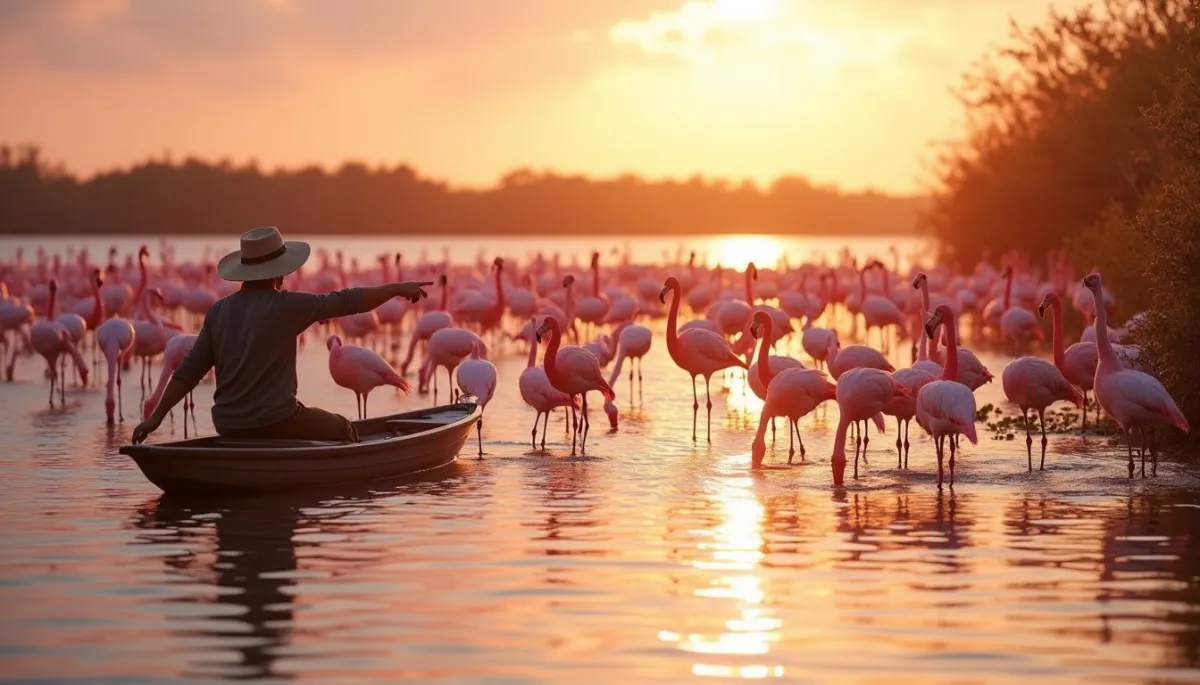
Early morning light paints the shallow salt pans in pastel pinks, the quiet broken only by the tapping of long beaks in rose-tinted water. A narrow wooden skiff glides past mangrove roots, a local guide points to a distant arc of thousands of flamingos, and for a moment the world seems made of a single soft color.
Visitors arrive mainly to witness these large congregations in two distinct landscapes: Rio Lagartos, to the northeast of the Yucatán peninsula, where saltworks and Las Coloradas' pink pools punctuate the coastline, and Celestún, to the northwest, where wide estuaries and dense mangroves form calm feeding grounds. Both places function as living laboratories, tourism destinations, and strongholds for conservation efforts that began as community responses to decline and now attract ornithologists and photographers from around the globe.
Pink lagoons
In Rio Lagartos the scene is dramatic. Boats leave the village at dawn, skimming past salt flats whose hue comes from microalgae and high salinity. Flamingos feed in the shallows, their workers’ legs like painted sticks. Nearby Las Coloradas, once humble salt extraction ponds, became famous on social media for their candy-pink tones; tourists often combine a visit there with a flamingo tour.
Celestún offers a gentler tableau. The estuary widens into broad channels fringed by mangroves, and shallow flats concentrate brine shrimp and algae, the flamingos’ food. Local fishermen, often turned guides, know the tide cycles and lead small groups into quiet lagoons. On calm days the water mirrors the sky and the flamingos, creating the mirror-image shots that fill travel feeds.
These are not sterile photo sets. Families of flamingos preen, juveniles show paler plumage, and courtship displays unfold in tight choreographies of head flagging and wing spreading. Naturalists will tell you the color is diet-driven, a visible record of the food web at work.
Roots of protection
The comeback of flamingo populations is tied to local initiatives. Communities around Celestún and Rio Lagartos gradually organized to limit hunting, regulate boat approaches, and define nesting zones. Today, small cooperatives of guides and boatmen offer regulated tours, and revenue from ecotourism helps fund patrols and habitat restoration.
Ecology explains why these places matter. Flamingos concentrate where shallow, saline waters foster abundant brine shrimp and carotenoid-rich algae. Those carotenoids are the chemical origin of the birds’ pink color. Protect the wetlands, and you protect both food and color.
Scientists and volunteers run monitoring programs, counting nests and tracking seasonal movements. Citizen science has taken root; on many mornings visitors can encounter researchers measuring chicks or tagging a banded adult. These small acts of collaboration are part of a broader conservation architecture that mixes local knowledge with academic research.
Delicate balance
Despite successes, tensions exist. Tourism brings money and awareness, but increased boat traffic can disturb feeding and nesting. The proximity of Las Coloradas saltworks illustrates this contradiction: the same salt pans that create striking colors and supplementary habitat can also alter water chemistry if mismanaged.
Climate change adds uncertainty. Sea level rise, greater storm intensity, and shifting freshwater inflows can change salinity patterns, with cascading effects on algae and shrimp populations. Locally, urban expansion and poorly planned development threaten watershed integrity that wetlands depend on.
Still, there are hopeful signs. Management plans are evolving, stricter codes of conduct for tours are more common, and some hotels and operators on the Riviera Maya corridor have begun financing habitat projects. The key for visitors is to choose operators who respect distance rules, avoid flash photography, and support community-based guides.
Practical tips: visit in the dry season, typically November to April, for clearer skies and denser concentrations; go at dawn or late afternoon for the best light; bring binoculars and polarized sunglasses; and prefer small-group tours that keep a respectful distance. If you can, include a stop in the town to buy local crafts or a seafood lunch, so tourism dollars benefit residents.
Flamingos in Rio Lagartos and Celestún are emblematic of a living coastline. Their color tells a story of food chains, of community responses to environmental pressure, and of the choices travelers make. See them responsibly, and you support the fragile partnership that keeps those pink lagoons alive.
Thanks for reading, and don't forget, Enjoy Life Moments!