Chichén Itzá at the solstice: the mystery of the feathered serpent's shadow
🚀 Key Takeaways
- Core idea : The famous serpent illusion occurs at the equinox, yet solstices reveal their own astronomical signs and ritual meanings.
- Practical tip : Visit early on solstice days, hire a certified guide, bring water and respect restricted zones; climbing El Castillo is forbidden.
- Did you know : El Castillo has 365 steps (91 on each side plus the platform), a built reminder of the solar year.
Light can turn stone into story.
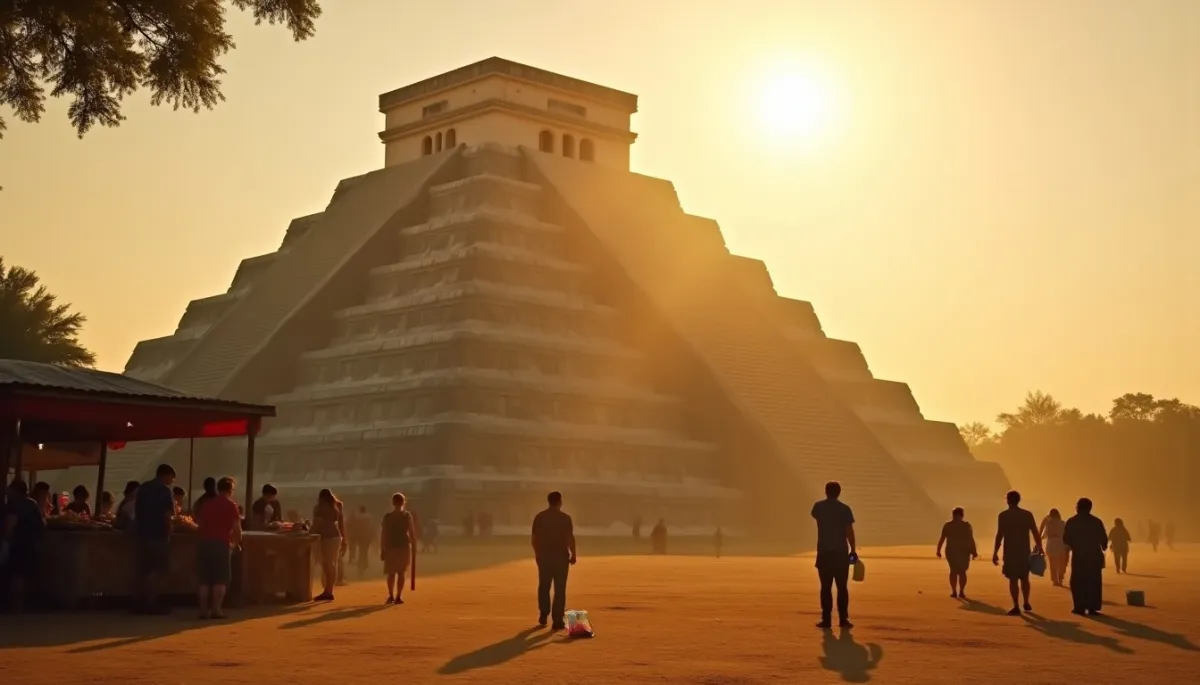
Dawn over the great plaza bathes El Castillo in honeyed light. Small groups of visitors stand with coffee cups, cameras at the ready, while a local h-men (Maya priest) arranges copal and candles near the base. The air holds the dry warmth of Yucatán and the low hum of vendors opening stalls. It is here, at specific solar instants, that architecture, astronomy and belief meet.
The famous shadow
When most people think of Chichén Itzá and the feathered serpent, they remember the equinox. Around March 20 and September 22, late afternoon light projects a stepped shadow on the pyramid's north staircase that aligns with sculpted serpent heads at the base. The visual effect, a succession of triangular shadows, resembles a long descending snake. It is an optical phenomenon produced by the sun's angle and the pyramid’s precise geometry.
Archaeologists note that El Castillo (the Temple of Kukulkan) is a calendrical monument. Built mainly between the 9th and 12th centuries CE, during Chichén Itzá’s apogee, it encodes time: four sides, 91 steps each, plus the summit platform make 365, a clear reference to the Haab' year. Kukulkan is the feathered serpent, a major deity shared across Mesoamerica, who links sky, earth and rulership.
For decades the equinox event has drawn massive crowds and international media. It also created misconceptions: many tourists conflate equinox and solstice, expecting the same serpent show on June 21. Clarifying these differences enriches the visit: the Maya had multiple solar markers, not a single spectacle.
Solstice readings
Solstices (around June 21 and December 21) mark the sun’s extreme declinations and were crucial for Maya agriculture and ritual cycles. At Chichén Itzá, the solstice does not produce the famous staircase-serpent illusion, yet it offers other readings. The site’s alignments, including sightlines from plazas to distant horizons and from structures like El Caracol (the observatory), reflect careful solar and planetary observation.
One important Maya concept is the zenith passage. At tropical latitudes like Yucatán, the sun passes directly overhead twice a year. On those zenith days shadows vanish under vertical objects, a striking phenomenon the ancient Maya observed and recorded to schedule ceremonies and farming tasks. These dates do not coincide exactly with the solstices but are part of the same practical skywatching tradition.
Modern archaeoastronomers, including Anthony Aveni and others, have documented how Chichén Itzá functioned as a complex observatory. Windows, stair orientations and plaza axes capture sunrises and sunsets at key times. That sophistication explains why local communities and contemporary Mayan groups continue to perform rituals during solstices, reading different messages from the sun than those at equinox.
Between myth and preservation
Stories and spectacle boost tourism. Chichén Itzá became a UNESCO World Heritage Site in 1988 and was voted one of the New7Wonders of the World in 2007, increasing its global visibility. Today the site receives more than a million visitors per year, which brings economic benefits but also conservation challenges.
Access rules evolved with preservation needs. Climbing El Castillo was closed to tourists in 2006 to protect the structure and for safety reasons. Guided access to the plazas is regulated; certain ceremonial areas are reserved for authorized ritual practice. These measures aim to balance living culture, scientific study and public visitation.
If you plan to go during a solstice, do so respectfully. Arrive at sunrise, choose a certified local guide who can explain zenith passages, solstice alignments and the difference with the equinox serpent. Visit nearby treasures: the Sacred Cenote, the Great Ball Court, and the observatory El Caracol. Bring water, sun protection and patience: mornings can be crowded, and afternoons hot.
Thanks for reading, and don't forget, Enjoy Life Moments!