Plant medicine: the living heritage of today's Maya healers
🚀 Key Takeaways
- Core concept: Maya plant medicine blends empirical herbal lore and spiritual practice, transmitted orally through families and communities.
- Practical tip: When seeking a healer, ask permission, respect rituals, and avoid experimenting with unknown plants.
- Did you know: The World Health Organization estimates up to 80% of the world relies on traditional medicine for primary care.
It smells of copal and wet earth.
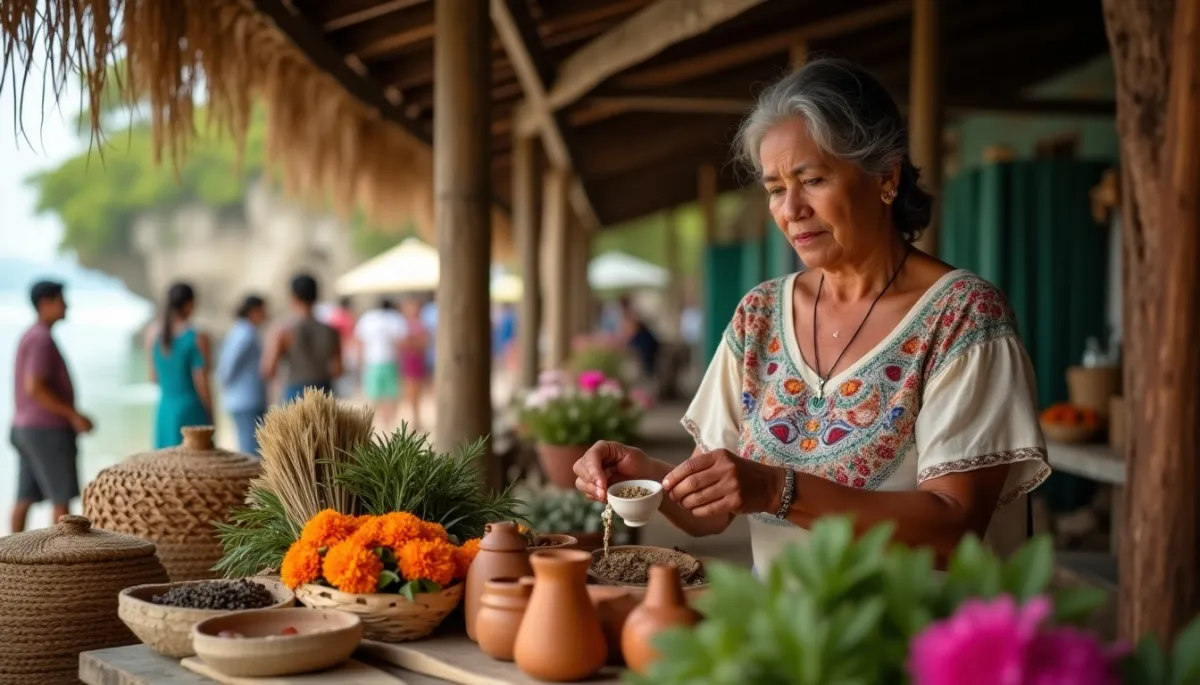
Picture a shaded stall in the Valladolid market at dawn: woven baskets of dried leaves, bright bundles of marigold, a woman sorting hoja santa with practiced fingers, and the low murmur of Mayan words. Nearby, a cenote rim glistens; the healer will later use cenote water to rinse a poultice. You are not just in a market, you are in a living pharmacy whose shelves are the forest, garden and memory.
Savoirs vivants
Across the Yucatán peninsula, traditional plant medicine remains an active system of care. Healers, often called 'h-men' or 'ihomal' in Yucatec Maya (terms that mean caretaker or healer), combine botanical remedies with ritual and prayer. Remedies include familiar species such as manzanilla (chamomile) for digestion, ruda (ruta) for ritual cleansings, and copal resin for fumigation.
These practices are not museum pieces. In towns like Tulum, Mérida and the smaller communities around Cobá, people still consult healers for postpartum care, respiratory ailments and spiritual afflictions. Ethnobotanists such as Wade Davis have documented how indigenous knowledge encodes ecological observation across generations, turning the landscape itself into a pharmacopeia.
Institutions are taking note. Local universities and cultural agencies collaborate with communities to catalogue plant uses, while tours and workshops offer visitors hands-on learning. This visibility helps sustain craftsmen and growers who maintain milpa gardens and medicinal plots, preserving both biodiversity and know-how.
Racines et raisons
The resilience of Maya plant medicine stems from historical necessity and cultural continuity. During colonial times and the upheavals of the 19th and 20th centuries, indigenous communities relied on local remedies when access to formal clinics was limited. Oral transmission—through family apprenticeships and ritual contexts—kept recipes and techniques alive.
In recent years, several factors boosted interest. Eco-tourism and cultural tourism brought curious travelers seeking authentic experiences. The COVID-19 pandemic in 2020–2021 also renewed local interest in self-care and immune-supporting herbs, making traditional remedies more visible in everyday practice.
Economic and environmental incentives play a role too. Growing demand for native plants can create income for rural households, supporting cultivation of medicinal gardens and the maintenance of wild harvesting zones. At the same time, international attention opens opportunities for community-based branding and ethical tourism.
Entre héritage et défis
Visibility brings contradictions. As knowledge circulates, the risk of commodification and biopiracy increases. The Nagoya Protocol (an international agreement on access and benefit-sharing) aims to protect community rights over genetic resources, yet enforcement on the ground is complex.
Another challenge is generational change. Younger Maya may migrate to Mérida or Cancún for work, reducing the pool of apprentices. When elders pass without transmitting certain practices, rare preparations and songs risk disappearing. Conservation projects and community gardens try to bridge this gap by teaching youth ethnobotany and sustainable harvesting.
Health-wise, caution is essential. Some medicinal plants can interact with pharmaceuticals or have toxic effects if misused. Responsible practice means combining respect for tradition with modern medical advice, especially for chronic or serious conditions.
Pratiques recommandées
If you want to learn or consult locally, come with humility. Ask permission before photographing rituals, offer fair compensation, and use trusted referrals from community organizations or local cultural centers.
Never self-prescribe wild herbs without guidance. Ask about dosages and preparation methods, and inform your physician if you plan to use traditional remedies alongside prescribed medicine.
Support ethical projects: buy from community cooperatives, join certified ethnobotanical walks, and prefer experiences that return value to local stewards of knowledge.
Thanks for reading, and don't forget, Enjoy Life Moments!