Glamping in the Vaud Alps: luxury tents, snow and starry nights
🚀 Key Takeaways
- Core concept : Luxury camping (glamping) in high-elevation settings, combining insulation, heating and local gastronomy.
- Practical tip : Book early for winter stays near Les Diablerets or Leysin, check access by snow tyres or train, and pack thermal layers.
- Did you know : Château-d'Oex hosts an international hot-air balloon festival since 1979, a short drive from many glamping sites.
It feels like being cradled by the mountains.
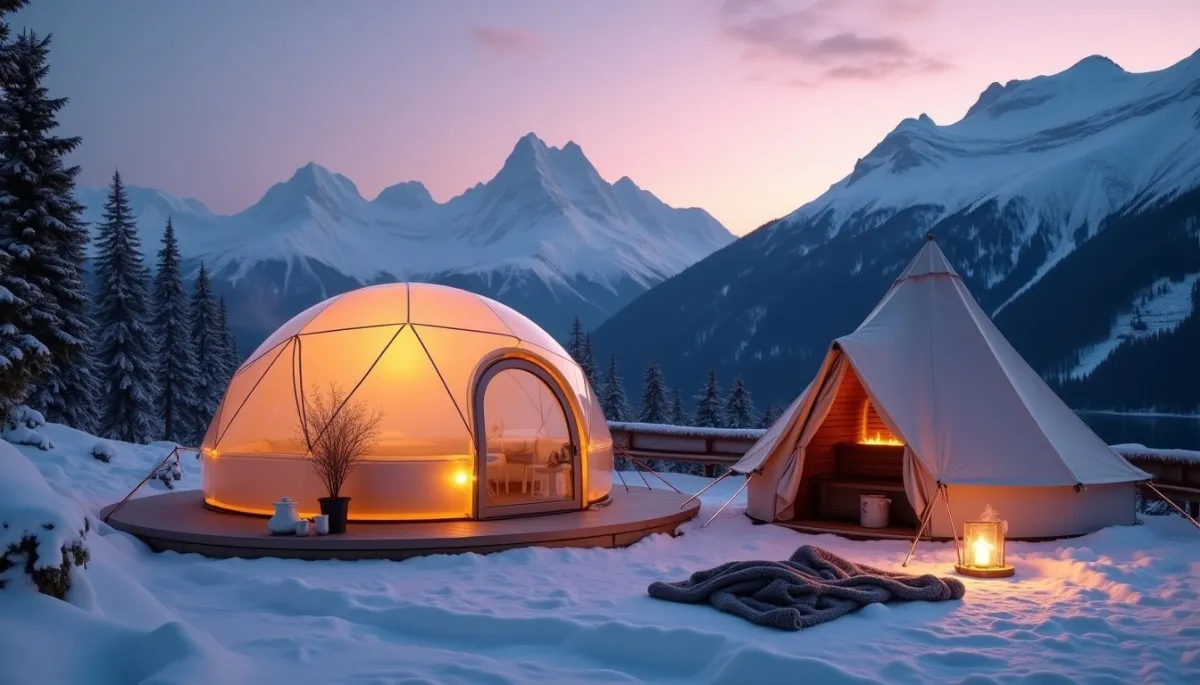
Under a thick canvas or inside a transparent dome, a wood stove breathes warmth while outside, the peaks of the Diablerets catch the last light. Steam rises from a mug of hot chocolate, and for a moment, the only sounds are distant skiers and the soft settling of snow on firs. The Riviera of Lake Geneva lies just beyond the ridgeline, but here, at 1,500 to 2,000 meters, the world is very near and entirely different.
nuit confortable
Glamping is not simply a tent with a mattress. In the Vaud Alps, operators fit canvas bell tents, insulated pods, or geodesic domes with real beds, electric or wood heating, and small private bathrooms. Some accommodations include panoramic windows oriented toward the stars, and others offer private wood-fired saunas on a terrace.
The trend accelerated over the last decade, as travelers sought experiences combining nature and comfort. Winter glamping stays are increasingly available around Leysin, Villars-sur-Ollon, Les Diablerets and Château-d'Oex. Glacier 3000, reachable from Les Diablerets, provides dramatic backdrops and day activities such as snowshoeing on a glacier or riding the Peak Walk by Tissot, a suspension bridge at 3,000 meters.
Expect curated touches: local cheeses and raclette prepared on-site, breakfasts with fresh bread from mountain bakeries, and guides who offer half-day outings on snowshoes. Many sites emphasize eco-responsibility, using solar panels for lighting, composting toilets, and careful water management, so guests enjoy comfort without heavy impact.
pourquoi maintenant
Why the surge in winter glamping? Post-2020 travelers looked for safer, more secluded experiences, and mountain regions offered natural distancing long before it was fashionable. At the same time, interest in slow travel and outdoor wellness increased, making the Alps an ideal stage for micro-adventures close to urban centers like Lausanne and Geneva.
Accessibility also improved. Train connections to mountain towns such as Leysin and Villars are reliable, with regional services linking to the main Swiss rail network. For drivers, cantonal roads are well maintained in winter, though snow tyres or chains may be required. These logistics make a weekend glamping escape feasible even for visitors arriving by rail from the nearest airports.
Cultural factors matter too. The Vaud region has a long tourism history going back to the 19th century, when British visitors popularized Alpine stays. Today, local producers and chefs collaborate with glamping hosts to showcase products like alpine honey, local cheeses from Gruyère-milked herds, and seasonal game, adding a gastronomic dimension to the experience.
prises et limites
Despite the romance, winter glamping has constraints. High-altitude sites must contend with weather fragility: heavy snowfall can cut access, and severe cold requires robust insulation and reliable heating systems. Operators invest in infrastructure, which can raise costs and limit the number of units that fit a site without altering the landscape.
There is also a tension between comfort and authenticity. Some travelers seek raw solitude, a basic night outdoors, while others want hotel-level services. Hosts are responding with hybrid offers: private cooks, guided excursions, and flexible cancellation policies to cope with mountain unpredictability.
Looking ahead, expect more seasonal creativity. Night-time snowshoe treks, pop-up fondue dinners served on frozen terraces, and collaborations with local festivals, such as the Château-d'Oex balloon festival, create unique winter packages. Yet the core promise remains simple: breathe mountain air, sleep warmly, and wake to a view that feels handcrafted by nature.
Practical tips: choose layered clothing, ventilated footwear to avoid condensation, and ask your host about stove operation and emergency access. Reserve at least two months in advance for stays between December and February, and verify transport options if a site is accessed by a short winter road.
Thanks for reading, and don't forget, Enjoy Life Moments!