Lausanne botanical gardens: a plant journey without leaving Switzerland
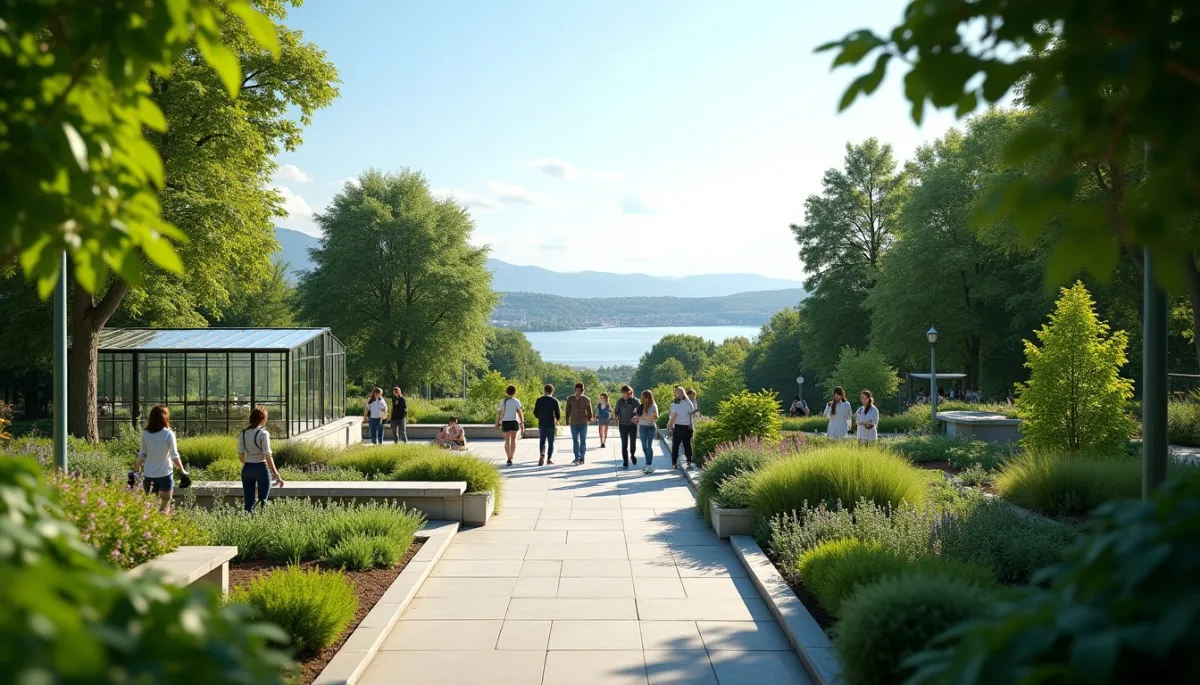
A warm gust carries the scent of rosemary and damp earth. A student crouches over a tray of alpine seedlings, an elderly couple follow a labelled path, and in the greenhouse a tropical canopy hums with insects. You can almost hear the city soften as you walk from the tram stop into a tangle of labelled stems and stone benches.
The gardens of Lausanne are more than pretty beds. They are living libraries, places of research, education and public delight. Here, plant collections are organised by geographic origin and ecological story. Benches sit where you can pause, read a plaque, and imagine the high Alps or Mediterranean scrub without leaving the city.
Sous la voûte verte
Visitors immediately notice the variety. Alpine cushions nestle near a rock garden, Mediterranean shrubs face a sunlit terrace, and behind glass, succulents and orchids hold their court. These distinct atmospheres allow concrete encounters: children marvel at Venus flytraps, botanists count rare gentians, and photographers capture the contrast of delicate petals against modern Lausanne rooftops.
One memorable anecdote comes from a local volunteer who tends a medicinal plant bed. She once received an elderly villager who recognized a herb used in his childhood to soothe coughs. That moment transformed the garden into a place of memory, linking personal histories to plant conservation.
Guided tours and seasonal events make these consequences visible. In spring, a seed-exchange day attracts gardeners from the region. In autumn, workshops explain how alpine species adapt to warmer winters. These practical activities translate research into everyday gardening tips for locals and visitors alike.
Racines et raisons
Why such effort? Partly because botanical gardens are essential to biodiversity stewardship. Lausanne's collections serve scientific purposes, supporting taxonomy (the classification of species), phenology studies (timing of life-cycle events) and ex situ conservation (protecting species outside their natural habitat). The information gathered here feeds wider networks, helping to track how plants respond to climate change.
Historically, many European botanical gardens were created in the 19th century as universities expanded their curricula. Lausanne followed this pattern, anchoring botanical study near academic institutions. Today the gardens continue to serve students from the University of Lausanne and neighbouring schools, offering living classrooms where theory meets soil and microscope.
Local municipal policies also explain the gardens' vitality. The city invests in green corridors and public education, seeing gardens as tools for urban resilience. Partnerships with research institutes and community groups amplify the gardens' mission: conservation, education and public wellbeing, all in a compact, accessible footprint.
Nouveaux bourgeons
However, tensions exist. Urban pressure challenges space. New developments and budgetary constraints can limit expansion. At the same time, the need to modernise facilities, especially greenhouses and lab spaces, requires funding and political will.
Another contradiction concerns public access versus scientific protection. Some rare collections need controlled environments and restricted access to prevent contamination. Balancing open invitation with preservation is an ongoing conversation, solved by timed visits, educational signage and volunteer mediation.
Looking forward, future projects aim at greater climate interpretation. Expect more interactive displays explaining plant responses to warming, citizen science programs where residents monitor flowering times, and greener transitions that integrate stormwater management. These developments keep Lausanne's botanical gardens relevant, both for research and for the everyday pleasure of wandering among leaves.
Practical tips: visit in late spring for the fullest floral display, check greenhouse hours on the garden website, arrive by tram for easy access, and bring comfortable shoes. If you love stories, ask for a guided tour or attend a seed-exchange event to meet the people who keep these collections alive.
Thanks for reading, and don't forget, Enjoy Life Moments!