The villa Ephrussi de Rothschild: the woman who tamed Cap Ferrat
🚀 Key Takeaways
- Concept key : The villa is a Belle Époque palais and nine themed gardens created between 1905 and 1912.
- Practical tip : Visit early morning in spring to see roses and bougainvillea at their best and avoid crowds.
- Did you know : Béatrice bequeathed the villa in 1934 to the Académie des Beaux-Arts, ensuring its preservation.
Light, sea and flowers.
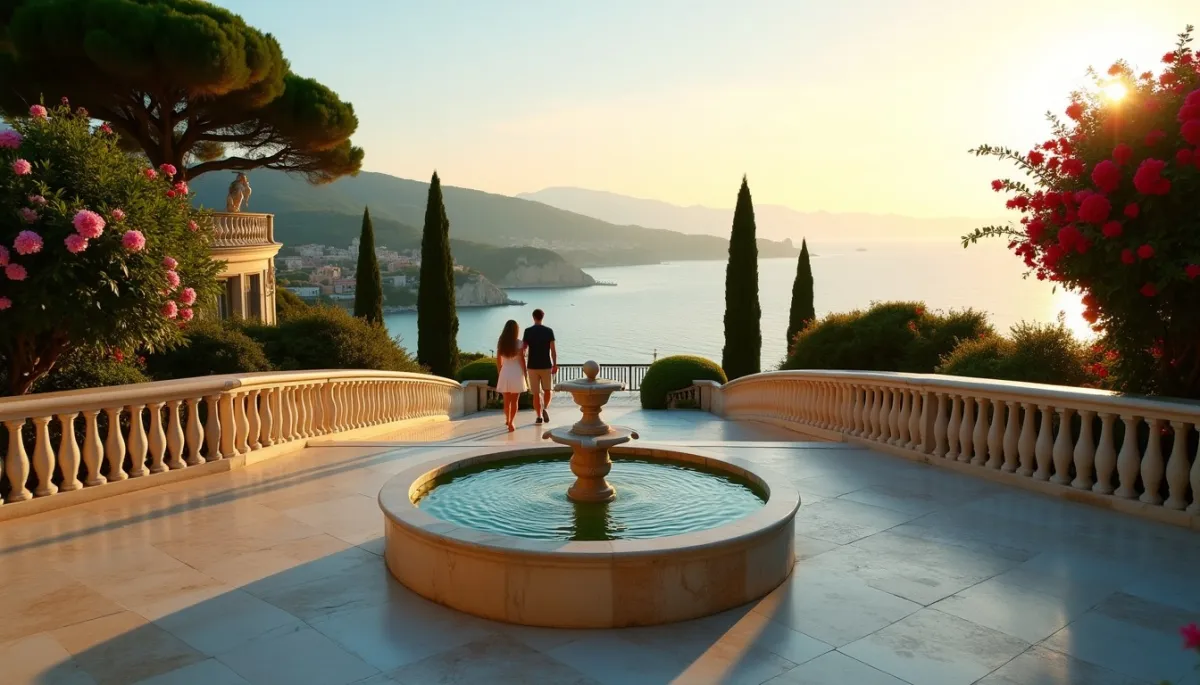
Imagine standing on the villa's grand terrace, the Mediterranean spread below, marble balustrades warmed by the sun, fountains throwing plumes of water into the blue. Poppies and roses scent the air, and small groups of visitors move slowly through paths bordered by sculpted cypresses. That scene is largely the work of one woman, Béatrice Ephrussi de Rothschild, who between the early 1900s and her death in 1934 moulded Cap Ferrat into a private, cultivated paradise.
Cap façonné
At the turn of the 20th century, Cap Ferrat was still a string of rocks and olive groves, prized for its views but not yet the playground of the jet set. In 1905 Béatrice bought the promontory where the villa now stands. She commissioned an Italian-style palazzo inspired by Renaissance architecture, and oversaw construction that lasted until about 1912.
The villa itself is a carefully arranged stage: marble loggias, Venetian windows, a grand hall that displays 18th-century French furniture, porcelain from Sèvres, and paintings by masters of the Rococo and 18th century. The interiors reveal her taste for the refined and the theatrical, each room set up like a cabinet de curiosités for visitors to admire.
Outside, she traced terraces into the steep slope, creating nine themed gardens: French, Spanish, Japanese, Florentine, exotic, rose garden, stone garden, an orangery area, and a terrace overlooking the sea. Paths, stairways, and water features (including a decorative pond reminiscent of a Venetian canal) connect those rooms of greenery, offering changing vistas at every turn.
Jardins en scène
Béatrice worked with landscape designers of her time to procure mature trees, statues and architectural fragments from Italy and Spain, knowing that instant maturity gives a garden immediate presence. This practice (transplantation of mature specimens) was a signature of grand estate-making in the Belle Époque, and it paid off: visitors see a garden that looks centuries old even though it was shaped in a few years.
The gardens function as an outdoor museum, each theme framing different plants and moods. The Japanese garden concentrates on intimate composition, water and stones. The Florentine terrace is filled with terracotta statues and clipped hedges. The exotic garden hosts agaves and palms, plants that adapt to the Mediterranean climate while providing dramatic silhouettes.
Beyond aesthetics, the gardens were social theatre. Béatrice staged luncheons, soirées and small concerts on terraces where the light and scent were part of the spectacle. Her gardens invited strolling, conversation and the careful appreciation of objects, a practice that fits perfectly with today's slow tourism.
Héritage vivant
When Béatrice died in 1934 she bequeathed her house and collections to the Académie des Beaux-Arts. That decision saved the property from subdivision and change of use, and opened it to the public as a museum. The villa now displays her porcelain, tapestries, 19th-century portraits and decorative arts in rooms preserved much as she arranged them.
Since then, the site has evolved to meet conservation needs and modern visitation. Restoration campaigns have repaired facades, reinstated historic plantings, and adapted visitor circuits to protect delicate interiors. The gardens are maintained by skilled gardeners who follow historical plans while responding to climate challenges, like prolonged droughts or new pests.
Visiting today gives both historical insight and practical inspiration. Gardeners and enthusiasts can note how microclimates are used: south-facing terraces for Mediterranean shrubs, shaded nooks for camellias and box, and stone walls that store heat for orchids and cyclamens. For couples, the villa remains a romantic stop, ideal for a slow afternoon followed by a coastal walk toward Saint-Jean-Cap-Ferrat.
Thanks for reading, and don't forget, Enjoy Life Moments!