The magic of the Three Corniches: France's most mythic road trip
🚀 Key Takeaways
- Core concept : The Basse, Moyenne and Grande Corniche form a layered coastal drive with distinct landscapes.
- Practical tip : Drive in spring or early evening, park near viewpoints, rent a small car or scooter.
- Did you know : Famous films like Hitchcock's "To Catch a Thief" (1955) used these roads as a backdrop.
Pure light and vertigo.
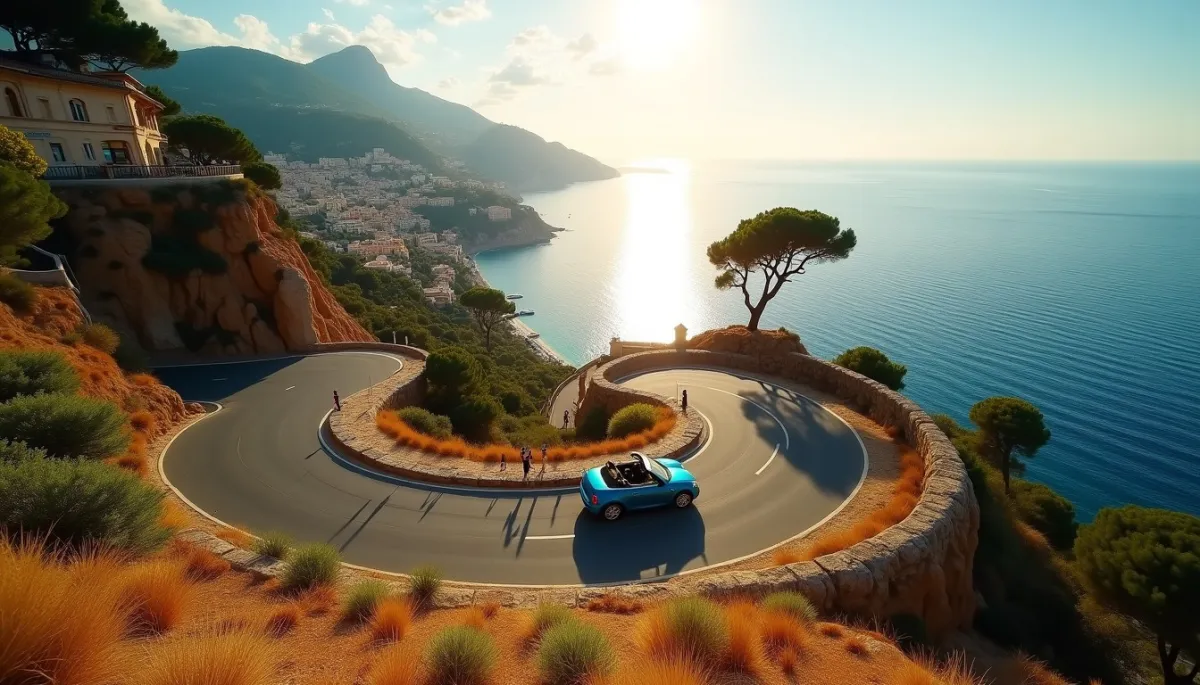
You round a hairpin, the azure opens beneath you, a fishing boat leaves a white trail in the bay of Villefranche, and the buildings of Monaco cling like sugar cubes to the rock. The air smells of rosemary and sea salt, and a line of past and present flashes by: villas from the Belle Époque, Roman stones, and sleek yachts. It feels cinematic because it is, and because many artists, aristocrats and filmmakers made these roads their stage.
Trois routes, trois ambiances
Start with names: the Basse Corniche runs closest to the sea, the Moyenne Corniche sits higher with views over bays, the Grande Corniche crowns the heights above them all. Each route stretches roughly along the stretch from Nice to Menton, offering different perspectives on the same coastline.
The Basse Corniche threads through Villefranche-sur-Mer and Saint-Jean-Cap-Ferrat, perfect for pauses on pebble beaches and visits to the Villa Ephrussi de Rothschild, built in the early 1900s. The Moyenne Corniche passes Èze, with its medieval village and the Jardin Exotique, a favorite for photographers.
The Grande Corniche climbs, skirting La Turbie and offering panoramic vistas toward the Alps and the Mediterranean. Romans already appreciated this corridor; you can still see vestiges, notably around La Turbie where the Tropaeum Alpium (a Roman trophy) marks ancient strategic importance.
Pourquoi cette fascination
The Riviera's allure is partly historical. From the 18th century, British nobles wintered here, followed by artists and writers. The coast became synonymous with glamour and escape, a narrative that film and photography amplified in the 20th century.
Cinematic moments cemented the myth. Alfred Hitchcock shot scenes of "To Catch a Thief" in 1955 along these roads and in Monaco, bringing international attention to the curves and light of the corniches. Stars and directors returned, layering the route with cultural memory.
Beyond glamour, the geography is decisive. Dramatic relief, mild climate and short distances create intense visual contrasts. In one hour you can go from a seaside café to a mountain outlook, which makes the road trip compact, rewarding and endlessly repeatable.
Prendre la route, conseils
Best seasons are spring (April-June) and early autumn (September-October), when light is soft and traffic is lighter than in July-August. Early morning or late afternoon are ideal for photography and fewer caravans of holiday drivers.
Choose a small car or a 125cc scooter for narrow bends and parking, and always check local restrictions: some stretches have parking limits and occasional closures for events. Bring water and sun protection, and allow time to stop: viewpoints, the village of Èze, Monaco's rock, the Villa Ephrussi and the lemon gardens of Menton are not to be rushed.
Respect local rhythms: olive groves and vineyards occupy terraces carved into the slopes, and fragile coastal ecosystems deserve attention. Walking short trails like portions of the Sentier du Littoral complements the drive and reveals hidden coves that cars cannot reach.
Thanks for reading, and don't forget, Enjoy Life Moments!