Tren Maya: ecological revolution or a Riviera disaster?
🚀 Key Takeaways
- Core concept : A large-scale rail project aiming to modernize transport across five Mexican states.
- Practical tip : Visit Valladolid or Sian Ka'an with certified local guides to see conservation efforts firsthand.
- Did you know : Cenotes are natural sinkholes that feed the Yucatán's underground aquifer, vital for local communities and biodiversity.
Change hums along the tracks.
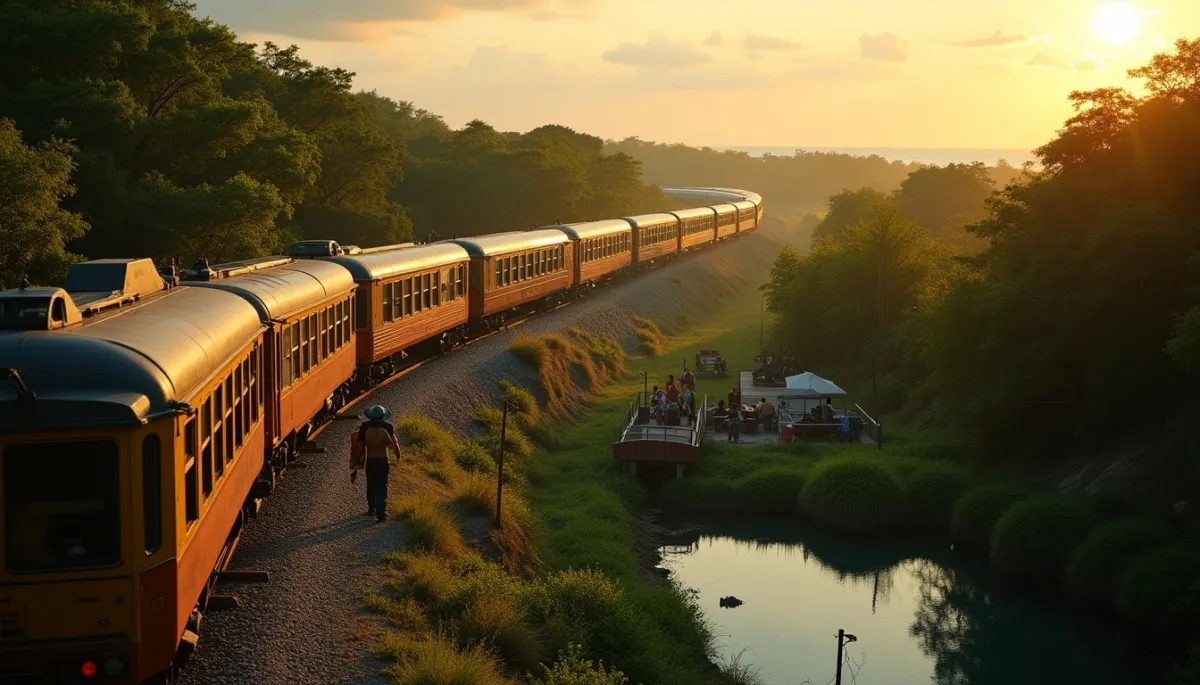
Imagine standing at sunrise on the edge of a mangrove lagoon near Tulum, hearing distant diesel and the creak of rails, while a cloud of egrets lifts off. Workers move along new embankments, heavy cranes reflect in still water, and a sign names a future station. The Riviera's white beaches and turquoise sea feel a world apart, yet the rails promise to redraw how people arrive, move and live here.
Rails and landscapes
The train project, publicly announced in 2018 and developed during the presidency of Andrés Manuel López Obrador, covers roughly 1,500 kilometers across the states of Chiapas, Tabasco, Campeche, Yucatán and Quintana Roo. Its promoters present it as an infrastructure backbone for the south-east, with stops planned near Cancún, Playa del Carmen, Tulum and Chetumal.
Proponents argue the line will reduce road traffic, shorten travel times and disperse tourist flows beyond the overloaded hotel corridors of the Riviera Maya. For travelers this could mean easier day-trips to archaeological sites such as Ek Balam or colonial Valladolid, and a new rhythm for island-hopping and cenote visits.
On the ground, the visible consequence has been a building boom. Stations, railbeds and maintenance yards change landscapes, and for small towns the arrival of a station often brings new hotels, restaurants and services. Local entrepreneurs in Bacalar and Felipe Carrillo Puerto expect a surge in visitors, while some communities already report more construction activity and temporary jobs.
Why the push
The motivations are multiple. Politically, the Tren Maya has been framed as a tool for regional development and social inclusion, promising investment to areas long neglected by central policy. Economically, it aligns with a desire to diversify local economies beyond seasonal sun-and-beach tourism.
From an environmental standpoint, officials have highlighted efficiency gains. Trains, when electrified or running at high occupancy, can lower per-passenger emissions compared with cars and buses. The project also aims to connect remote communities to markets and services, which can improve livelihoods and reduce some long drives on unsafe roads.
Global interest in greener mobility adds momentum. In 2021 and 2022, Mexican authorities cited reduced carbon intensity as part of the justification, and parts of the system were proposed to run on electricity or cleaner fuels, though technical plans have evolved over time.
Fault lines and worries
Yet the Tren Maya is not a simple win. Environmental NGOs, scientists and some community groups have raised alarms since the project's early stages. Concerns focus on mangrove destruction, impacts to the karstic underground (home to thousands of cenotes), and habitat fragmentation that could affect species such as jaguars and local bird populations.
Legal and social friction has accompanied the work. Debates about the quality of consultations with Maya communities surfaced in 2019 and 2020, and in several cases indigenous organizations called for better guarantees and compensation. International bodies and conservation groups urged careful mapping of sensitive zones and protection of archaeological sites.
Water risk is acute. The Yucatán Peninsula sits on a porous limestone base, so surface interventions can alter groundwater flows and contaminate cenotes. For countless locals, cenotes are not only tourist attractions but sources of freshwater and cultural sites. Any damage to them risks both ecology and livelihoods.
Real stories, real choices
Meet Rosa, a guide from Río Lagartos, who in 2022 pivoted from small-group birdwatching to offering transfer services from a nearby construction camp. She says the work brought income but also dust, noise and questions about the future of nesting sites. Her testimony reflects the mixed local calculus: jobs now, uncertainty later.
At the same time, entrepreneurs in Valladolid reported increased bookings in 2023 from domestic travelers eager for rail itineraries. Regional hotels and tour operators are adapting, promoting slower travel and multi-day stays rather than same-day bus runs from Cancún.
These anecdotes show that outcomes will vary by place. In some communities the train may be an economic lifeline. In others, it could deepen pressure on fragile ecosystems already stressed by mass tourism and unplanned development.
Practical advice for visitors
If you plan to visit the Riviera Maya while Tren Maya lines are active, choose operators certified by local conservation groups, avoid cenote swimming in restricted or unregulated sites, and seek out community-led experiences in towns like Ek Balam or Punta Allen.
Support small-scale conservation efforts: buy from artisans, book guides from the village, and prefer lodges investing in wastewater treatment and mangrove restoration. A responsible itinerary helps ensure tourism revenue supports protection, not destruction.
Finally, stay informed. Follow updates from academic centers such as the National Autonomous University of Mexico (UNAM), NGOs monitoring the project, and municipal notices where you travel.
Merci d'avoir lu, et n'oubliez pas, Profitez des moments de la vie !