Swimming with bull sharks at Playa del Carmen: myths and realities
🚀 Key Takeaways
- Concept key : Bull sharks (Carcharhinus leucas) tolerate low salinity and form seasonal aggregations near Playa del Carmen, mainly November to March.
- Practical tip : Choose licensed operators, follow briefings, avoid jewelry and sudden movements, and never participate in unregulated baiting (chumming).
- Did you know : Observations here support local research and community ecotourism, but they require careful management to avoid behavioral changes in sharks.
Excitement hits the moment the skiff slows and the turquoise opens into deep blue.
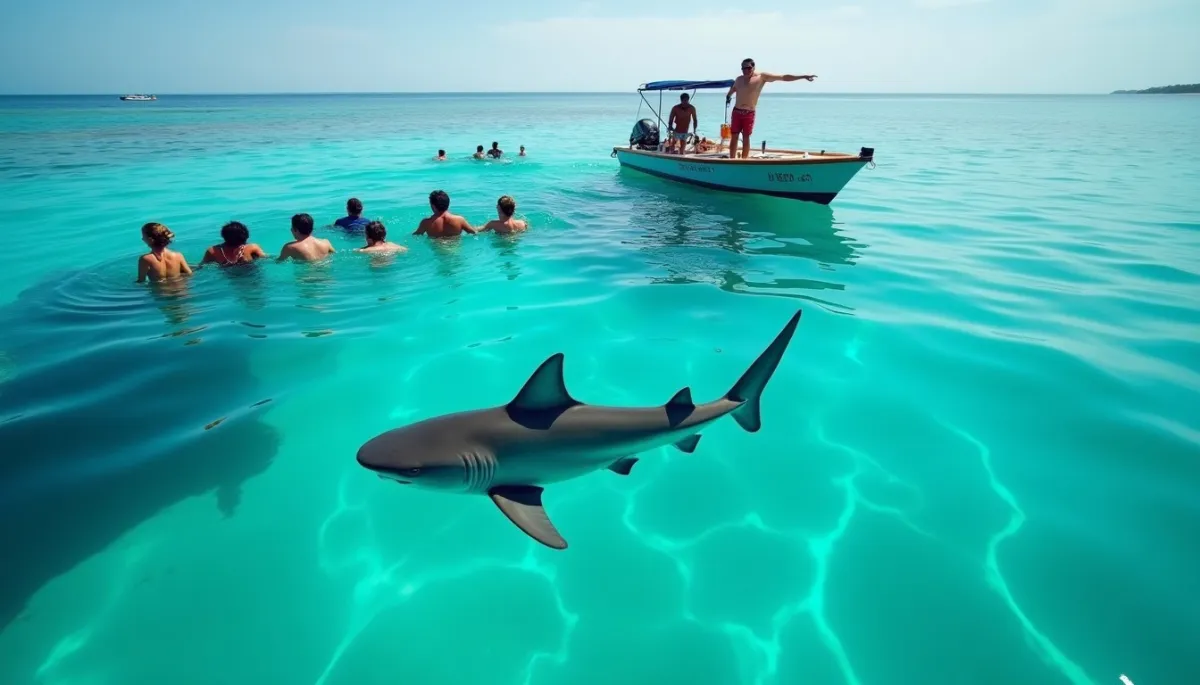
On a crisp morning off Playa del Carmen, the water is flat, the light sharp. A small group of divers and snorkelers listens to a short briefing. On the horizon, shapes appear like slow ships, then the streamlined silhouettes of bull sharks. The crew points, cameras come out, and you feel the ocean's pulse — powerful, patient, indifferent.
The phenomenon of swimming with bull sharks here is real and structured. Each season, operators run day trips from Playa del Carmen's marina to known aggregation sites along the barrier reef and adjacent deeper channels. These encounters are organized with strict safety protocols, trained guides, and, increasingly, scientists on board. The result is a tourism niche that blends adrenaline, education, and conservation funding, but it also raises questions we will unpack below.
Découvertes et récits : les conséquences visibles
Witness accounts are consistent. Visitors describe close, calm approaches by bull sharks rather than theatrical attacks. Photographs and videos shared on social networks have popularized the image of tourists floating among large sharks. These media moments boosted Playa del Carmen's reputation as a premier site for shark encounters, drawing international attention and bookings during high season.
For local communities, there are direct consequences. Dive shops and panga boat crews earn seasonal income, guides develop specialized skills, and some operators allocate part of revenue to monitoring programs. In the last decade, small research collaborations with universities have used tourist trips to tag sharks or record sightings, turning recreational outings into citizen science opportunities.
However, the visibility also produced regulatory responses. Authorities like SEMARNAT (Mexico's environment ministry) and regional agencies introduced permits and codes of conduct to regulate baiting (known as chumming) and ensure safety. The aim is to limit behavioral conditioning, keep sharks wild, and protect both animals and people.
Racines du phénomène : pourquoi les requins se rassemblent
Biology explains much. Bull sharks tolerate fresh and brackish water, so they exploit river mouths and estuaries as hunting grounds. Seasonal changes in temperature, prey abundance, and ocean currents can concentrate fish and, consequently, predators. Near Playa del Carmen, these natural factors create predictable aggregation windows, mostly in the cooler months between November and March.
Tourism demand is another driver. As divers seek iconic encounters, operators refined techniques to offer reliable sightings. This led to standardized briefings, strict distance rules, and, in many cases, the abandonment or tight regulation of baiting. It's important to clarify jargon: chumming (appâtage) means dispersing fish parts or oils to attract sharks. Unregulated chumming can alter shark behavior and is discouraged by conservationists.
Scientific interest reinforced the practice. Researchers document movements, size distribution, and health, using the tourist presence as a cost-effective platform. When research is conducted responsibly, data collected during tourist trips helps inform management measures and raises public awareness about sharks' ecological roles.
Entre fascination et prudence : contradictions et perspectives
The activity sits between thrill and responsibility. On one hand, encounters demystify sharks and generate funds for conservation. On the other hand, poor practices can habituate animals to humans, increase risk, and distort natural behavior. The balance depends on enforcement, operator ethics, and informed tourists.
Looking ahead, the trend is toward stronger governance and transparency. More operators now publish their permits, code of conduct, and affiliations with researchers. Local initiatives aim to cap the number of daily visitors, rotate sites to reduce pressure, and promote off-season alternatives like cenote dives and reef health tours.
Practical advice for anyone considering a swim with bull sharks: book with licensed companies, attend the full safety briefing, maintain a neutral body position, avoid splashing or touching, remove shiny jewelry, and ask whether research fees support monitoring programs. Respecting these rules ensures that the encounter remains both thrilling and sustainable.
Thanks for reading, and don't forget, Enjoy Life Moments!