Is sargassum really dangerous?
🚀 Key takeaways
- Concept key : Sargassum is rarely life threatening, but it can cause respiratory or skin irritation and disrupt local tourism.
- Practical tip : Visit cleaned stretches early in the morning or choose beaches managed by hotels that remove seaweed regularly.
- Did you know : Local communities and researchers are testing composting and harvesting methods to turn sargassum into useful products.
Sargassum blooms have changed the rhythm of beach life along the Caribbean coast. For travelers coming to the Riviera Maya in 2026, the question is less about panic and more about preparedness.
This article separates myth from fact, explains health and environmental aspects, and offers practical tips so you can plan your visit with confidence.
What is sargassum and why is it here
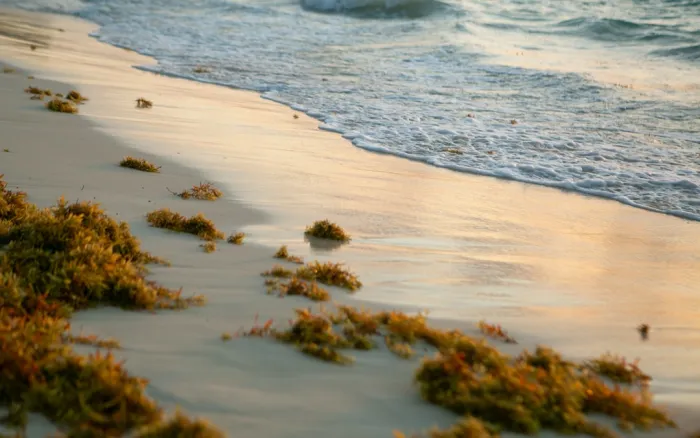
Sargassum is a brown macroalgae that floats in large mats across the Atlantic and Caribbean. Blooms have increased in size and frequency since the 2010s due to a mix of ocean currents, nutrient loads and climate variability.
When these mats reach shallow coastal waters they wash ashore, creating the thick brown lines many visitors notice. The sight can be dramatic, but the algae itself is a natural organism, not a chemical spill.
Is sargassum dangerous to people?
For most beachgoers, sargassum is an irritant rather than a severe hazard. Damp, decomposing seaweed can emit gases like hydrogen sulfide which may cause eye, nose or throat irritation, and in some people worsen asthma symptoms.
Serious medical emergencies are rare. Health guidance cited by major outlets such as BBC and The New York Times emphasizes monitoring symptoms and seeking care if breathing becomes difficult or irritation is intense.
Environmental and economic impacts
Sargassum affects marine life by changing oxygen levels near shore and smothering seagrass beds when decomposition is heavy. It also alters the look and smell of beaches, with real consequences for tourism revenue and local livelihoods.
Communities along the Riviera Maya have responded with cleanup crews, mechanical removal and pilot projects to find sustainable uses for collected seaweed. The problem links local economies to broader ocean health issues.
How travelers can reduce risk and discomfort
Choose beaches known for regular maintenance, swim beyond the line of floating sargassum, and avoid entering the water where thick mats are present. If you are sensitive to smells or have respiratory issues, bring masks or plan indoor activities on heavy-days.
Bring water shoes to avoid contact with decomposing fragments, rinse off after swimming, and check hotel policies before booking. Many hotels in the region now advertise proactive sargassum management as part of their amenities.
Local responses and the long-term outlook
Authorities, scientists and communities are investing in monitoring systems and collection strategies that reduce beach impacts and explore beneficial uses like compost or biofuel. Progress is uneven, but coordination has improved since the early surge years.
Ultimately, sargassum is part of a changing ocean system. For visitors, being informed and flexible lets you enjoy the Riviera Maya while supporting local efforts to adapt and rebuild resilient tourism.
Thanks for reading, and don't forget, Enjoy Life Moments!