Socca of Nice: the most authentic street food of the French Riviera
🚀 Key Takeaways
- Core concept : Chickpea flour pancake, baked at very high heat, eaten hot and peppered.
- Practical tip : Try it at a stand in Vieux-Nice or at Chez Pipo in the early evening, with a glass of local rosé.
- Did you know : Socca is part of a wider Mediterranean family (farinata, cecina), with roots in medieval coastal trade.
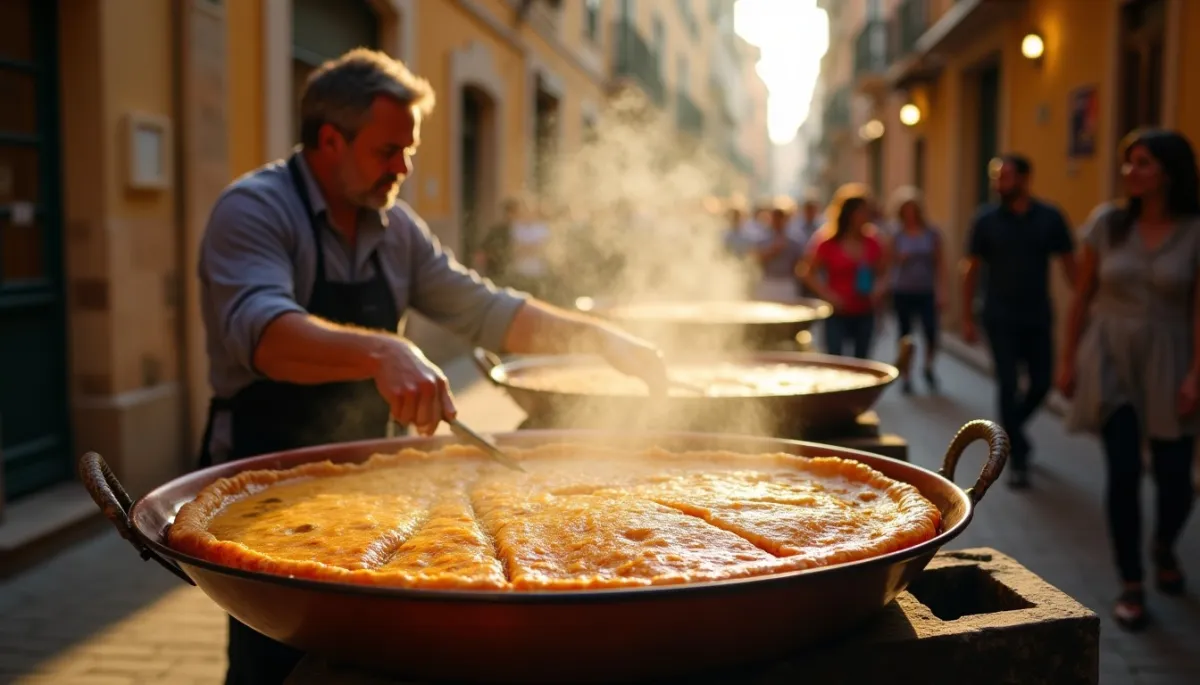
Close your eyes and breathe in the smoky, salty air. You are in a narrow lane of Vieux-Nice, heat from a copper tray warming the stones, people tearing off irregular wedges of socca and passing them along like a rite of passage.
Un plat populaire
Socca is, first and foremost, street food. In Nice it was sold at markets and by itinerant vendors, served on cardboard and meant to be eaten standing. The image is classic: a huge round, blistered and bronzed, cut into triangles and handed out piping hot.
Its popularity is tied to accessibility. Made from chickpea flour, water, olive oil and salt, socca uses inexpensive, shelf-stable ingredients, perfect for coastal communities where quick, hearty food was essential for dockworkers and market-goers.
Today, socca remains omnipresent in old town markets such as Cours Saleya and around Place Rossetti. It is both an everyday snack for locals and a discovery for visitors who arrive through Nice Côte d'Azur airport, which handled about 13 million passengers in 2019, a figure that helps explain the boom in food tourism on the Riviera.
Street vendors often work in front of traditional wood-fired or gas ovens and use large copper pans that give socca its characteristic edge and color. The cooking is quick, the pace frenetic, and the result immediate satisfaction.
Racines et recettes
Socca belongs to a family of chickpea flatbreads found along the Ligurian and Tuscan coasts. In Italy it is known as farinata in Genoa and cecina in Tuscany. These recipes travelled with Mediterranean trade routes and the movement of people over centuries.
Historical mentions are fragmentary but consistent: chickpea-based dishes are recorded in medieval Mediterranean cuisine, and the simple formula evolved in port cities where legumes were staples. In Nice, the recipe was adapted to local ovens and tastes, becoming thinner and crispier than some Italian cousins.
Preparation is deceptively simple but requires technique. The batter rests to hydrate the flour, and the oven must be extremely hot so the surface bubbles and chars slightly. A well-cooked socca is creamy inside, edged with smoky crispness. Many old-school vendors still sprinkle coarse pepper at the end; a few add rosemary, but purists prefer it natural.
Related Niçois specialities deserve a mention. Panisse is a fried or baked chickpea cake, thicker and denser, often served as a sandwich filling. Confusing the terms is common among tourists, so asking how it is prepared helps avoid surprises.
Tradition en mutation
The modern appetite for authenticity has revived interest in socca, yet commercialization presents tensions. Popular stands face long queues from tourists, which can push prices up and change the rhythm of service that made socca a quick, affordable snack.
At the same time, chefs and artisans are reinventing socca. Some upscale bistros reinterpret it with seasonal toppings, like marinated sardines or confit tomatoes, while others emphasize strict traditional technique, using copper pans and slow-fermented batters.
Local associations and market communities work to transmit know-how. Workshops, short courses and documentary projects in the last decade aim to keep the craft alive for new generations, balancing innovation with respect for the original simplicity.
If you want to taste the most authentic socca, go in the evening to Vieux-Nice, follow the smoke and the line of waiting locals, ask for it hot and peppered, and eat it standing. The experience is as much social as gustatory: socca reveals the rhythm of Niçois life, its conviviality and its ties to the sea.
Thanks for reading, and don't forget, Enjoy Life Moments!