The Cocteau chapel in Villefranche-sur-Mer: the poet’s artistic testament
🚀 Key Takeaways
- Key concept : Jean Cocteau's decoration of the chapel in 1957 transforms a fishermen's sanctuary into a work of modern sacred art.
- Practical tip : Visit at first light to catch soft natural light on the frescoes, and check opening times; entry is usually free.
- Did you know : Cocteau blended nautical motifs and portraits of locals, making the chapel a collective portrait of Villefranche.
Light and ink meet on white walls. You step from the narrow quay of Villefranche into a small, sunlit space where a drawn line seems to tell the sea's story.
mémoire sur les murs
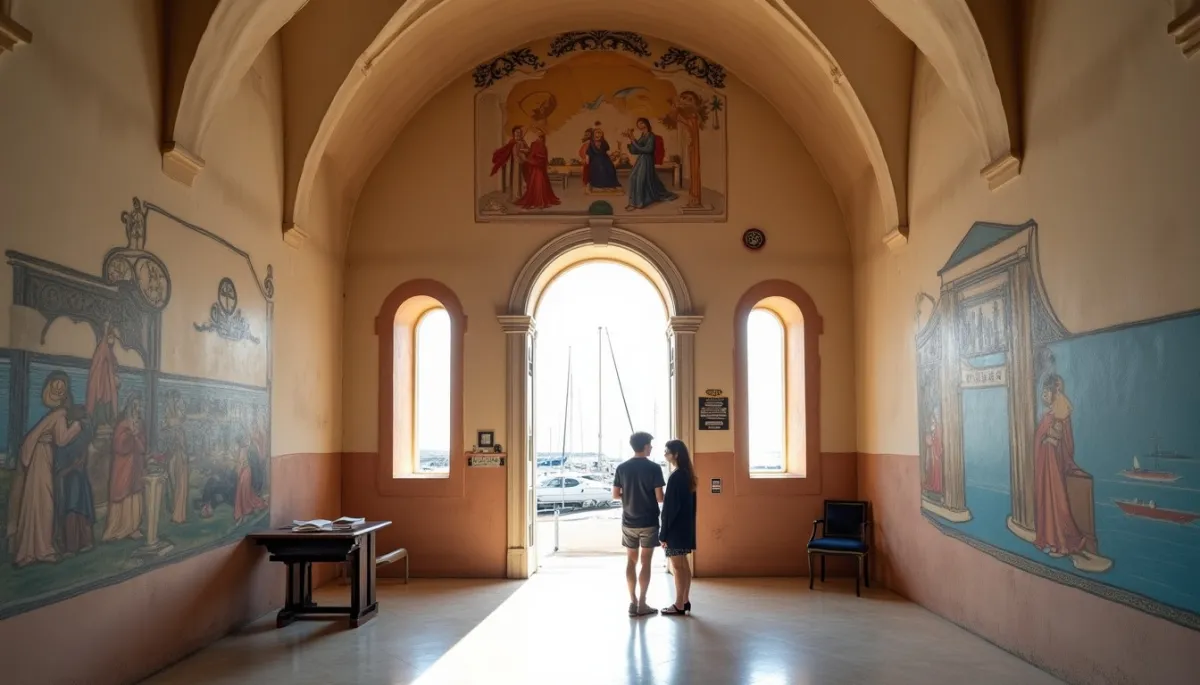
In 1957 Jean Cocteau, poet, filmmaker and artist (1889‑1963), was invited to decorate the Chapelle Saint‑Pierre, located a few steps from the harbor of Villefranche‑sur‑Mer. The result is an interior of whitewashed walls animated by black, calligraphic outlines and bursts of color, a surprising modernity in a modest coastal chapel.
Cocteau's approach was intimate rather than monumental. He painted fishermen, saints, boats and marine creatures, with inscriptions and personal motifs that speak to the town's life. The chapel became, at once, a public work and a local portrait, accessible to residents and visitors.
Seen today, the chapel reads like a last public testament, a concentrated expression of Cocteau's graphic language. It brings together myth and everyday life, faith and friendship, in a space where art serves both devotion and collective memory.
la rencontre locale
The story of the chapel begins with the community. The small chapel of Saint‑Pierre, patron saint of fishermen, belonged to the local brotherhood. Cocteau had strong ties to the Riviera, and the fishermen welcomed him; they offered him the keys and the freedom to work directly on the walls.
That proximity to the town explains the presence of familiar faces and nautical emblems. Édouard Dermit, Cocteau's companion and adopted son, and friends from nearby Nice and Monaco frequented the chapel, helping to anchor the project in everyday life rather than in an institutional commission.
By including portraits and local allusions, Cocteau turned the chapel into a collective object. Visitors do not only admire a famous name, they read a map of relationships: the sea, the crew, the artist and his neighbors.
un art accessible
Cocteau's technique is deceptively simple: a dominant black line, often continuous, that describes figures and scenes. This graphic clarity makes the frescoes readable even by those unfamiliar with art history; the images function like signs, immediate and poetic.
The chapel's modest scale also invites close attention. You can stand near the altar and notice small details, a playful fish, a hand gesture, an inscription in French. The experience is intimate in a way few museums manage to be.
Practical advice: aim for weekday mornings outside high season to enjoy the silence. Photography is allowed without flash, and local guides occasionally offer short talks about Cocteau's intentions and the restoration work undertaken in the early 21st century to preserve the fragile pigments.
entre conservation et vie
Maintaining a painted chapel by the sea raises technical and ethical questions. Salt air, humidity and tourist flows require careful conservation strategies. Conservators in the 2000s worked to stabilize the pigments while respecting Cocteau's hand, a balance between scientific intervention and artistic integrity.
At the same time, the chapel is a living place. Weddings, small ceremonies and local visits keep it part of communal life. This duality, museum object and neighborhood chapel, is central to its meaning: art that continues to serve a town.
Looking ahead, cultural projects and temporary exhibitions around Villefranche increasingly use the chapel as a focal point, creating a dialogue between contemporary artists and Cocteau's legacy. The conversation keeps the site relevant and draws new generations to the harbor.
Merci d'avoir lu, et n'oubliez pas, Enjoy Life Moments !