The seiche on Lake Geneva: when a lake behaves like an inland sea
🚀 Key Takeaways
- Key concept : A seiche is a standing wave in a closed basin (here, Lake Geneva) that makes water levels oscillate.
- Practical tip : Check MeteoSwiss and local port notices before boating or swimming after strong winds.
- Did you know : Historical accounts, including the Tauredunum event in 563 AD, testify to the lake's dramatic movements.
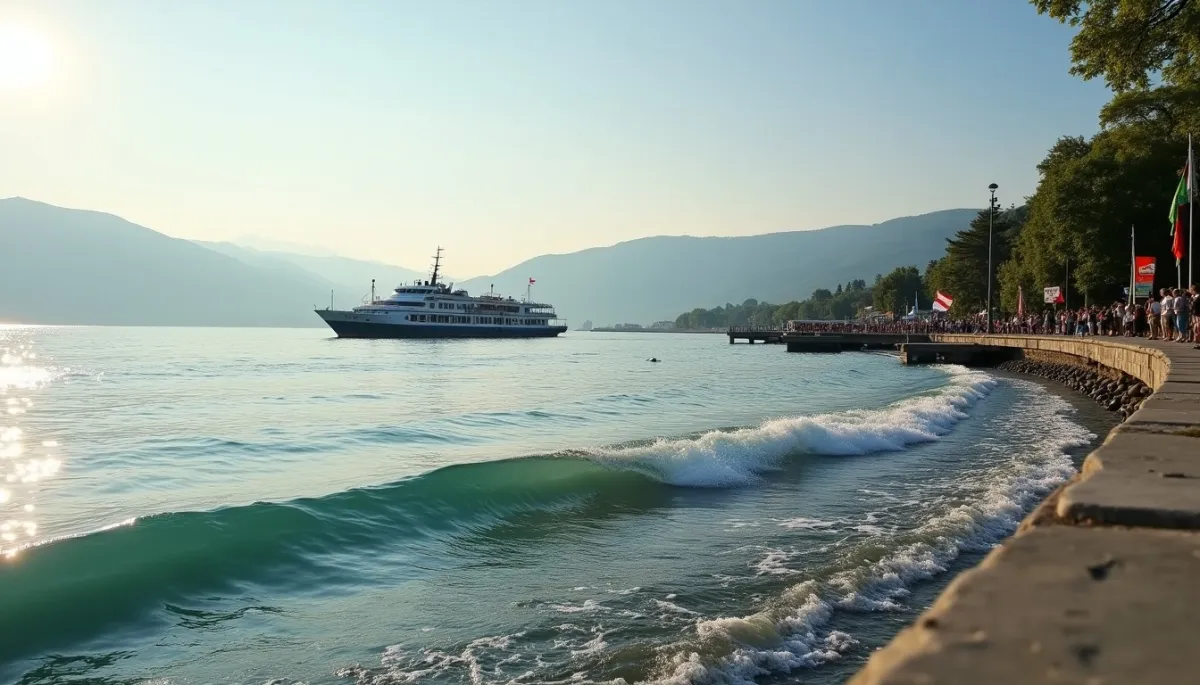
Sudden, rhythmic sloshing can turn a calm morning into a restless shoreline. Imagine standing on the quays at Ouchy or along the Promenade de Genève, as small bays alternately rise and fall, and ferries feel a slow, almost sleepy roll beneath their hulls.
Oscillation vive
On Lake Geneva (Lac Léman), a seiche is not a poetic image, it is a measurable motion. The whole basin can oscillate as a single body of water, producing periods of unrest that last typically around 70 to 80 minutes for the fundamental mode. The effect is visible as a slow rise on one shore and a simultaneous fall on the opposite shore.
These oscillations affect towns that line the lake, from Geneva to Lausanne, then Montreux and Vevey, and reach French shores like Yvoire. In strong events, differences of water level between ends can reach decimetres, and rarely more than a metre, enough to surprise swimmers and unsettle small craft.
Local witnesses, such as ferry captains and lakefront restaurateurs, describe seiches as a slow heartbeat. They report sudden currents near piers, unusual ebb and flow at boat slips, and the curious sight of water flowing backwards in small inlets. Scientists confirm these observations with sensors and long-term monitoring.
Ce qui provoque
Physically, a seiche is a standing wave in a confined basin. It appears when wind stress, rapid changes in atmospheric pressure, or a sudden inflow push the lake’s surface. The energy then reflects off the ends of the basin and interferes with itself, creating a rhythm. For Lake Geneva, the basin length and depth set the characteristic period.
Major meteorological triggers include strong northerly or southerly winds aligned with the lake axis. A rapid drop in air pressure during a storm can also act like a hand slapping the water surface, initiating oscillations. Seasonal factors matter: autumn and spring storms are frequent times for seiche formation.
Research teams from local institutions, including EPFL and the University of Lausanne, use buoys, tide gauges and numerical models to reconstruct these events. Satellite altimetry and high-frequency radars complement in-situ data, allowing scientists to map the seiche pattern and predict likely hotspots along the shore.
Vagues et conséquences
Practical consequences are concrete. Harbors can experience unexpected surges, moorings may strain, and swimmers can be carried by strong localized currents. In urban areas like Geneva, abrupt water level changes complicate port operations and require vigilance from local services.
Historically, the lake has shown it can be dramatic. The Tauredunum event of 563 AD, described in medieval chronicles, is thought to have been a massive landslide that generated waves across the lake and impacted settlements along its shores. While a seiche is usually less catastrophic, it reminds us the lake is dynamic.
Local authorities monitor conditions. Port captains, lifeguards and marina managers post advisories when oscillations are expected. For recreational users, common sense rules apply: avoid anchoring in narrow bays during strong, aligned winds, and secure small craft well when a storm approaches.
Et pourtant
Despite the power of seiches, they are part of the lake’s personality. The phenomena are intermittent and largely predictable with modern monitoring, yet surprises still happen when meteorological extremes align. Climate change, by altering storm patterns and the intensity of winds, could modify the frequency of seiches in the coming decades.
Engineers and urban planners factor seiche scenarios into lakeside development. When renovating quays or designing floating restaurants, authorities consider potential water level oscillations and currents. This pragmatic approach reduces risk while allowing people to continue enjoying the waterfront.
For visitors, a seiche is also a memorable encounter with natural dynamics. Watch from a safe quay, ask a ferry crew about currents, and learn to read the lake: its surface and the flags on the shoreline often tell you more than a calm forecast line.
Thanks for reading, and don't forget, Enjoy Life Moments!