Saint-Saphorin: the intact wine village that inspired Jean-Aneau
🚀 Key Takeaways
- Core concept : A perfectly preserved wine village in the Lavaux terraces.
- Practical tip : Reach Saint-Saphorin by train and walk the vineyard path at sunset; taste local chasselas.
- Did you know : Lavaux was inscribed on the UNESCO World Heritage list in 2007.
Close your eyes, breathe the lake air, and listen to the quiet of stone lanes. You are on the main street of Saint-Saphorin: narrow, paved, with houses that lean toward each other as if to whisper.
Vines like poetry
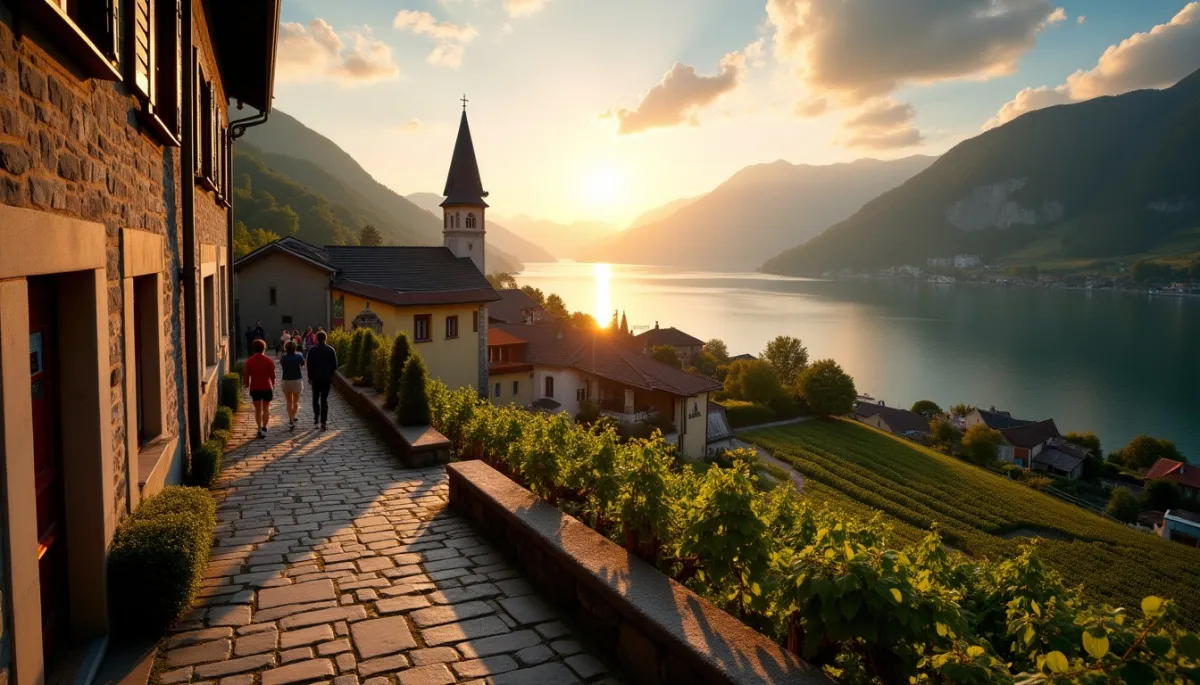
Saint-Saphorin sits on the northern shore of Lake Geneva, between Vevey and Lausanne, tucked into the famous Lavaux terraces. From the village square the vineyards descend in almost geometric rows to the water, a patchwork of sun and stone walls.
The village has a small station on the regional line, which makes it an easy stop for day-trippers and walkers. In autumn, the smell of ripe grapes mixes with lake mist; in summer, the light turns the chasselas grapes to translucent gold.
Lavaux's terraced landscape is listed by UNESCO since 2007, a recognition that has increased visits but also reinforced local pride. Here, viticulture is not just business, it is a way of life that shapes houses, roads and festivals.
Racines et repères
What makes Saint-Saphorin special is continuity. Many cellars are family-run, passed down through generations. Small domaines open their doors for tastings, and you meet winemakers who can trace the parcel of vine on the slope back half a century or more.
Chasselas is the dominant grape in this part of Vaud. Light, dry, and mineral, it pairs perfectly with perch from the lake and with the conviviality of local table culture. Vignerons from Saint-Saphorin regularly take part in regional events, including the famous Fête des Vignerons held in Vevey (the last edition took place in 2019).
History is visible in everyday things: stone terraces, low cellar doors, and a compact parish church that anchors the skyline. The layout of the village preserves medieval patterns, which is why many artists and writers, including Jean-Aneau, have long found it a source of inspiration.
Pourquoi on y revient
Saint-Saphorin invites slowness. Walk the vineyard trail that links the Lavaux villages, sit on a bench above the lake, or enter a wine shop to taste cru from a named parcel. The experience is both visual and gustatory, and it explains why creatives come here to write or paint.
For photographers and painters, the angle of light between the vines and the lake is irresistible at dawn and dusk. For couples and friends, the terraces offer intimate paths and viewpoints. For anyone curious about terroir, the small producers explain their pruning, their yields, and the hand-harvest rhythm that still governs many parcels.
Practical advice: travel light, bring walking shoes. The village is compact but the slopes are steep. Public transport links are excellent; the train stop is a five-minute walk from the center, and many vignerons welcome visitors by appointment.
Un avenir partagé
Tourism has grown since the UNESCO listing. That brings more cafés and visitors, but the community is attentive to balance. Local associations and the cantonal authorities work together to protect view lines and pedestrian routes, while allowing sustainable tourism.
There are tensions: increased second homes and seasonal rentals can raise prices and change rhythms. Yet many initiatives favor local production and short circuits, like village markets and joint tastings that highlight single-parcel wines.
Jean-Aneau's attraction to Saint-Saphorin is telling. He sought a place where landscape and human work are inseparably linked. Today the village offers that synthesis: a living vineyard, stones that remember generations, and an invitation to slow travel.
Thanks for reading, and don't forget, Enjoy Life Moments!