Forest bathing and sylvotherapy: the serenity secrets of Vaud's woods
🚀 Key Takeaways
- Key concept : Forest bathing (shinrin-yoku) and sylvotherapy are mindful, guided practices in nature that lower stress.
- Practical tip : Try a 90-minute walk in Sauvabelin or the Jorat early morning, without phone, breathing slowly.
- Did you know : The trend started in Japan in the 1980s and gained traction in Europe in the 2010s as research linked nature to measurable health benefits.
The forest breathes slowly.
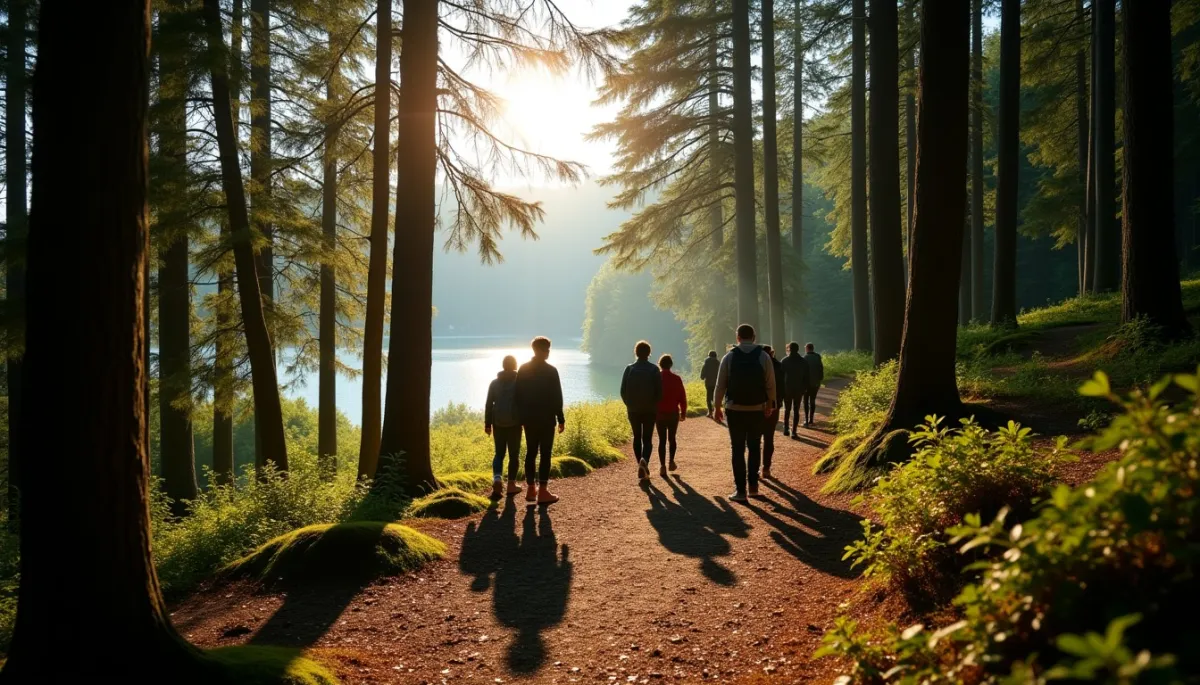
Imagine stepping out of Lausanne's tram into the hush of Sauvabelin, boots on a pine duff path, sunlight filtered through tall trunks, and the distant shape of Lake Geneva. A group of six follows a guide's invitation to slow down, to touch bark, to listen. Conversation fades, replaced by the small orchestras of birds and wind.
Silences partagés
Forest bathing, known in Japanese as shinrin-yoku, is both an attitude and a practice. It asks us to be present, to move slowly, and to engage the senses. Sylvotherapy is a broader term used in Europe, often incorporating therapeutic guidance, breathing exercises, and sometimes gentle movement.
In Vaud, this practice is no longer marginal. Since the 2010s, local guides, health professionals, and community groups have organized regular sessions in well-known woods. Sauvabelin, the Jorat massif above the Broye plain, and the woodlands above Montreux attract people seeking stress relief, improved sleep, or a break from screens.
Empirical studies around the world have shown that time in forests can lower cortisol, reduce blood pressure, and improve mood. While research is evolving, public interest is also measurable: booking platforms and local associations report rising participation in nature therapy events, especially after 2020 when many looked for safe, outdoor ways to care for mental health.
Racines du renouveau
The roots of forest bathing lie in Japan in the 1980s, when authorities encouraged walks in 'forest therapy' sites to promote health. The idea traveled, blending with European traditions of 'taking the air' and modern mindfulness. In Vaud, the landscape is especially favourable: gentle elevations, mixed beech and spruce forests, and proximity to urban centres make short escapes possible.
Local history plays a role too. The Jorat massif, an expanse of beech and oak, has long been a resource for timber and a refuge for wildlife. Its paths, used by shepherds and woodcutters for centuries, are now trails for contemplative walks. Sauvabelin's small forest, near Lausanne's urban fabric, was transformed into a public park in the 19th century and today hosts both families and therapeutic groups.
Guides in Vaud often combine modern techniques with cultural touches: stories of the land, seasonal rituals, and simple biodiversity education. This blend explains why visitors report not only relaxation, but also a renewed sense of place and curiosity about local nature.
Chemins et incertitudes
However, the trend raises questions. Increased visitation can stress fragile ecosystems, especially in smaller urban woods like Sauvabelin. Local authorities and associations have started to manage flows, designing marked trails and offering group sessions to concentrate impact.
Another challenge is quality control. 'Sylvothérapie' is not a regulated profession in Switzerland, so the experience depends on the guide. To choose wisely, look for organizers who explain their methods, who work with health professionals when needed, and who keep groups small. Ask whether sessions are evidence-based or primarily experiential.
Finally, accessibility remains key. Forest therapy is simple, but not everyone can walk long distances. In Vaud, several groups now offer seated sessions, shorter loops, or mixed urban-nature formats so more people can benefit.
Petits gestes, grands effets
For those who want to try, start with a single rule: slow down. Leave your phone on airplane mode, set an intention, and spend at least 60 minutes outdoors. Pay attention to textures, smells, and sounds. A useful exercise is the 5-4-3-2-1 sensory listing: name 5 things you see, 4 you feel, 3 you hear, 2 you smell, 1 you taste or imagine.
Practical routes: the loop around Lac de Sauvabelin in Lausanne, gentle trails in the Jorat near Mézières, and the upper woodlands of Mont Pèlerin offer varied ecosystems and easy access. Bring water, dress in layers, and choose footwear adapted to forest floors.
Finally, treat the forest with respect. Keep to paths when requested, avoid loud music, and leave no trace. In return, the woods of Vaud offer a quiet curriculum in presence, patience, and small wonders.
Thanks for reading, and don't forget, Enjoy Life Moments!