From Pok-Ta-Pok to 2026: the sacred and astrological meaning of the Maya ballgame
🚀 Key Takeaways
- Key concept : The ballgame (known in Classic Maya as pitz, and in Yucatec as pok-ta-pok) was a ritual mirror of cosmology.
- Practical tip : Visit the Great Ball Court at Chichén Itzá at dawn for atmosphere and fewer crowds.
- Did you know : Maya astronomers tracked Venus and solar cycles in codices, and these cycles often informed ritual games.
It still echoes when you stand in a stone court. Imagine the dust, the shouts, the drumbeats echoing against carved reliefs.
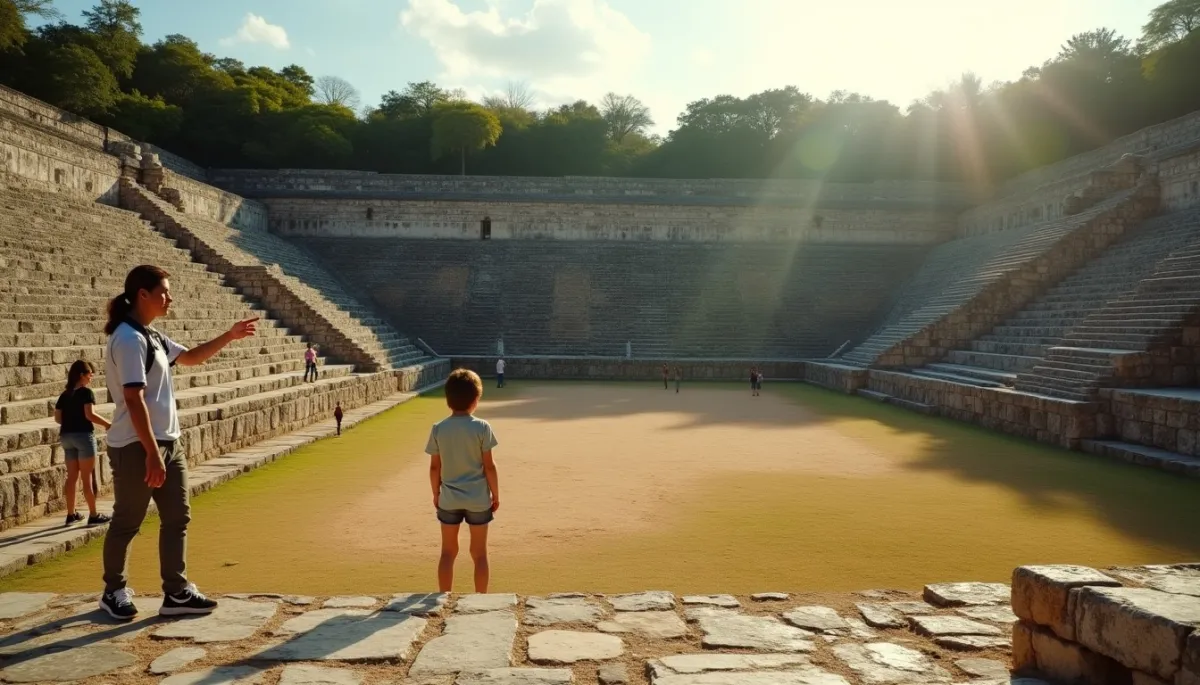
On a humid morning at Chichén Itzá, the Great Ball Court feels alive. The low terraces, the stone rings high on the walls, and the bas-reliefs of players and skulls transport you to an event that was never only a game. It was choreography of power, death, and the sky.
jeu et cosmos
The ballgame connected earth and heavens. In the Popol Vuh, recorded by Dominican friar Francisco Ximénez in the early 18th century from K'iche' sources, the Hero Twins play ball against the lords of Xibalba, a myth that encodes cycles of death and rebirth. That narrative makes the court a stage of cosmic struggle.
Archaeological courts—at Chichén Itzá, Copán, and Uxmal—are aligned and decorated with symbolism: ballplayer masks, skull trophies, and scenes suggesting ritual outcomes. The Dresden Codex, a pre-Columbian Maya book with precise Venus tables (compiled between the 11th and 12th centuries), links planetary cycles to ritual timetables, and scholars such as Anthony Aveni have argued that ballgames could mark celestial events.
Epigraphers note that Classic Maya inscriptions use the term pitz for the ballgame. The modern name pok-ta-pok, popularized by 19th and 20th century archaeologists and local Yucatec speakers, hides a longer history. By 2026, with new studies and community projects, this continuity between myth, observation, and practice is clearer than before.
échos et raisons
Why do we still care in 2026? Because the ballgame reveals how Maya thought combined ritual, politics, and astronomy. Courts were places where elites negotiated power. Victories and sacrifices were public statements, recorded in stone and glyphs for posterity.
Colonial witnesses such as Diego de Landa (Relación de las cosas de Yucatán, 1566) documented the game and its ritual paraphernalia, albeit through a European lens. Modern researchers, using LiDAR, epigraphy, and archaeoastronomy, have shown that court orientations often reflect solar and Venus cycles. These celestial patterns calibrated agricultural and political calendars, hence the game's centrality.
On the ground, contemporary Maya and mestizo communities, and even revival groups playing ulama in parts of Mexico, remind us the ballgame is living heritage. Festivals and archaeological park programs in the Riviera Maya increasingly stage demonstrations that invite visitors to understand ritual meaning rather than mere spectacle.
ombres et avenirs
However, the picture is complex. Not every court aligns to a clear astronomical sightline, and interpretations vary among specialists. Some propose Venus-centered rites, others foreground solar symbolism or local political narratives. The risk of over-reading astronomical intention is real.
Another tension is tourism. Re-enactments can simplify or exoticize rituals. The best programs in 2026 are those co-curated with local Maya voices, offering context and restraint. Conservation challenges also persist: humidity, visitor pressure, and illicit looting have damaged courts and reliefs, prompting new preservation campaigns.
For travelers, the advice is practical. Seek guided visits at Chichén Itzá, Copán's ballcourt reliefs in Honduras if you cross borders, and small-scale ulama matches in western Mexico for a sense of continuity. Read Popol Vuh passages beforehand to catch mythic echoes, and ask guides about calendar cycles such as the tzolk'in and the Venus tables in the Dresden Codex.
In 2026, the Maya ballgame remains a multilayered story: a sport, a state ritual, and a sky calendar carved in stone. Standing in a court, you are not simply watching old stone. You are listening to a civilization that mapped the heavens through dance, leather, and a rubber ball.
Thanks for reading, and don't forget, Enjoy Life Moments!