Roquebrune-Cap‑Martin: Le Corbusier and Princess Sissi's secret refuge
🚀 Key Takeaways
- Key concept : Le Corbusier's Cabanon, built in 1952, embodies the architect's Modulor and simple living.
- Practical tip : Visits are limited, plan ahead and favor morning slots or heritage days.
- Did you know : Local memory links Empress Elisabeth of Austria, "Sissi", to Roquebrune's tranquil microclimate.
Closer to the sea than most houses, the Cabanon seems to listen to the waves.
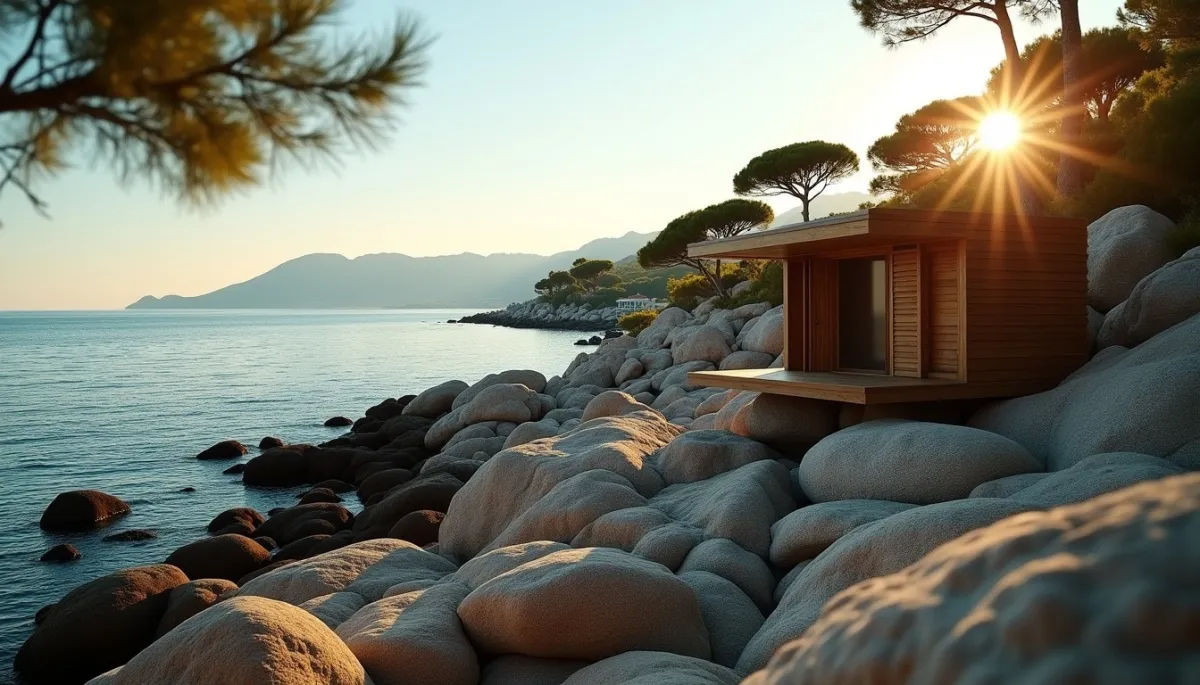
Imagine a wooden box perched on coastal rock, the sun lowering behind Cap Martin, gulls circling, and inside a single compact room where Le Corbusier cooked, slept, and sketched. On clear days you can see Monaco to the west and the Italian coast to the east. The scent of pine and resin mixes with metal and oil from a tiny stove, and the proportions of the room make you feel both sheltered and strangely elevated.
modern refuge
Le Corbusier, born Charles-Édouard Jeanneret in 1887, built the Cabanon in Roquebrune-Cap‑Martin in 1952. It is a small wooden cabin conceived as a radical exercise in essential living. The project answers a question he kept returning to: how to design comfortable human space with the fewest materials.
The Cabanon measures roughly according to Le Corbusier's Modulor system, a scale of proportions derived from the human body. Inside, everything is fitted, from the bunk bed to the wardrobe, making the cabin a living manifesto. The cabin was part of the intimate life of the architect; he spent many vacations there until his death in 1965.
In 2016, Le Corbusier's major works were inscribed on the UNESCO World Heritage List as "The Architectural Work of Le Corbusier, an Outstanding Contribution to the Modern Movement." The Cabanon is included among these works and draws architecture lovers from around the world, eager to see a functioning laboratory of ideas rather than a frozen museum piece.
royal whispers
Roquebrune's history predates modernism. The medieval village, with its ochre houses and narrow lanes, sits above the sea; its origins date back to the early Middle Ages, and its castle keep watches over the bay. This layered history is part of the town's charm and explains why aristocrats and artists have long favored the spot.
Among the town's romantic associations is the memory of Empress Elisabeth of Austria, known as Sissi. While the Riviera hosted many members of European royalty in the late 19th century, local archives and oral tradition preserve tales of Sissi's stays in the area, attracted by the gentle climate and relative privacy of smaller coastal villages like Roquebrune.
Whether full historical record or local legend, the image of Sissi strolling the promenade or retiring to a shaded villa contributes to Roquebrune's cachet. It is one more layer in a place where austere modernism and belle époque elegance share the same horizon.
practical echoes
What does this confluence mean for a visitor today? First, it offers contrasting experiences within a short walk. You can wander the medieval lanes and within twenty minutes be standing beside Le Corbusier's compact cabin, facing the sea. The site encourages slow noticing: scale, light, and texture become the story.
Access to the Cabanon is controlled. It is not an open beach hut, but rather a protected heritage object. Visits are organized occasionally by heritage bodies, the Fondation Le Corbusier, and local cultural services, especially during national heritage days. Book in advance, and if possible choose morning hours for cooler light and quieter access.
Local advice: arrive by train to Roquebrune-Cap‑Martin station, then walk the coastal path or take a short taxi. Bring sturdy shoes for the rocky approach, a hat, and a camera. Respect the site's fragility, do not climb on the cabin, and favor guided visits so you can understand the details of the design.
continuing conversation
Roquebrune-Cap‑Martin remains a living laboratory of contrasts. Urban development pressure and tourist flows challenge small towns across the Riviera, and Roquebrune is no exception. Local councils balance conservation with the need to welcome visitors and maintain residents' quality of life.
Initiatives to preserve both the coastal landscape and the built heritage include controlled access to sensitive spots and investments in interpretive signage. Cultural programming often stages themed walks that link medieval, belle époque, and modernist sites, offering a narrative thread for visitors.
For those who love stories, Roquebrune offers an exceptional one: a place where a modernist icon's private retreat sits under the same sky that once soothed a traveling empress. It is an invitation to slow travel, to listen to local tales, and to measure a visit not by the number of photos but by the intimacy of the moments you keep.
Thanks for reading, and don't forget, Enjoy Life Moments!