Peille and Peillon: forgotten hilltop villages off the tourist map
🚀 Key Takeaways
- Key concept: Two medieval hilltop villages near Nice that escaped mass tourism.
- Practical tip: Visit in spring or autumn, wear walking shoes and start early to enjoy the light from the viewpoints.
- Did you know: Their stone alleys and defensive layouts date back to the Middle Ages, built for lookouts and terraces.
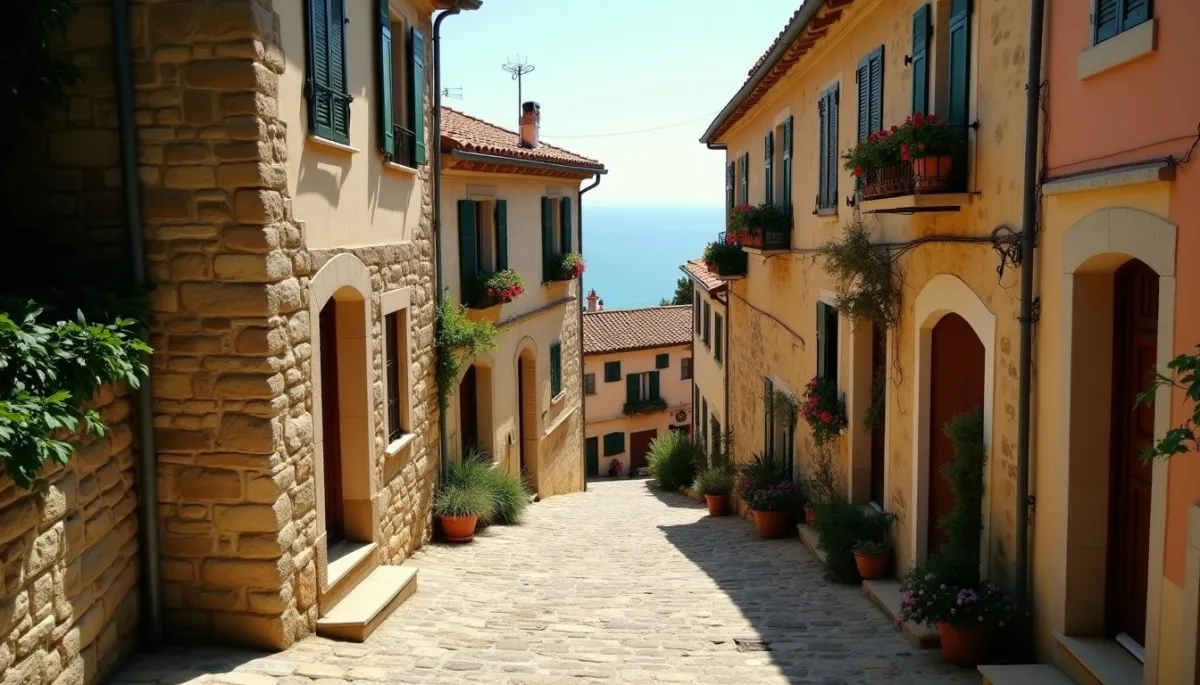
Light slants between narrow stone alleys, and time seems to move at the pace of a cathedral bell. Imagine standing on a tiny square, the sea faint on the horizon, with only a few locals watering their geraniums.
Hanging stones
Peille and Peillon sit inland from Nice, clinging to limestone ridges, their houses stacked like cards. From road level, the villages look like a single silhouette, but once inside the alleys, each corner reveals a new view, a small fountain, or a carved lintel with a date from the Middle Ages.
The consequence is obvious for the curious traveler: here there are no long queues, no souvenir stalls, only stone textures and slow discovery. These villages offer the kind of intimacy that many tourists search for but rarely find on the Riviera, where beaches and luxury hotels dominate the brochures.
For photographers and couples seeking a different French Riviera memory, Peille and Peillon provide an experience of scale and light that contrasts sharply with the coast. Early morning or late afternoon light sculpts the facades, and panoramic points show the sea beyond the hills, reminding visitors how connected the hinterland is to the coast.
Memory alive
The why is rooted in history. Both villages were fortified during the Middle Ages, roughly between the 11th and 14th centuries, to protect communities from raids and to control transhumance routes. The layout, narrow streets and elevated positions are the direct legacy of those defensive choices.
Another cause of their anonymity is modern infrastructure. Unlike coastal towns that expanded with railways and later motorways, many perched villages remained accessible mainly by secondary roads. That limited urbanization after World War II, preserving architecture and village rhythms, but it also kept them off most tourist maps.
Local life remains present. Small businesses, artisans and a few family-run auberges still sustain the villages, often serving recipes that mix Provençal and Ligurian influences, a reminder of the region’s layered cultural past. Seasonal festivals and village fairs, generally held in summer, are moments when these communities reveal their convivial side.
Quiet revival
Contradictions appear when popularity grows. In recent years, guidebooks and travel blogs have started to name-check these villages, and a trickle of visitors has become noticeable. That brings both opportunity and pressure: small cafés welcome new customers, but increased traffic can strain limited parking and change daily life.
Municipal initiatives try to reconcile preservation with welcoming visitors. Restoration projects, often supported by regional heritage funds, refurbish roofs, facades and public fountains while maintaining original materials. Signage in several villages now explains historical features, helping visitors understand what they see without altering the landscape.
If you go, be discreet. Park in designated areas, buy from local shops, and ask permission before photographing people. Practical tips: aim for a weekday in shoulder season, bring cash for small purchases, and follow the main lanes that lead to viewpoints rather than trampling private terraces.
Thanks for reading, and don't forget, Enjoy Life Moments!
Merci d'avoir lu, et n'oubliez pas, Profitez des moments de la vie !
Gracias por leer y no lo olvides: ¡Disfruta de los momentos de la vida!