Private beaches and the coastal law: how the rules have evolved
🚀 Key Takeaways
- Key concept : The 1986 Coastal Law (loi littoral) protects the shoreline but leaves room for concessions of the maritime public domain.
- Practical tip : Prefer municipal beaches for guaranteed access, and check signage for concession limits.
- Did you know : Iconic Riviera private beaches, from Blue Beach (Nice) to La Garoupe (Antibes), operate under municipal or state concessions, not absolute ownership.
Salt on the lips, umbrellas in neat rows. Imagine Cannes at dawn, the Film Festival tents still being assembled and a line of private cabanas already set for the day.
Sable partagé
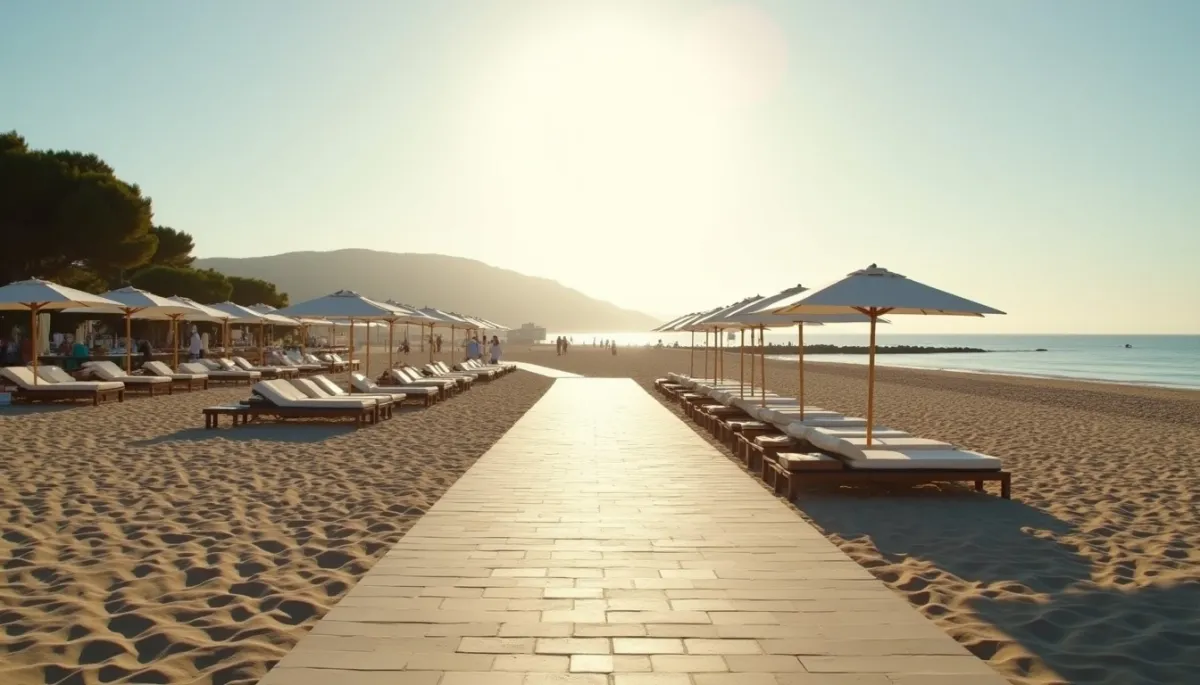
The French Riviera is famous for its carefully tended private beaches, where hotels and beach clubs offer sunbeds, service and a curated atmosphere. These stretches are visible from Saint-Jean-Cap-Ferrat to Nice, Cannes and Antibes, and they form a major part of the coastal experience.
But these private installations rest on public ground. In France, beaches and the strip of land adjacent to the sea generally belong to the public maritime domain or to communal areas; private operators normally obtain a concession to exploit them for a limited time.
That arrangement creates a mixed landscape: sections with free public access, municipal beaches with basic services, and private clubs where access is conditional on payment or reservation. For visitors, the difference is tangible: one stretch offers freedom to roam, the other an organized, serviced visit.
Raisons profondes
The current framework dates back to the law of 3 January 1986, known as the loi littoral. Its core objective was to protect coastal spaces from uncontrolled urbanization, to preserve public access to the sea, and to impose strict planning rules along the coastline.
Since 1986, municipalities have used the tools of the law together with concessions of the maritime public domain to balance tourism development and protection. Beach concessions provide a legal mechanism for hotels and beach clubs to offer services while the land remains under public authority.
Economic drivers explain why private beaches proliferate. Hospitality businesses seek predictable revenue and differentiated offers for guests. On the Riviera, a well-located private beach is a commercial and reputational asset, especially during high season and major events like the Cannes Film Festival.
Tensions visibles
Yet the arrangement is not without tensions. Local associations and state authorities periodically contest excessive privatization of coastal space, arguing that it can limit free passage and the right to access the sea. Debates intensify during hot summers, when demand for space is highest.
Jurisprudence and administrative practice have gradually clarified boundaries, but they also leave room for interpretation. Concession contracts, conditions of occupation and municipal rules vary from one commune to another, which explains the patchwork appearance of the Riviera shoreline.
Recent years have seen renewed scrutiny from citizens and environmental groups, who pressure elected officials to favor public access and ecological protection when renewing concessions or authorizing new installations.
Pratiques locales
In practice, municipalities grant concessions that set conditions: location of walkways, a minimum of free access routes, and restrictions to prevent permanent privatization of the foreshore. The state administration, through prefectural services, oversees rules for the public maritime domain.
Famous private spots such as Blue Beach in Nice or La Garoupe in Antibes function within that legal framework. Their operators pay fees and accept constraints, for example maintaining public passages or limiting constructions on the sand.
For travelers, recognizing signage is essential. Concession notices are generally posted at entry points; they indicate the name of the concessionaire, the period of the concession and often the hours when certain parts remain accessible.
Vers des équilibres
Looking ahead, the challenge is to reconcile economic uses and public rights while responding to climate issues. Rising sea levels and changing storm patterns force planners to rethink long-term concessions and hard infrastructure on beaches.
Some local councils experiment with more flexible, seasonal or low-impact installations. Others reinforce protections, favoring municipal beaches and limiting the footprint of private structures. The goal is to keep the coast attractive and accessible, without sacrificing resilience and public use.
Practical advice for visitors: arrive early in high season, consider renting a spot at a private beach for comfort, but seek municipal or naturist spots if you prioritize free access. Ask local tourist offices about concession rules and preserved pathways.
Thanks for reading, and don't forget, Enjoy Life Moments!