Inside Hôtel du Cap-Eden-Roc: behind the scenes of the world's most exclusive palace
🚀 Key Takeaways
- Core idea : The Cap is not just a hotel, it is a cultural icon of the French Riviera.
- Practical tip : Visit in shoulder seasons (May or September) and reserve a sea-facing table early.
- Did you know : The hotel has hosted generations of artists, actors and heads of state, and remains a Cannes favorite.
Light scatters on the Mediterranean like a promised secret.
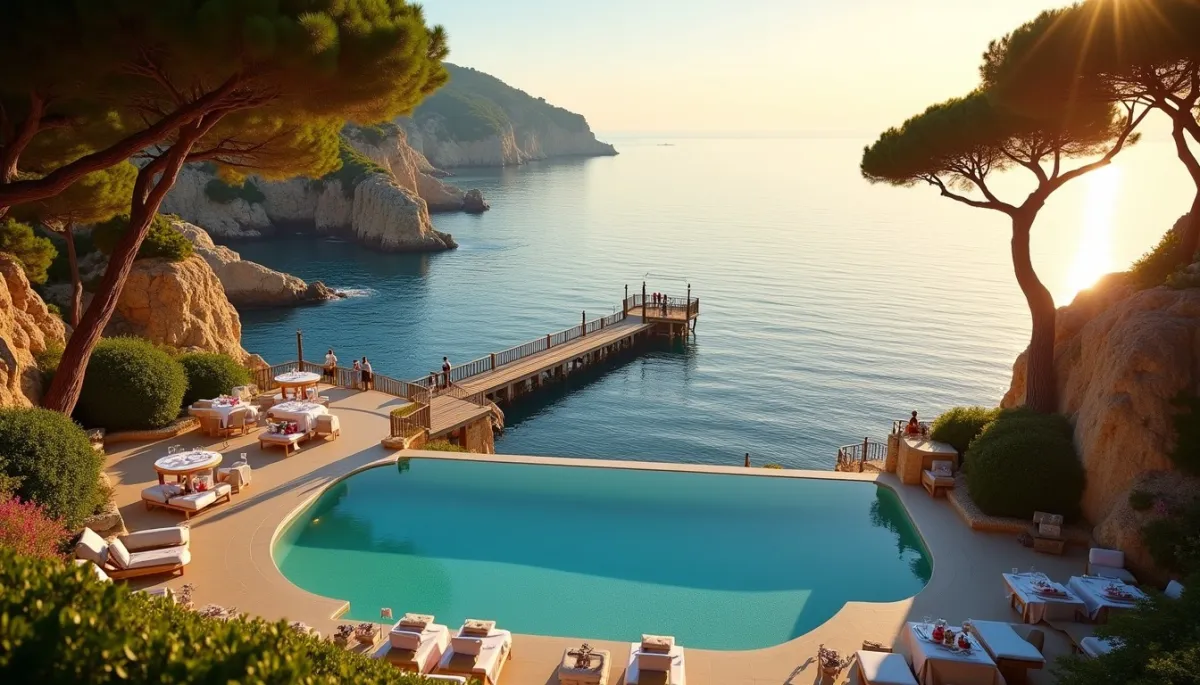
Imagine a gravel drive shaded by stone pines, chauffeurs lowering car doors for guests who step out beneath a discreet façade. To the left, a seawater pool clings to the rocks, its jetty stretching toward a calm blue. Waiting staff move with a practiced silence, while guests—actors, collectors, families—unfurl newspapers or slip into straw hats. This is Cap d'Antibes at its most intimate: the Hôtel du Cap-Eden-Roc.
Riviera et légende
For more than a century, the hotel has been woven into the Riviera story. Located on a rocky peninsula between Antibes and Juan-les-Pins, it offers a rare combination of proximity to Cannes and absolute seclusion.
Its address became legendary as the region developed into a winter and summer refuge for artists and wealthy travelers. Over decades, its terraces and rooms have been the backdrop to private lunches and discreet deals.
During the Cannes Film Festival, the Cap's lawns and jetty transform into an extension of the red carpet. Producing teams, stars and festival-goers use it as a haven: proximity to Cannes (about 20 minutes by car) with the privacy the festival buzz cannot offer.
Les coulisses du luxe
Behind the glamour, there is a strict choreography. Staff schedules are planned months in advance to manage high season flows. Many employees have decades of experience, and roles are highly specialized: from the gardeners who tend the bougainvillea to the maître d' who knows regulars' table preferences.
Service at the Cap relies on invisible standards: timing, anticipation, and discretion. Guests often describe an almost telepathic attention—requests anticipated before they are expressed, interruptions avoided, privacy preserved.
Maintenance of the property follows traditional craftsmanship. Stonework, tile, and wooden shutters are restored by local artisans to preserve the hotel's patina. The seawater pool and the jetty, iconic elements of the site, require year-round upkeep, especially after winter storms.
Visages et histoires
The guest book reads like a social history of the 20th century. Painters, writers, actors and political figures have mixed here. While precise details of private stays remain confidential, the Cap’s aura has been amplified by countless anecdotes—artists sketching on the lawn, filmmakers organizing private screenings, and families returning across generations.
One memorable ritual: breakfast on the terrace at dawn. Regulars cherish that calm hour when the sea is glassy and the scent of pine is strongest. It is in these small moments that the hotel becomes less a spectacle and more a private refuge.
Practical note: if you want to experience this, book a table for sunrise and ask for a sea-facing spot. For stays, prioritize May or September to enjoy warm weather with fewer crowds.
Tensions et avenir
Exclusivity raises questions of sustainability and local integration. Luxury tourism brings jobs but also price pressures for residents. The hotel's leadership has, in recent years, had to balance heritage preservation with modern guest expectations—wellness facilities, digital services, and higher environmental standards.
Another tension is access. The Cap's very charm depends on discretion; yet today’s travelers seek authenticity and connection. The challenge for palaces like the Cap is to offer intimate experiences without becoming closed sanctuaries cut off from local life.
Looking ahead, the hotel appears poised to blend tradition and innovation: maintaining its architectural identity, while adopting greener practices and new hospitality technologies that respect the site's character.
Thanks for reading, and don't forget, Enjoy Life Moments!