Notre-Dame de Laghet: popular devotion and the ex-voto of the Riviera
🚀 Key Takeaways
- Key concept : A living Marian shrine near Nice, rooted in popular devotion since the 17th century.
- Practical tip : Reachable by car in about 25 minutes from Nice, best visited in the morning for quiet and light.
- Did you know : Ex-voto come in many forms, from crutches to small plaques, each telling a personal story.
Light, incense and murmured thanks. Imagine stepping into a small stone church where the walls are covered with tokens of hope.
une scène vivante
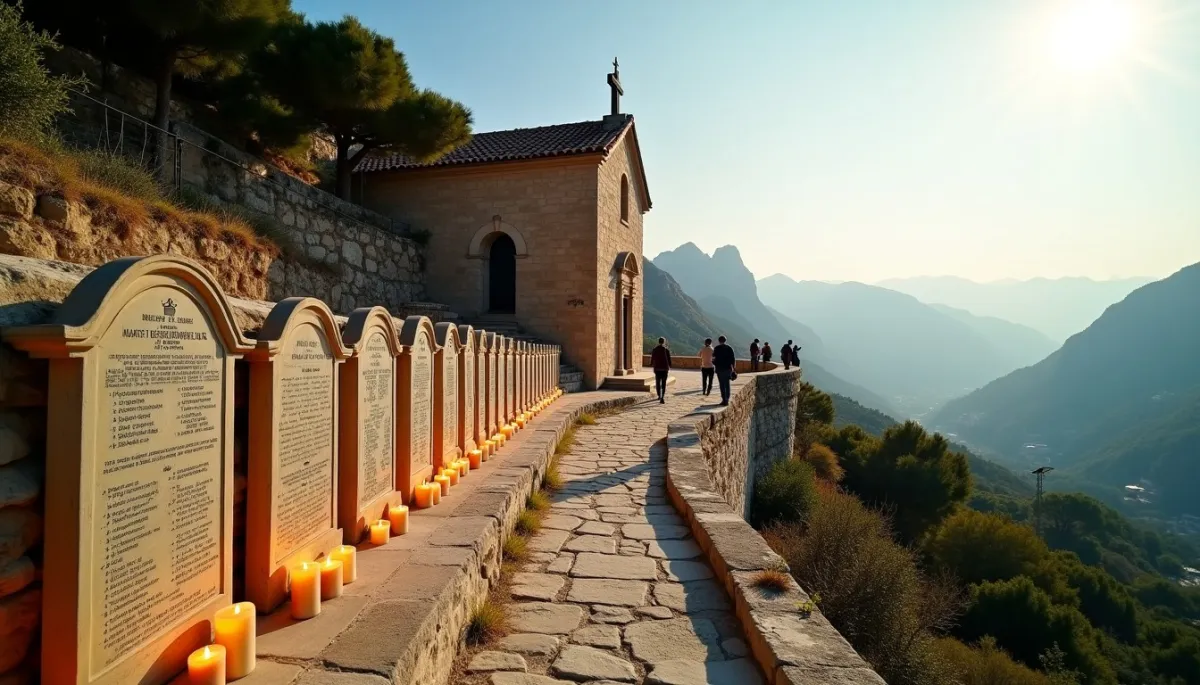
The sanctuary sits in the hamlet of Laghet, in the commune of La Trinité, a short drive from Nice. On any ordinary weekday you will find an elderly woman kneeling, a family leaving a bronze heart, a volunteer lighting a line of candles. The scent of melted wax mixes with the resin of wooden ex-voto; sunlight filters through stained glass and falls on a small, revered statue of the Virgin Mary.
Visitors talk in low voices. Some trace the outline of a plaque, others examine tiny metal legs, painted boats, or photographs fixed to the wall. Each object is an answered prayer, a memory anchored in matter. The scene is intimate, almost domestic, more like a family album than a museum.
The atmosphere explains why Laghet is both a tourist stop and a pilgrimage site. It is a place where local identity, faith and popular art meet, offering immediacy that draws curious travelers and faithful alike.
la ferveur populaire aujourd'hui
Laghet is primarily known for its popular devotion. Catholics and non-Catholics come to light candles, leave petitions, and deposit ex-voto as acts of gratitude. This practice, common across Mediterranean shrines, remains vibrant here. Pilgrimages intensify around Marian dates, notably in May, the month traditionally dedicated to the Virgin, and in August for the Assumption celebrations.
The ex-voto collection is remarkable for its variety and intimacy. You will find paper notes, wooden plaques, small metal limbs, crutches, representations of houses, and photographs. Many are anonymous, others signed with first names and dates. They document illnesses healed, safe returns from sea, fulfilled promises, births and personal conversions.
Local associations and volunteers help preserve this heritage. Restoration efforts in recent decades have focused on cataloguing and conserving fragile offerings, while keeping the devotional use of the sanctuary alive. The coexistence of conservation and living practice is a careful balancing act.
racines et histoires
Laghet's reputation as a Marian refuge dates back several centuries. While the exact origin stories vary in local memory, the site has been a place of pilgrimage since at least the 17th century. Over time, folkloric accounts and church records merged, producing a dense tapestry of narratives that locals recount with pride.
Families from the Alpes-Maritimes and neighboring Liguria traditionally made the ascent on foot. The route offered not only spiritual consolation but also social cohesion, a shared experience that reinforced village ties. In the 19th and 20th centuries, La Trinité and Nice residents continued this practice, adapting rituals to modern times while preserving core gestures.
Artists and writers have occasionally been drawn to Laghet for its raw humanity. Photographers document the ex-voto as vernacular art, while ethnographers study the way personal devotion becomes public display. These external gazes help situate Laghet within broader studies of popular religion and material culture.
tensions et perspectives
Keeping a living sanctuary open to pilgrims and tourists raises concrete questions. How to preserve fragile ex-voto without sterilizing the place? Which objects should be conserved in situ, and which transferred to archives? Local authorities, the diocesan curia and associations have discussed these issues, seeking compromises that respect both devotion and heritage protection.
Another tension touches authenticity and tourism. As Riviera tourism grows, so does the number of casual visitors. That can bring funding for conservation, yet it may also transform intimate practices into spectacles. The sanctuary responds by promoting respectful visiting rules and guided moments that explain the significance of ex-voto.
Looking ahead, digital initiatives offer new solutions. Some projects aim to digitize ex-voto inventories, creating online galleries that let researchers and descendants consult records without handling originals. These tools help link personal stories with wider historical contexts, while preserving material objects for future generations.
For a visitor: come early, speak softly, and allow time. Read a few plaques, ask a volunteer about local traditions, and consider leaving a small token if you feel moved. The real gift of Laghet is its testimony to ordinary lives, made sacred by gratitude.
Thanks for reading, and don't forget, Enjoy Life Moments!