The Negresco story: the palace that survived two world wars
🚀 Key Takeaways
- Key concept : A haven of art and history since 1913.
- Practical tip : Visit the Grand Salon and book afternoon tea on the Promenade side.
- Did you know : The hotel was requisitioned during both world wars and later classified for its heritage.
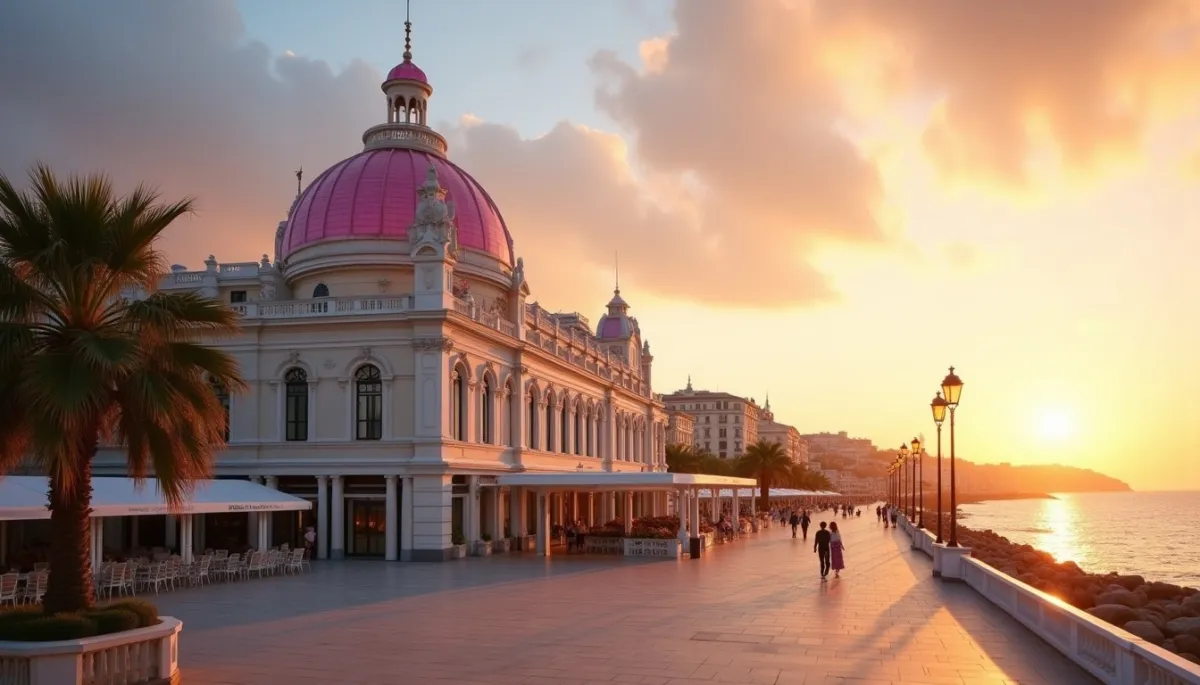
Step inside and you almost hear the sea applaud. Imagine walking along the Promenade des Anglais at dusk, the pink glazed dome glowing above, bellmen in historic livery guiding you through a lobby filled with paintings, mirrors and a Baccarat chandelier that dates back to the hotel's early years.
seuil d'une époque
Opened in 1913, Hôtel Negresco was the audacious project of Henri Negresco, a Romanian-born hotelier who commissioned architect Édouard-Jean Niermans to create a palace on Nice's seafront. The building's Belle Époque silhouette and its now-iconic pink dome immediately stamped the Promenade des Anglais.
Shortly after the inauguration, Europe plunged into the First World War. The palace's role changed: like many grand hotels, it was requisitioned and partially transformed to tend to the wounded. The glamour of 1913 gave way to a practical, civic duty.
Between the wars, the Negresco reclaimed its splendor. Aristocrats, industrialists and artists came to the Riviera's bright light, and the hotel became a stage for interwar elegance, receptions and cinematic soirées.
traces et raisons
The Second World War brought new trials. After 1940, Nice experienced Vichy administration, then Italian, then German occupation. The Negresco was again requisitioned, its salons occupied by officers and authorities. The building survived rationing, requisitions and the turbulence of liberation in 1944.
Survival owed as much to structure as to will. The solid masonry and careful urban position spared it from the worst of Allied bombings, while successive managers and staff protected furniture and artworks as best they could, storing fragile pieces until peace returned.
Post-war reconstruction and Riviera tourism's boom restored the hotel's economic role. In 1957, Jeanne Augier acquired the Negresco and shaped its destiny for decades, curating an extraordinary collection of paintings, furniture and curiosities that today read like a private museum.
entre splendeur et futur
Official recognition came later: façades, roof and certain interiors have been classified (Monuments historiques), a legal protection that anchors the Negresco in France's patrimonial map and obliges careful restorations.
Yet preservation raises questions. How to reconcile a static heritage with modern expectations of comfort and sustainability? Recent renovations have blended technological upgrades with strict respect for original aesthetics, demonstrating that luxury and conservation can coexist.
For visitors, the advice is simple: don't limit your visit to a photo. Book the Grand Salon, ask about the collection, and take time to listen to the anecdotes of long-serving staff. They are the human archive of a palace that has seen the world change, and kept smiling.
Thanks for reading, and don't forget, Enjoy Life Moments!