Mountain wildlife: chamois and marmots, Montreux’s high neighbors
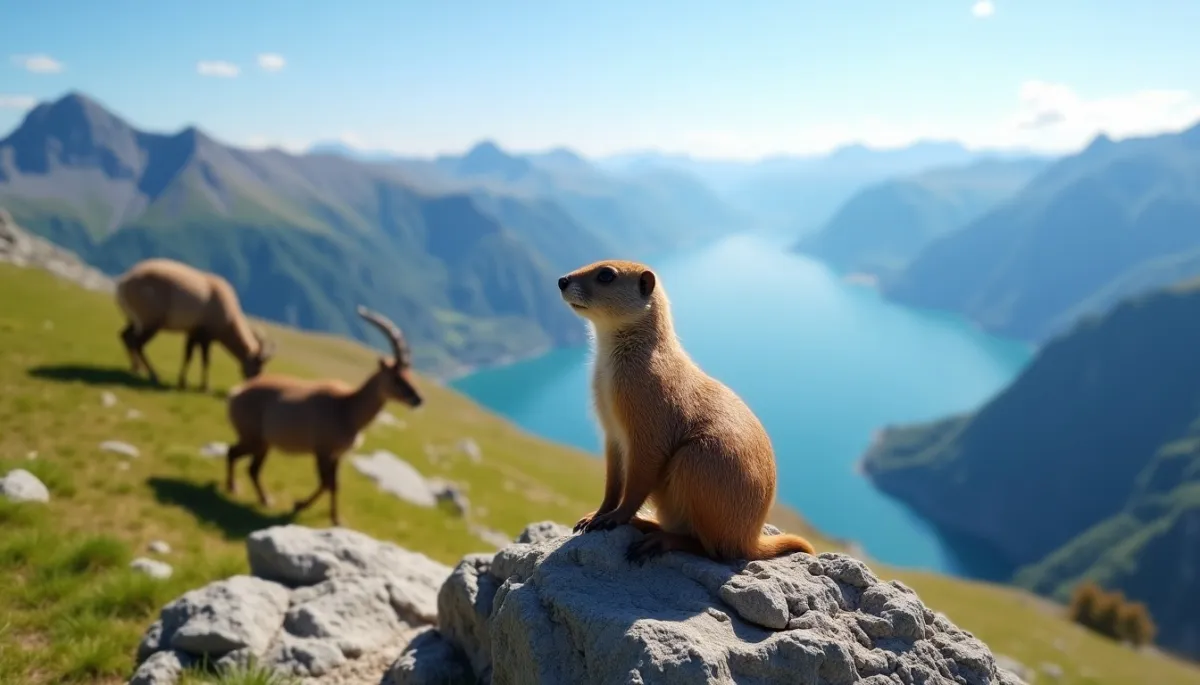
Sun on the limestone, the distant clack of the cogwheel train, and a marmot standing sentinel on a stone, whistling at a passing hiker. That instant brings the high Alps into sharp, intimate focus.
Right away, the presence of chamois (Rupicapra rupicapra) and alpine marmots (Marmota marmota) above Montreux has visible consequences for both visitors and landscapes. Their trails braid the pastures and scree, they shape vegetation by grazing and burrowing, and they have become icons of the Riviera’s mountain identity.
🚀 Key Takeaways
- Key concept : Chamois and marmots are integral to the Vaud pre-Alps ecosystem and to the visitor experience above Montreux.
- Practical tip : Best sightings at dawn or late afternoon for chamois, midday for marmots; keep distance and use binoculars.
- Did you know : The summit train to Rochers-de-Naye offers one of the easiest access points to observe marmots in a high-alpine setting.
Juin-juillet : traces visibles, anecdotes et rencontres
In early summer the high pastures near Les Avants and up toward Glion become a theatre. Tourists returning from the Rochers-de-Naye cogwheel train often recount marmots sunbathing on rocks near the path, or the sharp silhouette of a chamois on a ridge above Lake Geneva.
Concrete stories abound. Guides on the Montreux–Glion–Rochers-de-Naye line point out marmot colonies that habituate to visitors yet remain wild. Hikers on the trail to Dent de Jaman tell of a female chamois leading her young along a narrow ledge, a reminder that these animals use steep terrain to avoid predators.
These encounters have economic and cultural consequences. Local mountain restaurants, seasonal refuges and guided-walk operators advertise wildlife as part of the attraction. Photo-amateurs and families bring binoculars. But frequent sightings also require rules, to avoid habituation and stress for the animals.
Août-septembre : pourquoi ils comptent, causes et rôles écologiques
Chamois and marmots are not just pretty faces. Marmots aerate soils with their burrows, which can benefit alpine flora. Chamois grazing helps maintain mosaics of grass and shrubs, influencing plant diversity across altitudinal bands.
Historically, both species suffered from overhunting and habitat loss. In the 20th century, legal protections and the decline of rural hunting pressure allowed populations to recover. In the Vaud pre-Alps, managed grazing and protected zones around key summer pastures have helped stabilize local numbers.
There is also a cultural dimension. Mountain fauna figure in local folklore and in the identity of communities from Montreux to Caux. Educational signage on trails and school outings organized by regional naturalist groups make these species living ambassadors of biodiversity.
Octobre-novembre : cependant, contradictions, menaces et perspectives
However, pressures remain. Climate change shifts vegetation zones upward, reducing suitable habitat for cold-adapted species. Increased tourist footfall on popular routes can fragment habitat and lead to habituation, especially when visitors feed animals, which must be discouraged.
There are also management dilemmas. Conservationists recommend mosaic strategies combining protected refuges, seasonal access rules, and information campaigns. Local authorities have experimented with signage and guided tours to channel visitors away from sensitive colonies during breeding periods.
Looking forward, monitoring programs using volunteers and professional biologists are expanding. Citizen science apps allow hikers to report sightings (date, location, photo), which helps map seasonal movements and informs adaptive management. The challenge is to keep the balance between access and protection.
Practical tips: use binoculars, stay on marked trails, leash dogs, do not feed wildlife, and prefer early or late outings for calmer viewing. A small pair of field guides and a downloaded trail map make observations richer and more respectful.
Historical note: the recovery of chamois populations across Switzerland is a conservation success of the 20th century, thanks to hunting regulations and habitat protection. Marmots, once scarce in lower valleys, have recolonized higher pastures as disturbance decreased.
Indiscretion for the curious: if you want a high success rate for marmots without disturbing them, observe quietly from the Rochers-de-Naye summit paths and wait near rocky outcrops where they sun themselves. For chamois, scan ridgelines at dusk from the Dent de Jaman viewpoint or from the slopes above Les Avants.
Thanks for reading, and don't forget, Enjoy Life Moments!