Prestige architecture: when contemporary design meets medieval castles
🚀 Key Takeaways
- Core concept : Adaptive reuse of castles blends conservation and contemporary interventions.
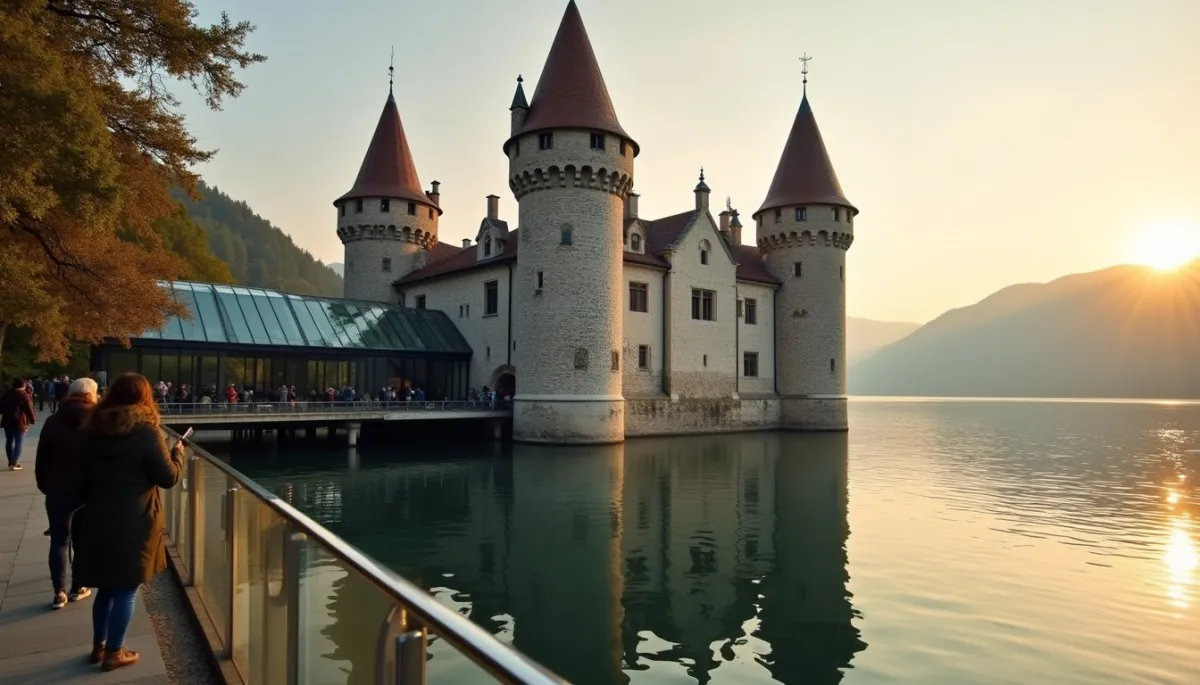
- Practical tip : Look for modern insertions such as glass galleries and discreet light wells when visiting Chillon and Prangins.
- Did you know : Lord Byron's 1816 poem about Chillon helped forge the castle's Romantic image and later drew artists and patrons to the Riviera.
Stone and light together, it feels almost impossible. Imagine standing on the terrace of a restored keep, the lake at your feet, while a translucent gallery stretches from an ancient wall.
On the Swiss Riviera, between Montreux and Nyon, this image is no longer hypothetical. Here, centuries-old castles such as Château de Chillon, Château de Coppet and the estate at Prangins coexist with contemporary interventions. The result is a dialogue where medieval masonry and minimalist materials answer one another, producing places that are at once historic and urgently of the present.
Heritage in dialogue
The first consequence is visual and programmatic. Castles originally built for defense now host museums, event venues and private residences with modern comforts. Château de Chillon, whose foundations date to the 12th century, is a prime example of how a heritage site becomes a living destination. Visitors still walk the dungeons that inspired Lord Byron's "The Prisoner of Chillon" in 1816, but they also experience museum lighting, curated exhibitions and conservation-guided access that rely on contemporary design solutions.
Practical needs shape these interventions. At Château de Prangins, part of the Swiss National Museum network, exhibition spaces and visitor flows were rethought to meet 21st-century expectations, without erasing original volumes. Nearby, private estates around Morges and Vevey have seen glass pavilions and discreet steel-framed extensions added to baroque wings, allowing more natural light and panoramic views over Lake Geneva.
Finally, the region's cultural calendar amplifies the effect. Montreux Jazz Festival, ongoing since 1967, and the UNESCO-listed Lavaux terraces (inscribed in 2007) attract international visitors who expect a high standard of cultural infrastructure. Contemporary architecture around historic sites responds to that expectation by offering improved accessibility, hospitality and exhibition quality.
Why designers converge
There are several causes behind this trend. First, an economic logic: cultural tourism is a growth sector for the Riviera. Owners and local authorities invest in high-quality restorations to attract year-round visitors rather than seasonal crowds. Adaptive reuse is often a smarter financial choice than new construction, because it leverages an emotional heritage asset.
Second, aesthetic and technical motivations. Architects such as Herzog & de Meuron internationally, and Swiss practitioners known for material sensitivity, have shown how to preserve historic character while introducing contemporary language. Techniques like glass insertions, reversed glazing and light wells make medieval interiors legible and liveable without falsifying the past.
Third, regulatory and environmental pressures encourage updating old structures. Improving insulation, integrating geothermal systems and adding low-impact accessibility solutions require modern technical layers. Contemporary design can hide these systems elegantly, keeping the silhouette of a castle while radically improving comfort and sustainability.
Tensions and futures
However, the marriage of old and new is not without contradiction. Purists sometimes argue that modern additions blemish authenticity, while preservationists insist on minimal intervention. Local debates often surface when a private owner proposes a bold glass wing or when a municipality approves a rooftop terrace visible from the lake.
There are also practical limits. Not every castle can accept contemporary interventions, due to archaeological constraints or legal protections. Projects require multi-year studies, archaeological assessments and public consultations. When work is successful, though, it can set a model: sensitive contemporary inserts that respect sightlines, materials and historic fabric.
For visitors and lovers of architecture, the Riviera Suisse offers a living laboratory. Walk the ramparts of Chillon, notice how light has been choreographed into the great hall. Visit Prangins to see how exhibition design stages objects in dialogue with the building. Ask at local châteaux-hôtels about recent restorations; you will hear about local craftsmen, centuries-old stonework and the contemporary engineers who made a new function possible.
Practical tips: go early to avoid crowds at Chillon, combine a visit with the Lavaux vineyards for the full landscape context, and favor guided tours to understand restoration choices. When photographing, include both medieval textures and modern elements to capture the full conversation.
Thanks for reading, and don't forget, Enjoy Life Moments!