The secrets of vine pruning in Lavaux: a titan's work above the void
🚀 Key Takeaways
- Concept key : Winter pruning (mainly Guyot and cordon methods) controls yields and quality.
- Practical tip : Visit in late winter to see vine pruning and follow a vigneron on the vineyard trail from Lutry to Rivaz.
- Did you know : Lavaux has been a cultural landscape on the UNESCO list since 2007, shaped by centuries of manual work.
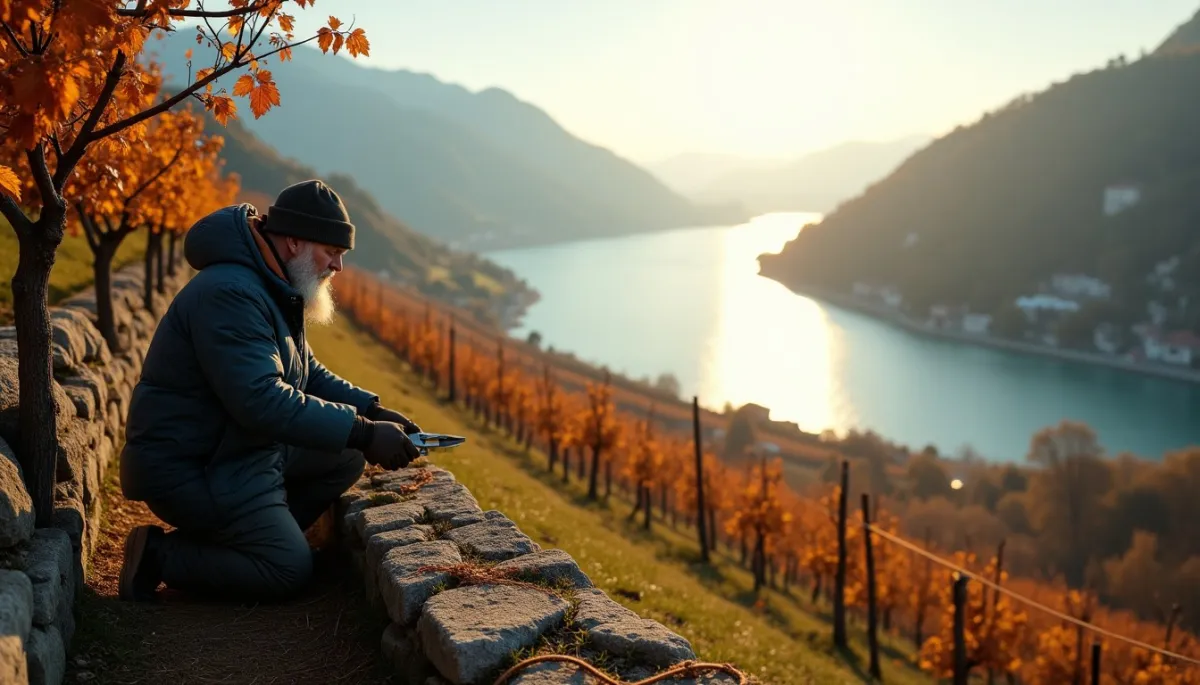
Cold air, sun on slate, and the clipped scent of vine wood. On a February morning, a vigneron kneels on a narrow terrace, scissors in hand, suspended visually between lake and sky.
stone and hands
The terraces of Lavaux are built like a tight staircase along the north shore of Lake Geneva, from Lally to Vevey, crossing communes such as Lutry, Saint-Saphorin and Rivaz. The landscape is compact, with dry stone walls that date back generations. Pruning here is not an abstract agricultural act, it is maintenance of a living monument.
Each winter, between late January and March, teams of vignerons climb these slopes to perform taille d'hiver (winter pruning). They cut the previous year's wood to leave precisely calibrated buds, which determines the number of grape bunches for the coming season. The most common systems are Guyot (simple or double) and cordon de royat, each chosen according to grape variety and microparcel.
The consequence is visible in the glass. Rigorous pruning reduces yield and concentrates flavors. Wines from Lavaux, notably Chasselas, owe a part of their finesse to this strict control. It is also why harvests remain mostly manual; machines cannot replace the discretion of a hand choosing a bud on a 45 percent slope.
why they do it
Pruning is primarily about balance. Removing excess wood regulates the plant's vigor so that sugar and phenolic ripening occur evenly. In a terraced context, this management also preserves soil stability. Fewer shoots mean less wind resistance and less risk of erosion on steep inclines.
Historical reasons matter as well. Lavaux has been cultivated since the Middle Ages, and local techniques evolved to fit the terraces and microclimates. The dry stone walls, oriented terraces and narrow parcels force manual methods. Tradition met necessity: families passed down pruning rules, which became a cultural code as much as an agronomic practice.
There are economic motives too. Quality over quantity sells better on the regional and international market. Since the UNESCO inscription in 2007, wine tourism grew, creating incentives to maintain both visual harmony and viticultural heritage.
difficult beauty
Yet contradictions appear. Younger generations often avoid the backbreaking work, and a shortage of seasonal labor can stress small domaines. In response, some producers invest in light mechanization like winches, portable hoists and cable systems to transport grapes, while keeping pruning strictly manual.
Climate change is another variable. Milder winters can shift pruning calendars, and vignerons experiment with adjusted pruning dates and canopy management to avoid early budburst and spring frosts. Local cooperatives and the Service de la viticulture vaudoise provide yearly advisories based on phenological data.
Despite challenges, Lavaux remains a place where vine pruning is both craft and faith. Watching a season of work unfold is to witness stewardship of a landscape that holds stories, family names and centuries of human adaptation. For visitors, joining a pruning demonstration or a winter walk along the vineyard trail is the best way to feel how much of Lavaux’s identity hangs on a vine cutter's hand.
Thanks for reading, and don't forget, Enjoy Life Moments!