Sailing the old way: the art of the lateen sail on Lake Geneva with the barque La Vaudoise
🚀 Key Takeaways
- Key concept : The lateen sail (a triangular sail set on a long yard) is used on La Vaudoise to navigate Lake Geneva in a traditional way.
- Practical tip : Best months for a public sail are May to September; check the local association for bookings and workshops in Vevey and Lutry.
- Did you know : Lateen rigging comes from Mediterranean seamanship and was adapted across European inland waters for its windward ability and simplicity.
A gust lifts a sliver of linen and the barque answers like a living thing.
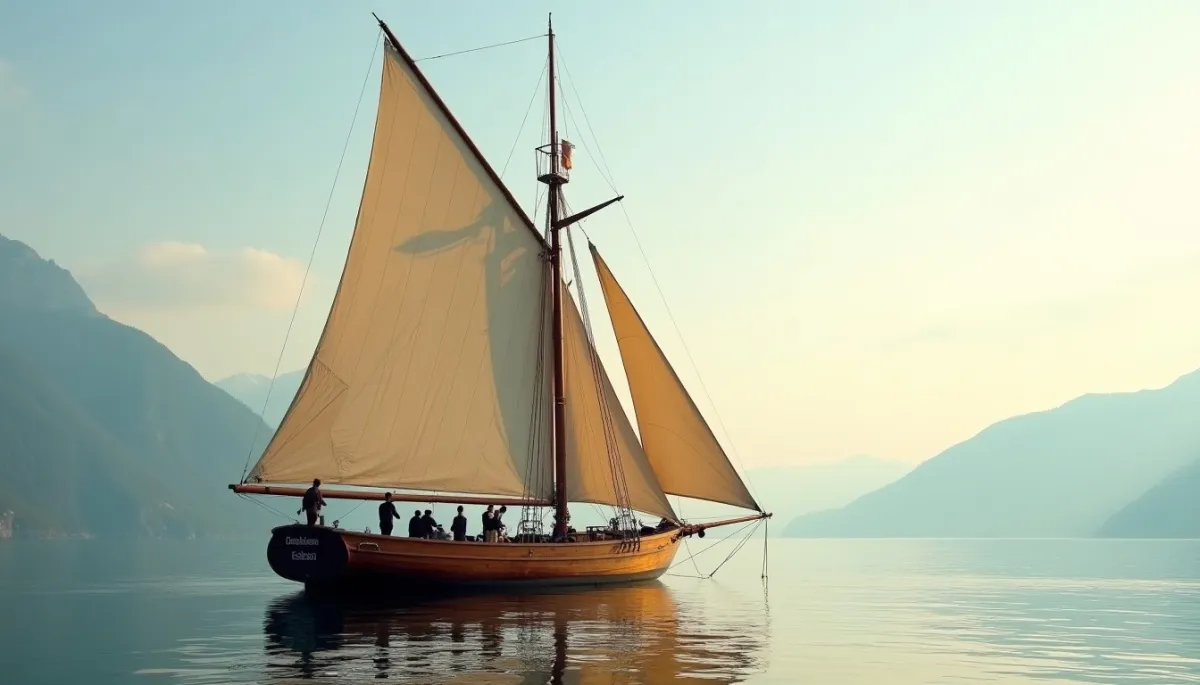
It is early morning on the Riviera vaudoise, near Vevey. The water is a sheet of glass pierced by the silhouette of La Vaudoise, her long yard at an angle, the lateen sail catching the pale light. A handful of volunteers tighten ropes on the wooden cleats, someone hums an old fishermen's refrain, and across the lake the Alps hold their breath. You feel both the slow geometry of the sail and the brief electricity of movement, as if you had stepped into a photograph taken a century ago.
vieux gréement et mémoire
La voile latine, reconnaissable à sa forme triangulaire et à son pic incliné (called the yard), has roots in Mediterranean navigation dating back to late antiquity. It proved efficient for tacking close to the wind, which made it valuable on coasts and inland waters where wind directions change abruptly.
On Lake Geneva, traditional craft using lateen rigs were common among small fishermen and ferrymen in the 18th and 19th centuries. The design was nimble and required a small crew, practical on a lake where sudden local winds, the bise or the föhn, alter conditions in minutes.
La Vaudoise itself is presented today as a living link to that past. Restorations of similar boats in Switzerland intensified in the late 20th century, driven by heritage associations that aimed to preserve both carpentry techniques and seamanship. These projects are as much about wood and tar as about stories and taste: recipes, songs, routes.
voile en pratique
Navigating a lateen-rigged barque is a different rhythm from modern yachting. The yard must be eased and trimmed by hand, the helm anticipates gusts, and every crew member moves with choreographed, almost theatrical gestures. There is no autopilot; there is human weather-sensing.
For a newcomer, a simple rule helps: control the angle of the yard to the wind to balance drive and heel. When tacking, the yard crosses over, and crew reposition themselves quickly to keep the sail from blanketing. It sounds technical, but volunteers and skippers running La Vaudoise offer short workshops where these motions are taught step by step.
Practically, public sails are scheduled in the warmer months, often from May through September. Boarding points vary: Vevey and Lutry are common departure locations on the Riviera vaudoise. Bring layered clothing, non-marking shoes, and a willingness to help — participation is part of the experience.
anecdotes et visages
One memorable morning, a local carpenter spent six months crafting a new mast using ash and oak, following patterns drawn from 19th-century plans. He insisted that the smell of fresh wood was part of the boat's identity. Such stories circulate in the association that cares for La Vaudoise, made of retired sailors, history teachers and young volunteers.
There is also the tale of a crossing in 2018 when a sudden bise tested the crew: they reefed the sail, adjusted ballast, and guided the barque into a sheltered cove near Montreux. No drama, only calm competence. These episodes build trust between the boat and the community, and they attract curious visitors eager to learn traditional skills.
La Vaudoise is both classroom and museum on water. Schools sometimes book educational sorties where pupils compare contemporary engineering to traditional solutions, linking physics, local history and hands-on craft. The result is a living heritage, transmitted palm to palm.
vers un futur salé
Interest in traditional sailing on Lake Geneva has grown in recent years, partly as a reaction to fast, motorized lifestyles. People look for slow experiences that reconnect them to seasons and material craft. Heritage sailing answers this desire by offering tangible practices: hauling, trimming, knotting.
Yet challenges remain. Maintaining wooden hulls and traditional rigging is costly. Funding often mixes public subsidies, ticket sales and volunteer hours. Climate variations also affect schedules: prolonged calm reduces training opportunities, while more frequent violent storms require stricter safety protocols.
Despite these constraints, La Vaudoise and similar initiatives persist because they create social value. They anchor communities, revive local expertise, and offer visitors an authentic way to feel the lake. For someone on the Riviera vaudoise, a sail aboard La Vaudoise is not nostalgia; it is a practical lesson in how past skills can shape contemporary pleasures.
Thanks for reading, and don't forget, Enjoy Life Moments!