How Italy shaped Nice: why its architecture differs from Provence
🚀 Key Takeaways
- Key concept : Nice's architecture blends Ligurian and Piedmontese traditions with French modernity.
- Practical tip : Walk Vieux-Nice, visit Palais Lascaris and Villa Masséna to see contrasts up close.
- Did you know : Nice belonged to the Duchy of Savoy and then the Kingdom of Sardinia until 1860.
The Italian past is visible at first glance.
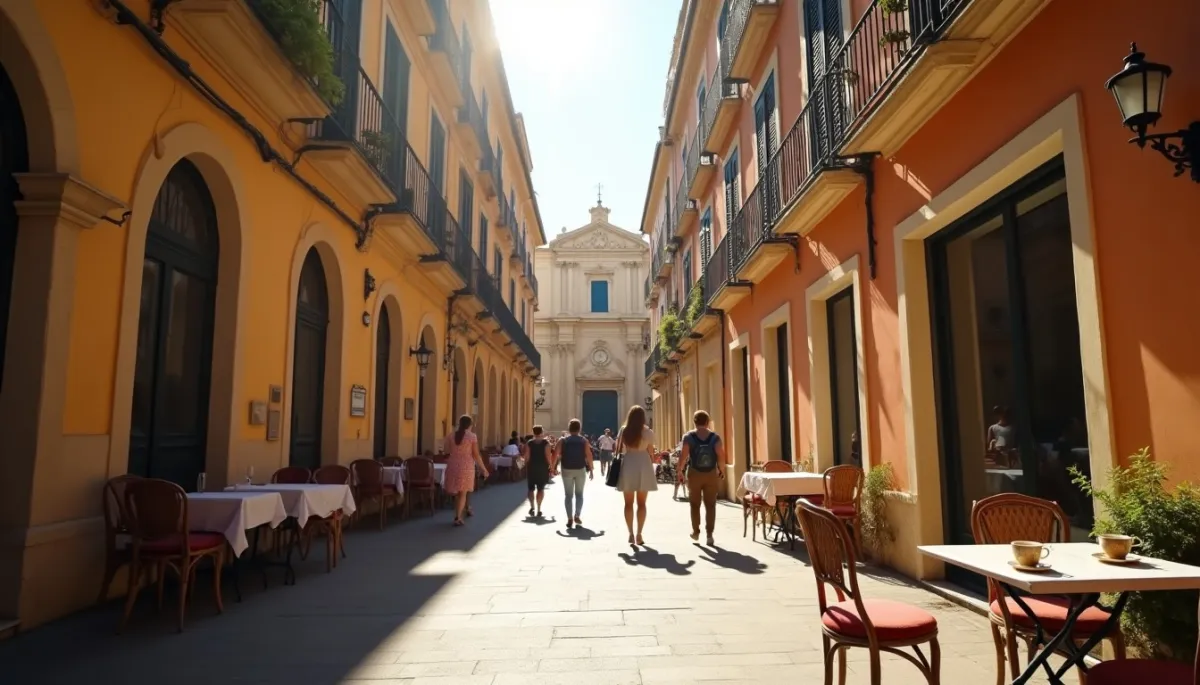
Imagine a summer morning in Vieux-Nice: sunlight warms pastel façades, laundry swings between wrought-iron balconies, and church bells from Cathédrale Sainte-Réparate answer the waves. Tourists sip espresso as locals buy socca at Cours Saleya; the street pattern is intimate, the atmosphere unmistakably Mediterranean in an Italian key.
Facades in conversation
Nice displays architectural features more commonly found in Liguria or Piedmont than in inland Provence. Narrow, vertical houses, pastel stucco, ornate iron balconies and covered passages recall Genoese caruggi. Look at the Palais Lascaris (17th century) or the row of ochre and pink houses along Rue Droite; the piano nobile (main floor) often sits above a shopfront, a configuration typical of Italian port towns.
These visual cues are not mere decoration. They reflect building techniques adapted to a dense, coastal town: light stucco that resists salt air, tall narrow parcels that shade streets, and loggias or porticos offering shelter from sun and rain. By contrast, Provençal villages such as Gordes or Roussillon favor limestone, terracotta roofs and broader, horizontal volumes suited to hilltop life.
From an urban point of view, the Promenade des Anglais and the Belle Époque palaces (Hotel Negresco, 1913) show how Nice absorbed international tastes while keeping an Italianate backbone. The city thus speaks two languages: one of local Mediterranean craft, one of 19th century seaside grandeur.
Transalpine roots
To understand why, we must go back. Nice chose (1388) an alliance with the Duchy of Savoy, and for centuries it lay within Savoyard and later Piedmontese domains. Until 1860, Nice belonged to the Kingdom of Sardinia. Its administrative, linguistic and commercial ties pointed toward Turin and Genoa rather than Paris.
The 17th and 18th centuries saw waves of Italian artists, builders and designers working in the city. Baroque churches such as Sainte-Réparate or the Oratoire Saint-François (17th century) display Lombard and Ligurian baroque traits: dynamic façades, polychrome marbles and expressive interiors. Genoese merchants invested in Nice, and building practices crossed the short maritime border repeatedly.
The 19th century accelerated the mixing. British winter visitors and aristocrats created new promenades, but local builders continued to employ Mediterranean methods. The 1860 annexation to France (Treaty of Turin) changed political affiliation, but the streets, the tongue (Nissart, a Ligurian-Occitan dialect) and the craftsmen remained. Urban modernizers such as mayors in the late 19th and early 20th centuries reshaped avenues, while preserving the dense old fabric of Vieux-Nice.
Between tradition and modernity
The result is a city of contrasts. You can move in minutes from a Genoese-style lane to an Art Deco seafront casino (Palais de la Méditerranée, 1938) or from a baroque piazza to a 19th century English-style villa. This plurality can confuse visitors expecting Provence’s ochres and dry stone; instead they find pastel stucco, slate-like rooflines and ligurian loggias.
There are tensions. Rapid 20th century growth under mayors such as Jean Médecin transformed neighbourhoods and sometimes erased older constructions. Postwar developments introduced concrete and wider boulevards that clash with the old alleys. Conservation efforts since the 1970s have aimed to protect Vieux-Nice and restore façades; local initiatives promote vernacular techniques like limewash rather than synthetic paints.
For the curious traveller: favor walking routes that highlight contrasts. Start at Place Masséna, cross into the old town to see Palais Lascaris and Cathédrale Sainte-Réparate, then stroll the seafront to compare Belle Époque hotels. Talk to a guide about Nissart expressions and pay attention to details: cornices, window shutters with louvers (a Ligurian adaptation), and the way balconies project over narrow streets. You will leave with a mental map that explains why Nice feels, in its bones, delightfully Italian yet firmly Riviera.
Thanks for reading, and don't forget, Enjoy Life Moments!