Roure truffle market: the black gold of the Nice hinterland
🚀 Key Takeaways
- Core concept : The Roure market celebrates the winter black truffle (Tuber melanosporum), prized for aroma and rarity.
- Practical tip : Visit between December and March, go early, bring cash and smell before buying.
- Did you know : Locals call the truffle "rabasse", from Provençal, and truffle hunting here uses dogs more than pigs.
An irresistible scent stops you on the lane.
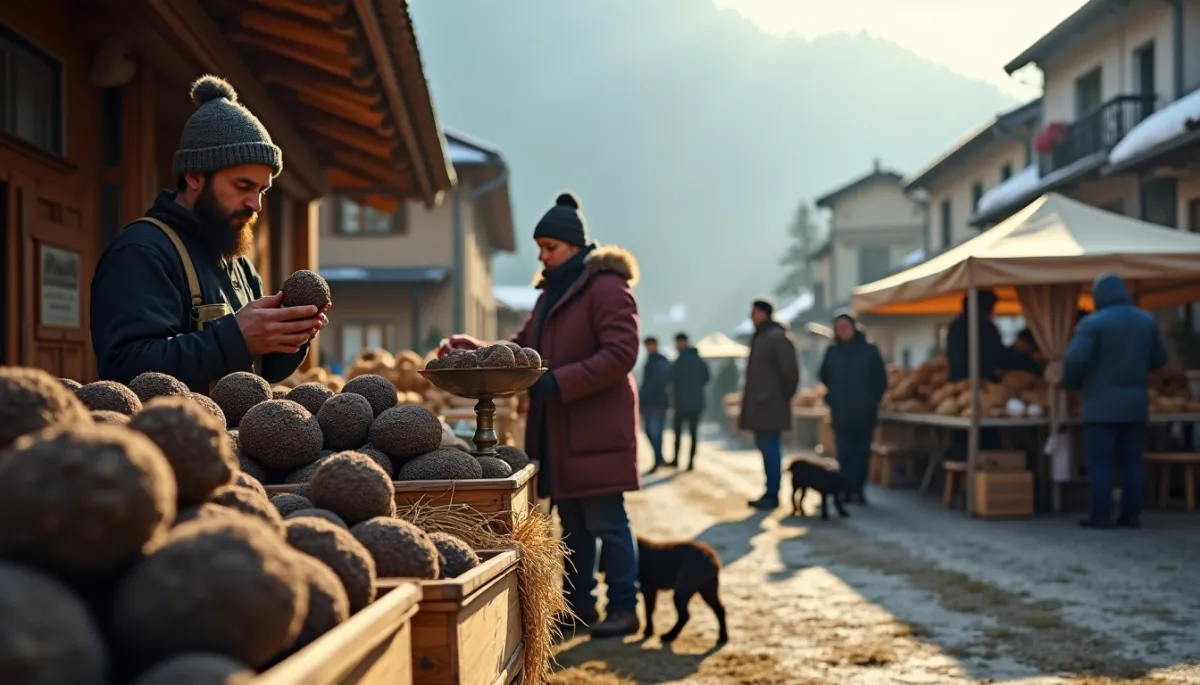
Imagine a crisp January morning, fog lifting from pine ridges, stalls under canvas, wooden boxes of dark, veined truffles laid on straw. Old hands weigh bulbs with a practiced eye, tourists lean in to inhale, chefs from Nice and even as far as Monaco smile, already planning the dish. The square of Roure, modest and steeped in mountain light, becomes a theater for one of winter's most decadent ingredients.
Arôme et marché
Roure's market centers on the winter black truffle, Tuber melanosporum, which develops its musky, cocoa and undergrowth notes from December to March. This seasonality explains why the market becomes a pilgrimage point for gourmets each winter.
Although Roure is a small commune in the Alpes-Maritimes, its market attracts local producers, restaurateurs and collectors from the wider Côte d'Azur and Provence regions. Prices vary with quality and harvest; in recent years market rates have commonly ranged from several hundred to over a thousand euros per kilogram for prime specimens.
Beyond price, the market is a social ritual. Purchases are often made after smelling the truffle, inspecting firmness, checking the veins. Sellers will advise on origin and storage, and sometimes a small tasting of oil or shaved truffle accompanies a sale. This transparency reassures buyers and preserves trust in a product where fraud can occur.
Racines et savoir-faire
The hinterland around Roure has a truffle culture that mixes tradition and modern techniques. Historically, truffles were found by chance in oak and hazel woods. Today, many small producers cultivate truffle oaks or manage woodlands to favor truffle development.
Dogs replace pigs in most searches, because dogs do not eat the truffle on the spot and are easier to train. Local "rabassiers" (truffle growers and hunters) often start training their dogs in autumn, and the partnership between human and animal is passed down in family stories.
Several local associations and fairs, which became more visible from the late 20th century, formalized sales and promoted knowledge. Workshops teach identification and storage (wrap in paper, keep refrigerated, use within days), and chefs run demonstrations on simple preparations like truffled eggs or pasta to showcase the tuber's aroma.
Contrastes et défis
Despite the romantic image, truffle production faces challenges. Climate variability, particularly rain patterns and winter temperatures, directly influences yields. Some harvests are abundant, others lean, producing price swings and uncertainty for small producers.
Another tension is between tradition and commercialization. As demand from global markets grows, some producers scale up, while others resist industrialization to protect local methods and biodiversity. The market in Roure remains largely artisanal, but external buyers and restaurants can push prices and harvest practices.
To protect quality, local actors encourage transparency: clear labeling of origin, small-scale certification, and traceability measures are discussed at municipal and intercommunal levels. These efforts aim to keep Roure's market both authentic and economically viable for families who count on the truffle each winter.
Conseils pratiques
Visit between December and March for the best choice. Arrive early, bring small bills, and don't hesitate to ask the seller to smell and show the truffle's cut cross section (veining indicates ripeness).
To store a truffle, wrap it in paper towel and change the paper daily, refrigerate in a sealed container, and use within 7 to 10 days. For longer keeping, rice is not ideal, it dries the truffle; instead, a gentle immersion in butter or oil will infuse flavors but reduce the fresh aroma.
On the plate, less is more. Shave thinly over warm dishes: eggs, polenta, simple pasta or a potato purée. Heat kills volatile notes, so add truffle at the last moment to preserve its perfume.
Thanks for reading, and don't forget, Enjoy Life Moments!