The renewal of nautical jousting: folklore and competition in Saint-Raphaël
🚀 Key Takeaways
- Core concept : A cultural revival mixing folklore and regulated competition.
- Practical tip : Watch from the Vieux Port or the beach at sunset for the best light.
- Did you know : Nautical jousts (joutes nautiques) are an ancestral Mediterranean practice kept alive in southern France.
Feel the clap of oars and the shout of the jouteur.
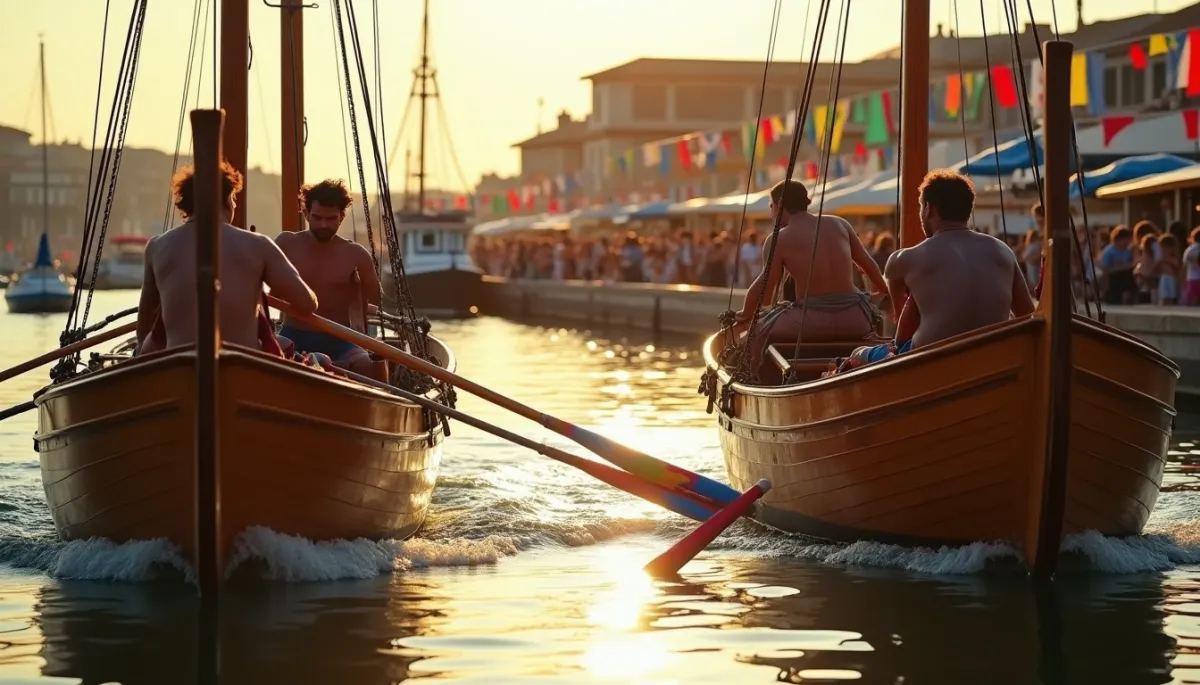
Imagine a narrow wooden barque gliding along the quay, a rower steady at the helm, while two figures balanced on elevated platforms aim to displace one another with long lances. Families crowd the Vieux Port, vendors sell socca and cold rosé, and the air smells of sea and varnish. The scene is both competitive and convivial, equal parts ritual and sport.
Rires et pagaies
Nautical jousting has always been a spectacle, an event where skill is measured in balance, timing and nerve. In Saint-Raphaël the revival has turned those skills into a summer staple. Local associations now organize regular matches during July and August, attracting both local jouteurs and visiting teams from neighbouring towns.
Each encounter is scored, and safety rules have been codified: helmets, approved lances, and referees on patrol boats. The result is a blend of ancient theatre and modern competition, where the spectacle remains intact while athletes perform within clear sporting standards.
The audience plays a role too. Cheering, melodic calls, and traditional songs accompany the clashes. For many residents, these moments reconnect them to maritime crafts and the rhythms of coastal life.
Retour aux sources
Why this revival now? Part of the answer lies in a broader regional impulse to safeguard intangible heritage. Across the Mediterranean, towns like Sète and Martigues have long preserved joutes as emblematic practices. Saint-Raphaël’s renewed interest follows that logic, seeking to affirm a local identity that is both touristic and authentic.
Economic factors matter. Local festivals bring visitors, support restaurants and hotels, and animate small artisan markets. Municipal programs often fund training for young jouteurs, ensuring the transmission of technique and the continuity of teams.
There is also a human story. Retirees who remember childhood jousts teach teenagers the balance and the call signs. Clubs form around shared passion, and inter-village tournaments foster friendly rivalry. This grassroots network is as essential to the revival as any municipal budget.
Entre spectaculaire et régulation
That said, the renaissance faces tensions. Popular demand for grand, photogenic events pushes organizers to stage larger matches, sometimes at the cost of smaller community gatherings. Balancing spectacle with authenticity is an ongoing conversation in Saint-Raphaël.
Safety and regulation introduce another layer. Modern rules protect athletes, but they can alter the original improvisational charm. Organizers work to keep rituals alive, such as the procession of the boats and the traditional music, while applying necessary standards for equipment and crowd control.
Looking ahead, the challenge will be sustainable development. Environmental considerations, like limiting fuel for support boats and protecting marine habitats, are entering the planning. The most durable revivals will be those that combine respect for tradition, athlete training, and care for the coastal environment.
Practical tips: arrive early for a dockside spot, bring binoculars for close-up views, and check the municipal events calendar for scheduled tournaments. If you want to try, many clubs offer introductory sessions, usually starting with balance exercises on land before moving to the barque.
Thanks for reading, and don't forget, Enjoy Life Moments!