Hidetoshi Nakata: from international glory to a spiritual quest to save Japanese craftsmanship
🚀 Key Takeaways
- Concept key : A famous athlete becomes a cultural patron.
- Practical tip : Visit Mashiko, Arita or Bizen to see living craft traditions.
- Did you know : Nakata retired from football at 29 to explore life beyond sport.
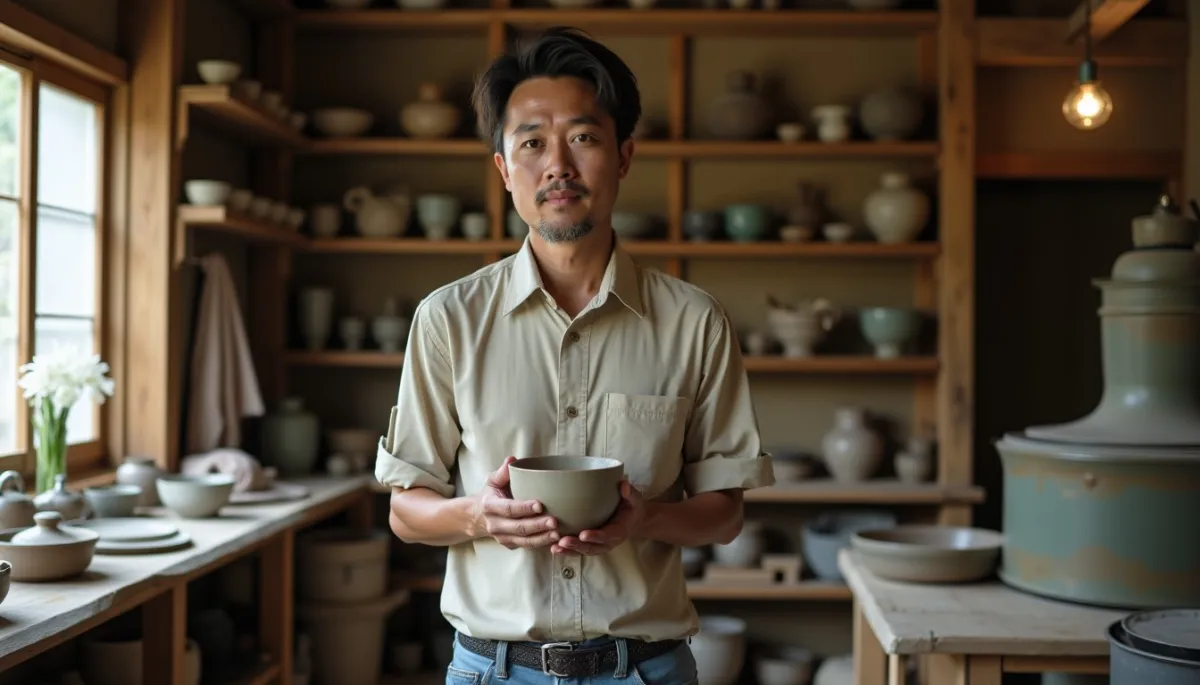
He looks smaller off the pitch, more concentrated than celebratory. Picture him barefoot on a clay-splattered floor, listening to the measured rhythm of a potter's wheel.
From stadiums to ateliers
Hidetoshi Nakata, born in Kofu in 1977, became an icon of Japanese football in the late 1990s and early 2000s. A versatile midfielder, he represented Japan at the 1998 and 2002 FIFA World Cups and built a successful club career largely in Italy's Serie A, where his technical elegance made him recognizable across Europe.
He retired in 2006 at the age of 29, an unusual decision for a player still in demand. Retirement did not mean disappearance. Instead, Nakata reemerged as a tastemaker: he modelled, collaborated with designers, and cultivated a public image that combined minimalism, travel and a discreet spiritual life.
Over the last decade, that image translated into commitments. He invested his curiosity and resources into cultural projects and used his platform to draw attention to Japanese craftsmanship, a sector under pressure from demographic change, globalized production and waning domestic demand.
Why the crafts matter
Traditional Japanese crafts (kōgei) include ceramics like Arita and Bizen ware, textile arts such as indigo dyeing (aizome) and kasuri weaving, lacquerware, and countless regional techniques passed down generation to generation. Many are registered as Important Intangible Cultural Properties or are practised by families whose knowledge spans centuries.
These crafts are not museum pieces. They are living practices tied to specific local ecologies: the clay of Echizen, the kilns of Mashiko, the indigo vats of Tokushima. As young people leave rural towns, master artisans age, and small kilns struggle to compete with mass production, unique skills risk disappearing with their bearers.
Nakata's interest arrives at this fragile intersection between heritage and modernity. He frames craftsmanship as cultural capital: a source of identity, sustainable local economies and aesthetic resilience. His voice, amplified by international fame, helps create markets and curiosity among younger urbanites and foreign collectors.
Hands-on patronage
Rather than restricting himself to donations, Nakata has embraced hands-on patronage. On trips across Japan he visits workshops, sits at the potter's wheel, and buys directly from artisans. These visible gestures do two things: they transmit respect for manual work, and they generate media moments that put small workshops on the map.
He also experiments with collaborations between contemporary designers and traditional ateliers. Such partnerships can rejuvenate forms and open export channels while keeping techniques intact. When a modern designer reinterprets a kasuri pattern or a potter adapts a tea bowl for contemporary dining, the craft evolves without being displaced.
For people who want to act locally, Nakata's example suggests practical steps: buy directly from artisans, attend workshops, and choose experiences over mass-produced souvenirs. Tourism that prioritizes visits to kilns and studios helps redistribute income and creates ambassadors for craftsmanship.
Between reverence and reinvention
There are tensions in this approach. Tourism can commodify rituals; collaborations can dilute authenticity. Conservators argue that preservation requires careful transmission of technique, not just aesthetics. Nakata appears aware of these contradictions and advocates for long-term investment in apprenticeships and regional initiatives rather than one-off publicity.
Successful interventions balance reverence for traditional methods with openness to new uses. Examples exist: pottery towns that run residency programs for young artists, workshops that teach both classic glazes and contemporary forms, and cooperatives that connect artisans to global markets while retaining local control.
Ultimately, Nakata's quest is quietly spiritual. It is about presence, attention and humility. The former footballer who once commanded stadiums now listens to the slow, patient time of kilns and dye vats. His fame buys artisans an audience; his curiosity helps translate centuries-old languages of making into today's conversations.
For readers inspired to follow, begin with a weekend in Mashiko or Arita, enroll in a class in indigo dyeing, or support artisans through specialty platforms that respect fair pricing. Small acts sustain big traditions.
Thanks for reading, and don't forget, Enjoy Life Moments!