The return of ancient grains: why breakfast is becoming a rustic ritual again
🚀 Key Takeaways
- Key concept : Ancient grains are cereals cultivated for millennia (einkorn, emmer, spelt, teff, millet, sorghum).
- Practical tip : Toast and soak kernels before cooking to reduce time and bring out flavor.
- Did you know : Teff has fed Ethiopian communities for thousands of years and makes the fermented flatbread injera.
Morning feels slower again.
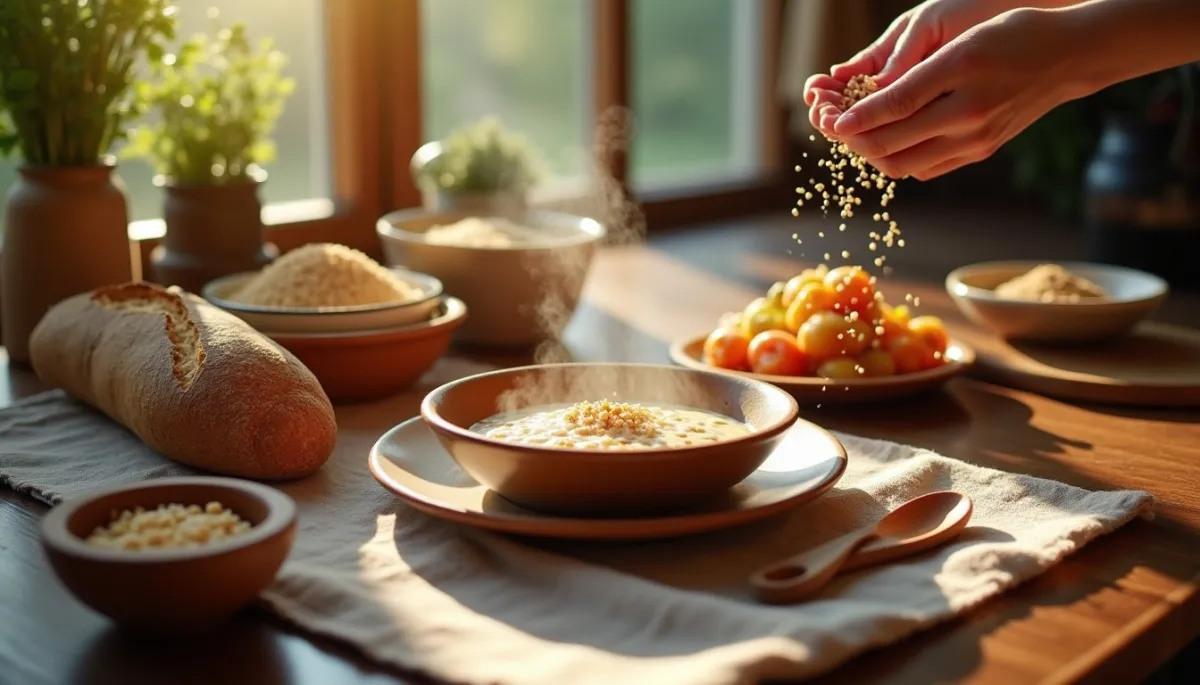
Imagine a wooden table at dawn, a linen cloth slightly rumpled, a steaming bowl of porridge flecked with tiny amber grains, a jar of stone-ground flour beside a crusty emmer loaf. A phone buzzes unnoticed. The ritual is tactile: hands, heat, smell.
Morning reclaimed
The visible consequence is simple: more people buy and cook with so-called ancient grains. Boxes of teff, bags of spelt flour and jars of millet appear in specialty shops and mainstream supermarkets alike. Bakeries advertise loaves made with heritage wheats, and cafés feature porridge blends that name each kernel.
This trend also shows up in numbers. Over the 2010s, specialty mills and small-scale bakers reported growing demand for stone-milled, locally sourced grains. Food festivals and farmers markets increasingly host producers who mill on-site or sell whole kernels, reconnecting consumers to texture and taste.
For consumers, the appeal is both aesthetic and sensory. Ancient grains bring a visual story to the plate, with coarse textures and nutty aromas that contrast with the refined flours of industrial bread. Eating them feels like participating in a lineage of daily practice.
Roots and flavors
Why now? One reason is cultural. Since the 1990s and 2000s, chefs and food activists such as Alice Waters and Dan Barber have promoted biodiversity and local agriculture. Movements like Slow Food and its Ark of Taste have catalogued heirloom varieties, encouraging farmers to keep them alive.
Another cause is curiosity about nutrition and taste. Archaeobotanical records show grains like einkorn were domesticated in the Fertile Crescent around 10,000 years ago. Many consumers perceive these cereals as more nutrient-dense or simply more flavorful. While research varies, whole ancient grains often provide more fiber and micronutrient diversity than refined modern products.
Global foodways also explain the revival. Teff, millet and sorghum have always been staples in Ethiopia, parts of India and the Sahel. Their recent international visibility owes much to migration, cultural exchange, and chefs who incorporate them into menus in Paris, New York and Tokyo.
Questions ahead
However, the return of ancient grains raises contradictions. Popularization can strain small producers. When a local heirloom becomes trendy, seed-saving networks and small mills must scale up or risk being edged out by industrial actors who will market the same name but with different practices.
There are also dietary misconceptions. 'Ancient' does not automatically mean gluten-free or healthier. Einkorn, for example, has a different gluten structure and can be easier to digest for some people, but it still contains gluten. Consumers with celiac disease must remain cautious.
Finally, sustainability matters. Some ancient grains are perfectly suited to low-input agriculture, drought tolerance being a common trait among millet and sorghum. Promoting them can diversify cropping systems and build resilience. Yet widespread adoption requires supply chains that respect small farmers and maintain genetic diversity.
Practical advice: start small. Try a cup of toasted spelt flakes for porridge, cook teff like polenta for a savory breakfast with eggs, or use stone-ground emmer for a dense, flavorful loaf. Soak whole kernels overnight to shorten cooking, and experiment with blends: a little teff goes far in texture and tang.
Ultimately, the ritual matters as much as the ingredient. Choosing ancient grains invites a slower morning, a conversation with a baker, and a connection to landscapes that shaped diets for millennia.
Thanks for reading, and don't forget, Enjoy Life Moments!