Silent yachting: the rise of electric and solar catamarans
🚀 Key Takeaways
- Key concept : Electric and solar catamarans pair twin-hull efficiency with large deck area for solar, creating long-range, low-noise cruising.
- Practical tip : Check range in motoring knots, onboard solar yield and marina charging options before buying.
- Did you know : Makers like Silent-Yachts, Sunreef and innovative builders such as Candela are accelerating adoption with new hulls and battery systems.
Silence feels like luxury again.
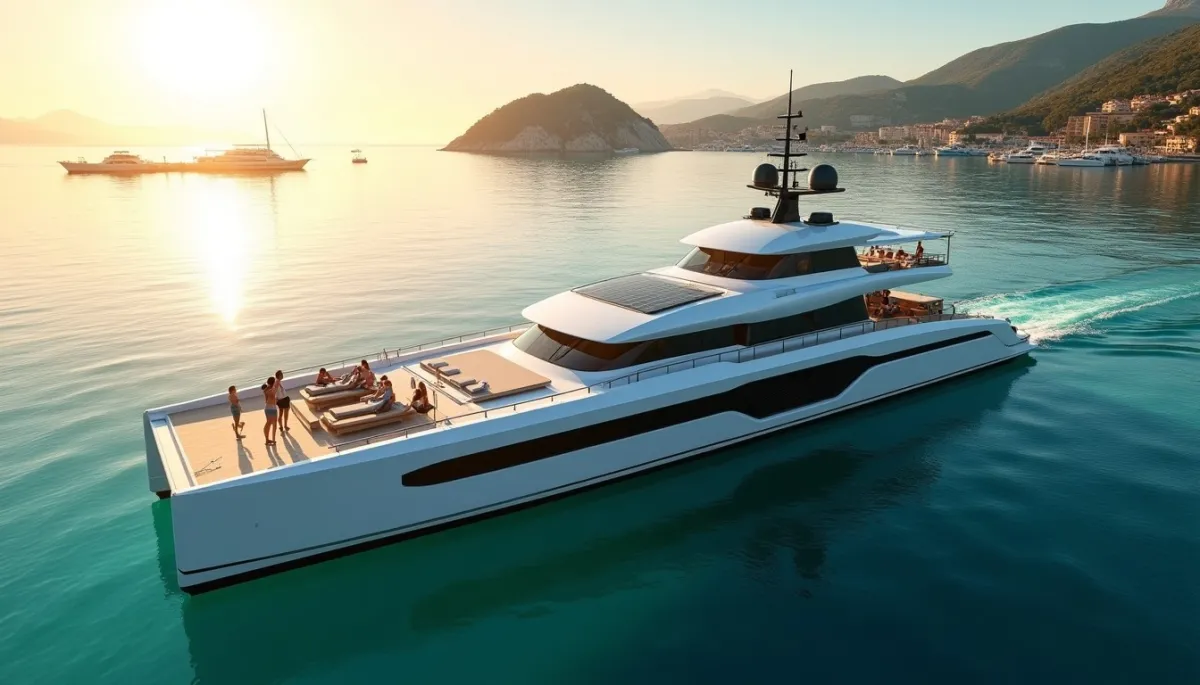
Imagine gliding into Porto Cervo at dawn, no diesel rumble, only the faint hum of an electric pod and seabirds. The deck is covered with low-profile solar panels, champagne glints from a glass, and the crew speaks in normal voices. In the cockpit, a family scrolls through an energy dashboard showing battery percentage, solar input, and projected range, while a distant coastline unfurls like a map of summer memories.
Des eaux plus calmes
The most visible consequence is experiential: silence. Electric propulsion removes vibration and engine noise, turning day passages and anchorages into restful moments. For owners used to conventional yachts the difference is striking, and for charter clients it becomes a selling point.
On practical terms, catamarans are an ideal platform. Twin hulls reduce hydrodynamic resistance at cruising speeds, and the wide deck area makes it easy to fit arrays of photovoltaic panels without ruining the lines. Models such as the Sunreef 60 Eco and Silent-Yachts ranges demonstrate how solar roofs and large battery banks extend autonomy.
Beyond comfort, there are measurable gains. Lower fuel consumption cuts operating costs and carbon footprint. In sensitive areas, from Corsica to the Norwegian fjords, quieter, cleaner boats reduce disturbance to wildlife and comply more easily with local restrictions on emissions and noise.
Le soleil et la batterie
Why now? Battery energy density has improved steadily, while lithium-ion systems became lighter, safer and more accepted in marine use. At the same time solar panel efficiency and flexible mounting techniques allow meaningful onboard generation without compromising aesthetics.
Industry momentum helps. Companies like Silent-Yachts pioneered large solar catamarans with integrated systems, while Sunreef offers bespoke luxury electric catamarans. Parallel innovation comes from makers such as Candela, which proved that foiling electric boats can dramatically cut energy use, a concept applicable to future high-efficiency catamarans.
Market dynamics accelerate adoption. Harbors and marinas across Europe, from Monaco to La Rochelle, invest in shore-power and high-power chargers. Policy nudges and consumer demand for sustainable luxury push yards to offer hybrid or fully electric options as standard on new builds.
Des limites à résoudre
Yet the revolution has limits. Batteries remain heavy and expensive. Pure electric catamarans trade top speed and some payload capacity for energy autonomy. For blue-water cruising, owners must plan carefully: average electric ranges at cruising speed are improving, but transoceanic passages still favor hybrids or gensets.
Infrastructure is uneven. While the Mediterranean's premier ports build chargers, many anchorages and smaller marinas lack reliable shore power. Charging logistics, battery management and cold-weather performance (battery efficiency drops in low temperatures) remain operational challenges.
Finally, lifecycle questions matter. Battery recycling and the embodied carbon of solar arrays are part of the sustainability equation. Builders and owners increasingly request certified recycling plans and second-life battery strategies to close the loop.
Prendre le large
For buyers, practical advice helps. First, define your cruising profile: coastal weekend, Mediterranean season or longer passages. Second, read the energy budget: assess range at your typical cruising speed, solar contribution in peak and off-peak months, and charging options at planned stops.
Consider hybrid setups if you expect long distances off-grid. Look for proven battery brands, reputable BMS (battery management systems) and redundancies in propulsion. Inspect insulation and thermal management for batteries, especially if you cruise in varied climates.
Lastly, experience matters. Test a day charter on an electric catamaran, compare noise levels, and ask to see real consumption logs. The intimacy of a solar-electric cruise is not only ecological, it rewrites what luxury at sea can be: calmer mornings, cleaner bays and a new rhythm of travel.
Thanks for reading, and don't forget, Enjoy Life Moments!