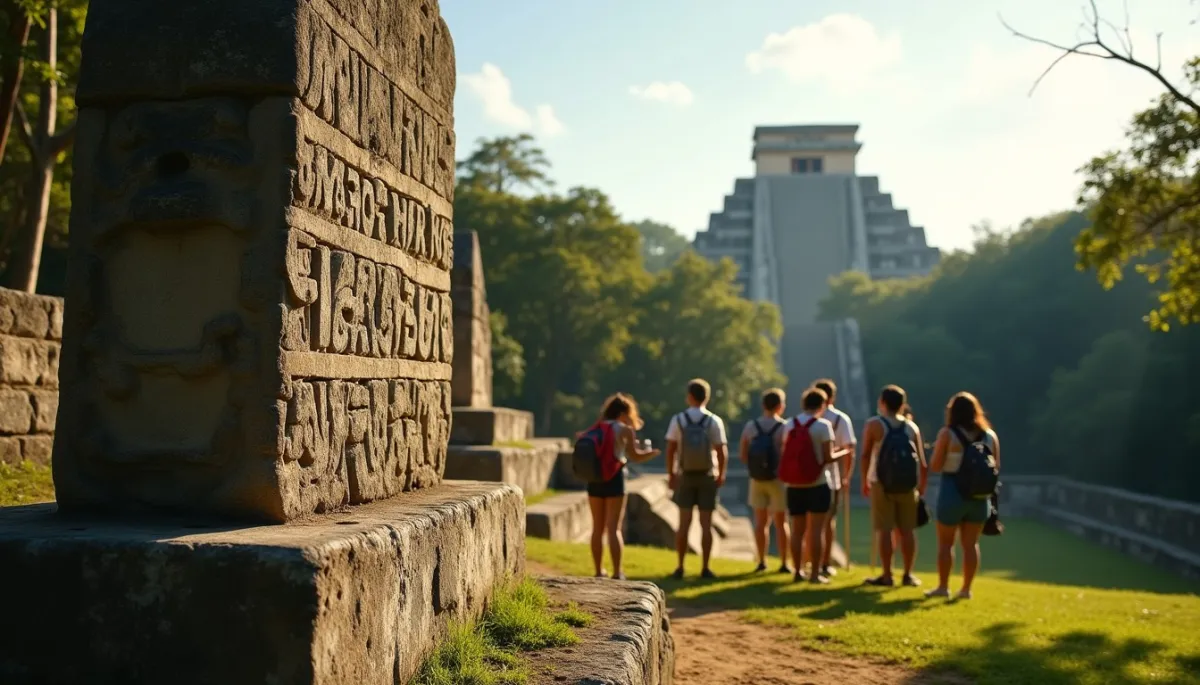
From Chichén Itzá to ultramodern stadiums: the evolution of spectacular architecture in Mexico
🚀 Key Takeaways
- Key concept : Mexican architecture links ritual, public spectacle and identity across 1,200 years.
- Practical tip : Visit Chichén Itzá at early morning or equinox for the serpent shadow, and book stadium tours in advance.
- Did you know : The Temple of Kukulcán has 365 steps, a solar calendar built in stone.
It feels like a dialogue across millennia.
Imagine standing at the base of El Castillo at Chichén Itzá, in Yucatán, as the morning sun warms carved stone. Voices of tour guides mix with the breeze through dry grass, and not far away the great ball court throws back a single, birdlike echo when someone claps. Now picture, in a different city and a different century, a football stadium glowing under LED lights, its façades folded like origami, crowds streaming through retail concourses and digital screens mapping every replay. Both scenes are public theatre, invented with tools and meanings of their time.
Rituels et spectacle
Mexico's spectacular architecture begins with ritual. El Castillo (Temple of Kukulcán), dated roughly between 800 and 1000 CE, organizes cosmology in steps: 365 stair-steps, four façades, and the serpent shadow at equinoxes, a phenomenon that still draws visitors and researchers. Chichén Itzá was designated a UNESCO World Heritage site in 1988, a formal recognition of its cultural scale.
Public architecture continued with the Aztec Templo Mayor in Tenochtitlan, a layered space of ceremonies and political power until the 16th century. These monuments acted as stages for community identity, territorial claims, and astronomical knowledge. The ball court at Chichén Itzá is also an acoustic marvel; clap once at the right point and you hear a chirp like the quetzal bird, perhaps used for signaling during ceremonies.
In the 20th and 21st centuries, stadiums and museums inherited that role of communal spectacle. The Estadio Azteca, opened in 1966, became an arena for national events and two FIFA World Cups. Newer venues, like Estadio BBVA in Monterrey (inaugurated 2015), combine sport, commerce and architecture to produce shared rituals adapted to modern audiences.
Techniques et intentions
Why this evolution? One reason is technology. Stone carving and astronomical alignment dominated pre-Hispanic architecture, while steel, concrete and digital modeling enabled sweeping curves and light façades in the modern era. Parametric design (a method where forms are generated by algorithms) allows architects to create complex, efficient envelopes that would have been impossible to fabricate decades ago.
Architects shape national identity too. Luis Barragán, awarded the Pritzker Prize in 1980, brought color, light and silence into modern Mexican architecture, influencing generations. Ricardo Legorreta and Teodoro González de León continued this project, integrating monumental scale with local materials. Contemporary names such as Fernando Romero (Soumaya Museum, 2011), Tatiana Bilbao and Frida Escobedo explore how buildings can be social instruments, from rich museum shells to community-minded public spaces.
Economic and social drivers matter as well. Growth in televised sports, tourism and urban redevelopment created demand for multifunctional arenas that host concerts, shops and corporate hospitality. Developers invest differently now, seeking returns through mixed use. That's why a single stadium can contain museums, plazas and transit connections, extending architecture's role beyond spectacle to everyday urban life.
Lumieres et tensions
Yet contradictions appear. The same technologies that enable dazzling façades can exclude. Stadium projects sometimes displace neighborhoods, and glossy venues risk becoming islands of consumption rather than civic commons. In Mexico City and other metropolises, debates over preservation versus modernization are alive: how to integrate UNESCO-listed sites, colonial centres and contemporary towers in a cohesive urban narrative?
Sustainability is another challenge. New projects aim for energy efficiency and lower carbon footprints, but retrofitting large existing arenas remains costly. Architects and engineers experiment with solar arrays, rainwater capture and natural ventilation, while cultural stakeholders demand sensitivity when works touch sacred or heritage sites.
For visitors, the opportunity is to read the landscape. Watch how light shapes Barragán walls, time a visit to Chichén Itzá for the equinox spectacle, and tour a modern stadium to see construction techniques up close. Photography is tempting, but respect is essential: sacred monuments deserve calm, and lively stadiums reward punctuality and an appetite for discovery.
Thanks for reading, and don't forget, Enjoy Life Moments!