Deepak Chopra: how an endocrinologist became a bridge between science and spirituality
🚀 Key Takeaways
- Core concept : Integration of mind and body through meditation and Ayurveda.
- Practical tip : Start with five minutes of daily focused breathing to reduce stress.
- Did you know : His 1989 book "Quantum Healing" brought him international attention.
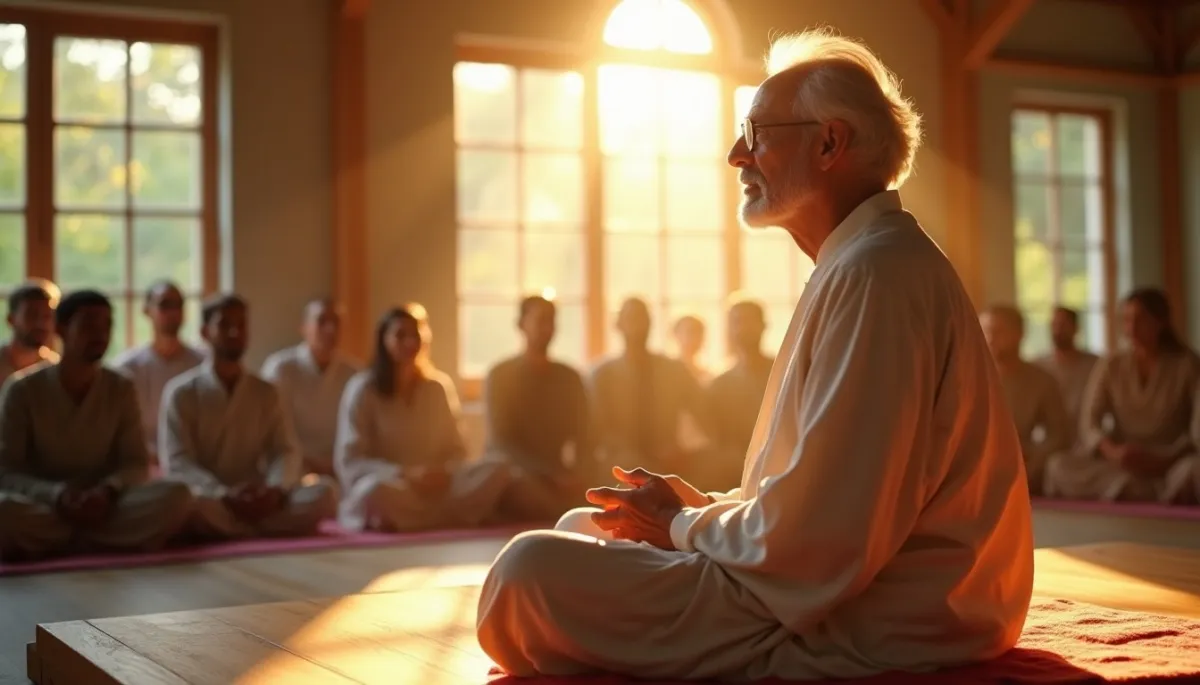
He greets the room with a calm voice. Imagine a sunlit retreat room in Carlsbad, California, the Chopra Center's cushions arranged in semi-circle, an audience of journalists, therapists and curious locals leaning forward as he describes simple practices to lower anxiety and reconnect with the body.
A hybrid voice
Deepak Chopra is both physician and popular author. Trained in India as a medical doctor (All India Institute of Medical Sciences) and later in internal medicine and endocrinology in the United States, he moved from hospital wards to the public stage.
He published Quantum Healing in 1989 and Ageless Body, Timeless Mind in 1993, books that sold widely and introduced terms like "quantum healing" into popular conversation (note : this term is metaphorical rather than a literal application of quantum physics).
Beyond books, Chopra co-founded the Chopra Center for Wellbeing in Carlsbad in 1996, offering programs that mix Ayurvedic advice, meditation, yoga and lifestyle coaching. Celebrities and media appearances, notably on Oprah Winfrey's shows in the 1990s, amplified his reach.
Racines et ascension
His trajectory began in New Delhi where he was born in 1946. In the 1970s he emigrated to the United States and specialized in endocrinology, a field that studies hormones and metabolism, central to how the body adapts to stress.
At the same time he explored Transcendental Meditation and Ayurvedic traditions, influenced by mentors and by the growing Western interest in Eastern practices. This personal synthesis of Western training and traditional Indian medicine became his trademark.
An anecdote often recounted: his appearances on television in the early 1990s. After a series of interviews and talk-show visits, his books crossed over from niche wellness circles to mainstream bestseller lists, and his health retreats began drawing international clients.
Lumières et doutes
Chopra's work sits at the intersection of inspiration and controversy. Admirers praise his accessible language, his emphasis on preventive care and the psychological benefits of meditation. He helped mainstream practices once marginal in the West, such as daily meditation and aspects of Ayurveda.
Critics challenge his mixing of scientific terms with spiritual claims. Phrases like "quantum healing" have been labeled misleading by some scientists because they borrow concepts from quantum physics out of context. These debates highlight a deeper question: how to translate complex science into everyday guidance without oversimplifying.
For readers curious to try elements of Chopra's approach, start small: five minutes of mindfulness breathing, a basic Ayurvedic tip like consistent sleep-wake times, and reputable sources. Keep a healthy skepticism; ask for evidence when claims promise dramatic cures.
Deepak Chopra remains a polarizing but pivotal figure. Whether you see him as a guide, a salesman, or both, his impact on wellness culture is undeniable: more people meditate, talk about stress as a physiological factor, and seek preventive lifestyles than before his rise.
Thanks for reading, and don't forget, Enjoy Life Moments!