The art of ritual bathing: how to transform your bathroom into a true holistic sanctuary
Water can become ceremony again.
🚀 The essentials
- Key concept: Ritual bathing transforms hygiene into an intentional break.
- Practical tip: Add an aromatic element and five minutes of breathing.
- Did you know: Public bathing practices, from Rome to Japan, shape community health.
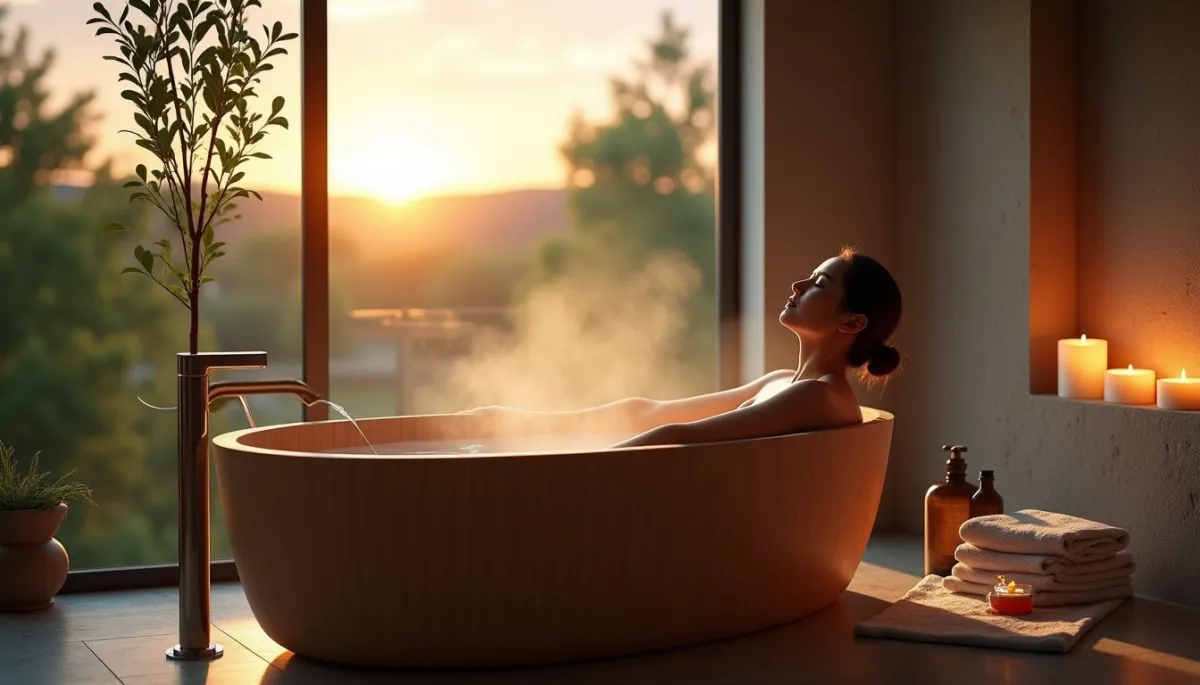
Imagine a small heated room at dusk, fragrant steam rising towards a high window, flickering candles reflected in a stone pool. Towels are folded like promises, a eucalyptus branch hangs from the knob, and the hum of the city dies down until the only sound is your chosen breathing.
This is the essence of contemporary ritual bathing. From Tokyo to a country house in Provence, we are reclaiming the bathroom as an intimate sanctuary, combining ancient wisdom and current needs to soothe stress, improve sleep and cultivate presence.
Consequences: what changes when bathing becomes ritual.
Water as a sanctuary
When we call a ritual bath, behaviors change. Stories from therapists show patients replacing nighttime screen time with a warm bath, and experiencing deeper sleep. Hotels like Six Senses and Aman offer signature baths that amount to therapy, and the home transformations documented online resemble small personal spas.
Historically, bathing has structured societies. Roman baths were civic places of meeting and treatment. The Turkish hammam combined purification and social ritual. In Japan, onsen remains a communal and restorative practice, with etiquette that encourages mindfulness. These are not just luxuries, but social techniques that have influenced public health.
On a daily basis, we find family rites: a grandmother's milk and honey bath, the lavender bath prepared to calm a difficult discussion. These practices produce measurable effects. Studies link hot bathing to reduced muscle tension and improved mood. The implication is clear: intentional use of water makes modern life more livable.
Roots and reasons
Why this movement today? Stress, digital overload and global awareness of mental health are driving a search for private, controllable rituals. The pandemic has reinforced the focus on the home and offered an opportunity to rethink our domestic spaces.
Intercultural inspirations play a role. Designers and practitioners borrow from Finnish sauna sequences, Ayurvedic massages, or dives in the Baltic Sea. Holistic here means taking into account the body, mind and environment (air, water, light). The practical result is often simple: a routine in a few steps accessible on a daily basis.
Economy and design also influence. Smaller homes require multi-functional bathrooms. Brands are responding with compact bathtubs, steam options and calibrated product ranges. Journalists and influencers translate the term “ritual” (repeated and meaningful act) into pragmatic steps that everyone can follow.
Tensions and paradoxes
Yet commercialization and greenwashing complicate the ideal. The wellness industry has exploded, and not every product is sustainable. “Exotic” ingredients are sometimes poorly sourced. There is also a risk that care becomes a performance, a box to check rather than a refuge.
Cultural appropriation is another issue. Borrowing rites without context erases stories. The Japanese onsen is linked to specific communities, the hammam carries social meanings. Practicing with responsibility involves learning the origins, paying homage and adapting with humility.
In the future, bathrooms will be smarter and greener. We will see water-saving rituals, local mineral-rich salts and community knowledge exchanges. Designers will balance technology and material, combining discreet sensors with handmade objects that invite touch and slowness.
Practical secrets
Start small. A warm foot bath with Epsom salt and rosemary for ten minutes can lower cortisol. Add a short rhythmic breath: inhale for four, hold for two, exhale for six, repeat three times. These micro-rituals recalibrate the nervous system.
Use what you have. Infuse the water with citrus peels, chamomile sachets, or a handful of sea salt. Name your ritual and light the same candle to signal to the body that the moment is sacred. Consistency creates the psychological imprint of rest.
Design tips: bring in natural textures (stone, wood), warm lighting, plants and textiles. A tray with salts, a wooden spoon and an intention card is enough. For a shared bathroom, put together portable kits. Above all, adapt the duration, temperature and products to each person’s health needs.
Thanks for reading, and remember, Enjoy life's moments!