Aman Resorts' hospitality: the obsession with minimalism and invisible service
🚀 Key Takeaways
- Core concept: Quiet, curated minimalism delivered with anticipatory service.
- Practical tip: Book a villa or request a villa manager to feel the 'invisible' service firsthand.
- Did you know: Aman, founded in 1988 with Amanpuri in Phuket, now operates about forty properties worldwide.
Silence as a gesture of luxury.
Imagine stepping from a humid tropical road into a courtyard of white pavilions, frangipani scent in the air, the noise of tourism left behind. Staff in soft uniforms acknowledge you, then disappear as if the place itself had taken over the act of hosting. This is an Aman arrival: architecture that reads as calm, service that feels like telepathy.
Architecture épurée
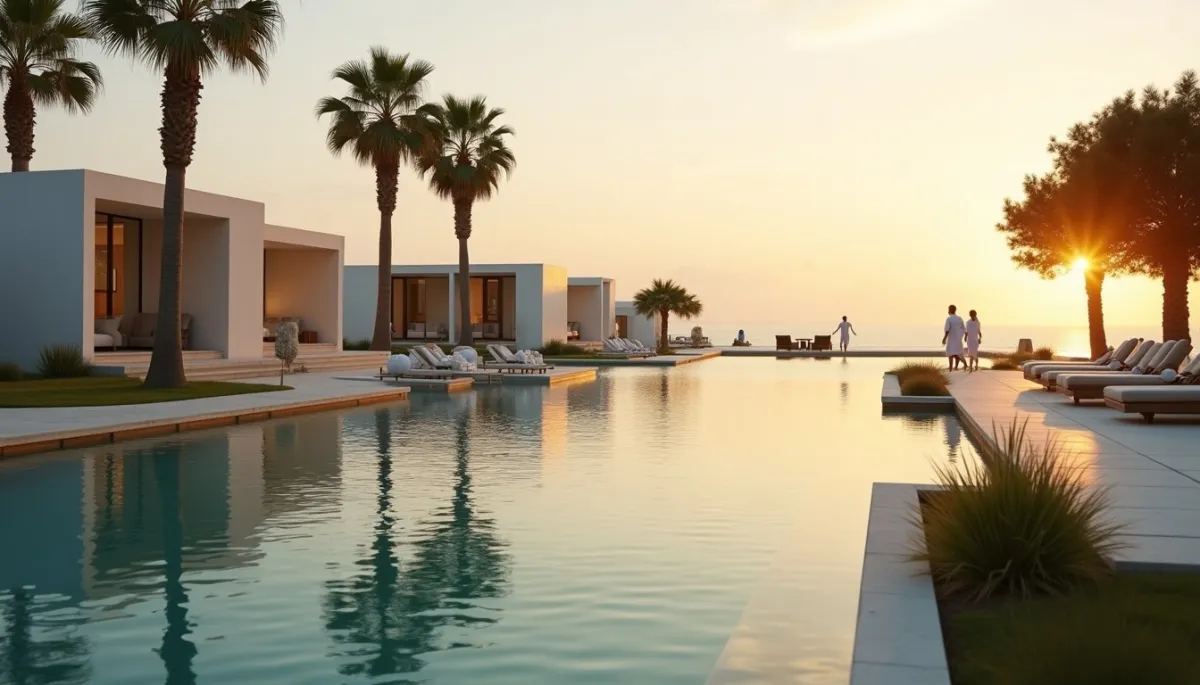
The visual signature of Aman is restraint. Low-slung pavilions, generous private terraces, natural materials and a palette that favors sunlight over ornamentation. The first resort, Amanpuri in Phuket, set that code in 1988.
Behind that code were collaborators who believed in 'less' as a way to amplify experience. The American architect who shaped many early Aman's spaces favored proportions and light rather than decorative flourishes. The result is an aesthetic that looks simple, but is highly composed.
Aman properties read their context. Amanzoe in Greece references classical white volumes and generous colonnades; Amansara in Cambodia frames quiet courtyards near Angkor; Aman Tokyo brings a rural sense of calm into a skyscraper complex. Today the group counts roughly forty addresses, from private islands to urban sanctuaries.
Service invisible
Invisible service is not absence of staff, it is the art of anticipation. House managers, butlers and concierges work to remove friction. Check-in sometimes happens in-suite, meals are timed to your rhythm, lessons and excursions arrive ready-made.
That approach answers a very concrete demand from high-net-worth travelers: discretion, privacy and personalization. Guests prefer staff who know preferences without being visible at every turn. The experience is designed so the property feels private, even when it hosts dozens of people.
Lean operations also allow for a high staff-to-guest ratio where it matters. Instead of a parade of public-facing employees, Aman concentrates human effort behind-the-scenes: sourcing local produce, organizing bespoke cultural visits, or ensuring the villa's temperature and soundscape match a guest's sleep preferences.
Beauté et limites
Minimalism as signature can feel like a double-edged sword. Curated restraint reads as elegance to many, but to some it risks coldness. The aesthetic relies on impeccable maintenance and highly trained staff; without those, minimal spaces can reveal a lack rather than an excess of thought.
There are also tensions between expansion and exclusivity. Since the 2010s Aman has broadened into branded residences and urban hotels. Growth means bringing the Aman ethos into new typologies, and with that comes the risk of dilution if scale outruns the bespoke service model.
Environmental concerns complicate the romance. Building fragile resorts in remote locations brings scrutiny. Aman's counterpoint has been to integrate local crafts and source materials regionally, but the balance between development and conservation remains a practical challenge.
Conseils pour goûter Aman
If you want to experience Aman as it intends, choose a villa with a dedicated manager. That is where invisible service is most palpable: staggered meals, private treatments, and an ease of movement that feels private rather than staged.
Ask for off-property cultural experiences. Aman excels at arranging intimate visits — a temple guided by a local, a private boat at dawn. These moments reveal how the brand trades spectacle for emotional precision.
Finally, understand what minimalism means here: not emptiness, but curated restraint. Bring curiosity rather than a demand for ornament, and the silence will feel like generosity.
Thanks for reading, and don't forget, Enjoy Life Moments!