Viktor Frankl: finding meaning in the camps
🚀 Key Takeaways
- Concept clé : The will to meaning, a drive to find purpose even in suffering.
- Practical tip : Set one future-oriented task every day, however small.
- Did you know : Frankl served time in Theresienstadt, Auschwitz and Kaufering and published his account after 1945.
He refused to let suffering be meaningless.
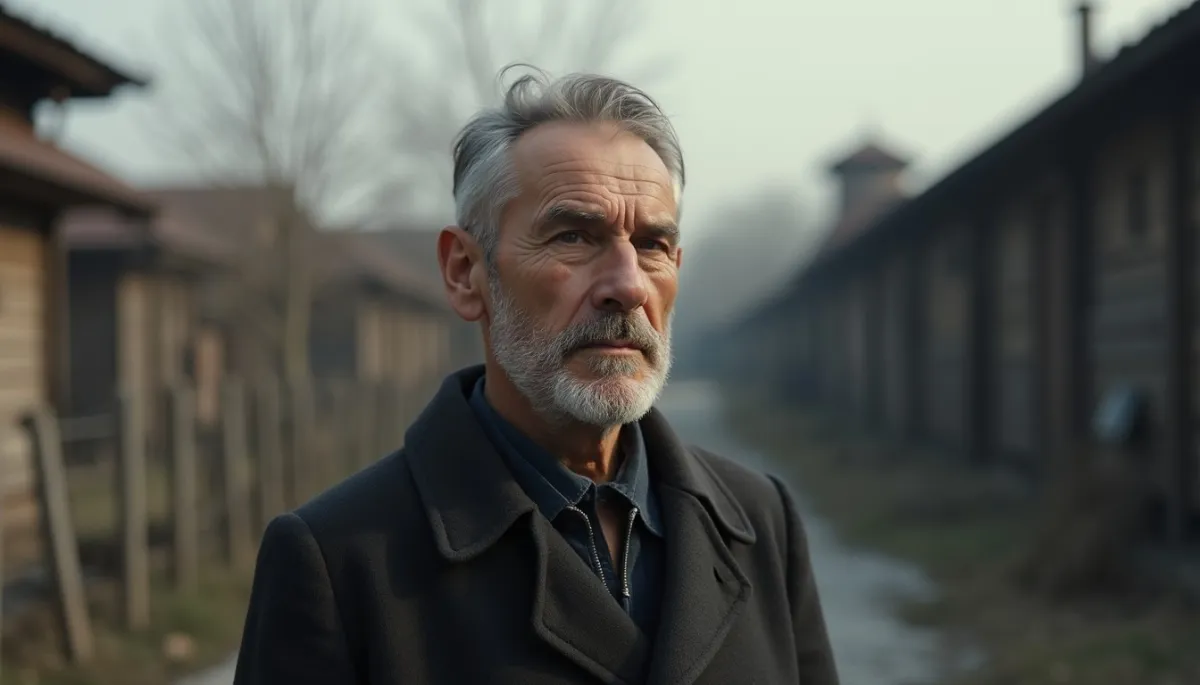
Imagine a winter morning in a camp yard, snow muffling the roll call, faces hollowed by cold and hunger, and a man in a thin coat jotting down notes in the margins of a borrowed notebook. That image, of observation partnered with compassion, is central to the origin of Frankl's thought. It is both a witness and a laboratory where psychology met survival.
Inside the camps
Viktor Emil Frankl was born in Vienna on 26 March 1905. He trained as a neurologist and psychiatrist, and from the 1930s he developed ideas that broke with classical psychoanalysis. He argued that humans are primarily motivated by a search for meaning, not only by drives or power. This thesis later became the core of logotherapy.
Frankl was deported in 1942, and spent time in Theresienstadt, Auschwitz, and the Kaufering subcamp of Dachau, until liberation in 1945. He lost most of his family during the Holocaust, a personal catastrophe that he did not make abstract, but used to test and refine his ideas.
In 1946 he published his German account, which later reached a global audience as Man's Search for Meaning, a book split into two parts: moving camp vignettes, and an introduction to logotherapy. The work is valued both as memoir and as a clinical manifesto. It sold millions of copies and remains widely read.
The idea that saved
Logotherapy comes from the Greek logos, meaning word or meaning. Frankl proposed that when people can identify a purpose, they endure hardship better. He coined phrases like the "will to meaning" and discussed "noogenic" issues, that is, problems rooted in the human spirit rather than in drives or emotions.
Concrete observations in the camps supported this. Frankl noted that prisoners who held onto a future project, a task, or an image of a loved one tended to survive longer. He described how the anticipation of giving a future lecture, or of seeing a wife again, could sustain tiny acts of will that accumulated into survival.
He contrasted his approach with Freud's focus on pleasure and Adler's emphasis on power. Frankl's clinical practice after the war became centered on helping people discover a concrete next step that made life worth living, even when circumstances imposed suffering.
Doubts and legacy
Frankl's ideas were not without critics. Some psychologists argued that his emphasis on meaning risked moralizing suffering, or minimizing social and material conditions. Others debated whether his camp observations generalize to peacetime mental health.
Frankl responded by clarifying that meaning does not justify injustice, and that logotherapy complements social remedies. He insisted meaning is found in three avenues: creating work or doing a deed, experiencing something or encountering someone, and the attitude taken toward unavoidable suffering.
After the war Frankl became professor of neurology and psychiatry at the University of Vienna, and he lectured worldwide. He expanded logotherapy into a clinical method used for depression, bereavement, and existential crises. He died in Vienna on 2 September 1997, leaving a large and practical legacy.
Applying logotherapy
How can a modern reader use Frankl's lessons? Start with concrete steps. Choose a small, future-oriented project for the week, something you can describe in one sentence. The concrete orientation is central, it turns abstract hope into action.
Write a short mission note: why does this project matter to you, who benefits, and what is the first step. This transforms meaning into decisions, a core movement in Frankl's therapy: meaning is found in choice and action.
Finally, name pain when it exists. Frankl did not ask people to ignore suffering. He proposed to face it with an attitude that preserves dignity. In practice, that means combining practical help, social ties, and a narrative that holds a future possibility.
Viktor Frankl teaches that meaning is not a luxury, it is a resource. In times of loss or boredom, the smallest sense of purpose can reset a life.
Thanks for reading, and don't forget, Enjoy Life Moments!