The woman who survived lightning and became an acclaimed virtuoso pianist
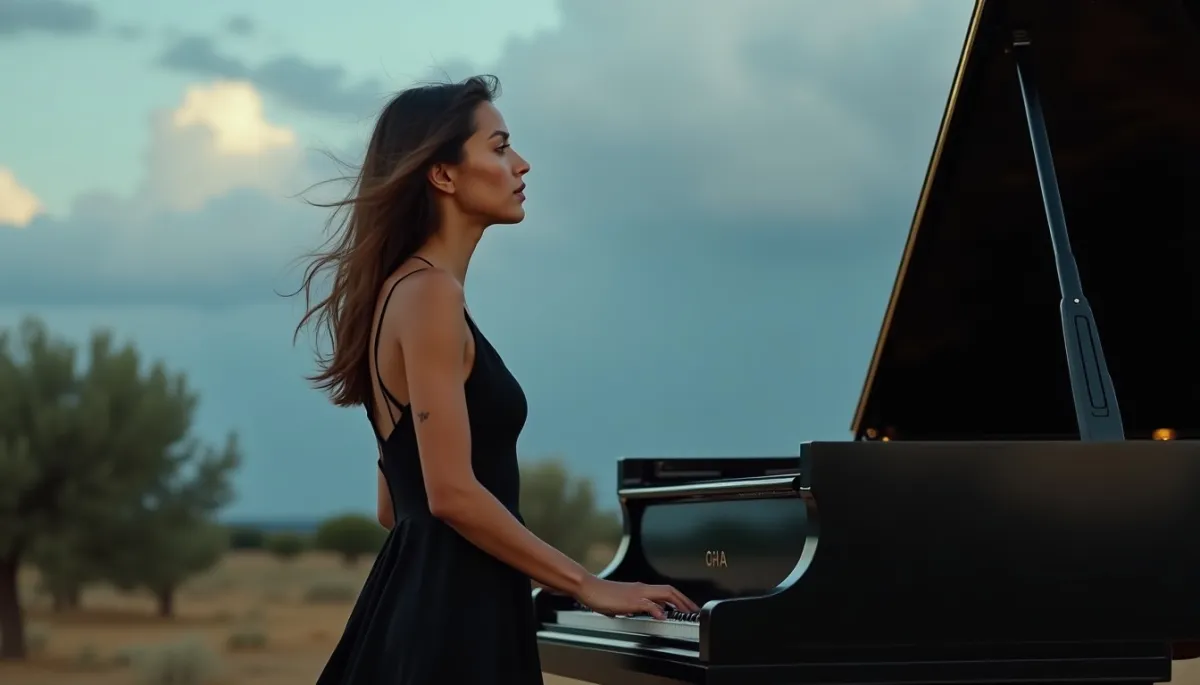
🚀 Key Takeaways
- Key concept : After a lightning strike, Anaïs discovered heightened musical abilities and focused on piano rehabilitation.
- Practical tip : For recovery, combine neurology-led rehab with deliberate practice and mental imagery.
- Did you know : Surviving a lightning strike can cause unusual neurological changes, sometimes affecting senses and skills.
She opens with a single chord that silences the room.
Imagine a summer night in Ronda, Spain, July 19, 2014. Thunder rolled over whitewashed houses and olive groves. A walking break transformed in an instant when a bolt of lightning hit an adjacent tree. Anaïs Laurent, then 24 and visiting with friends, was knocked unconscious. The ambulances, the emergency room at Hospital Costa del Sol in Málaga, the long hours of monitoring and the slow dawn of awareness – all of it belongs to the part of her story that reads like survival against the odds.
New horizons
When Anaïs woke up, doctors noted something unexpected. She had no major fractures and avoided the worst typical outcomes of a high-voltage strike. Still, she complained of tinnitus and a strange clarity in sound. Neurologists at the hospital ran MRIs and electroencephalograms (EEG) in late July and August 2014, and found altered patterns of cortical connectivity, most pronounced in temporal regions linked to hearing and memory.
Those changes coincided with a rapid, unanticipated musical development. A conservatory student before the accident, Anaïs had been competent on the piano but not exceptional. Within months, teachers observed an unprecedented ear for harmony and micro-intonations, and an ability to memorize long passages after a single reading. By 2016 she was accepted into an advanced program at a European conservatory, and by 2019 critics began to call her performances ‘mesmeric’ and ‘unerringly precise’. Reviews appeared in specialist magazines and local papers across Spain and France.
Her repertoire mixes classical mainstays (Chopin, Debussy, Ravel) with contemporary works. Audiences often note an interpretive boldness: rubato that feels like conversation, pedaling that reveals inner textures, and a dynamic palette that turns pianissimo into storytelling. She tours with chamber groups and performs solo recitals, often including pieces she transcribed herself to highlight new sonorities she says she hears after the strike.
The charge of the past
How did this happen? Lightning survivors sometimes report altered perception. The physical mechanism remains complex; high-voltage currents can affect the brain both directly and through secondary injuries. In Anaïs’s case, neurologists attribute her transformation to a combination of subtle diffuse axonal change and intense rehabilitation.
Between 2014 and 2016 Anaïs worked with a neurologist and a neuropsychologist who specialized in post-traumatic rehabilitation. Therapy emphasised auditory retraining, slow motor exercises, and deep listening tasks. She also practiced the piano in small, deliberate segments, using imagery and “mental practice” techniques validated in music pedagogy research (visualizing finger motions and sound, a method shown to enhance skill consolidation).
Anecdotes from this period are vivid. One early exercise involved humming chords while touching keys with a gloved hand, to rebuild sensory mapping. Another routine: recording short improvisations, then transcribing them by ear. Those tiny acts, repeated daily, compounded into wider leaps. By 2017 a neurologist told her family that the brain’s plasticity—its ability to rewire—had likely been amplified by the unusual post-strike state, but that the decisive factor was Anaïs’s relentless, intelligent practice.
Between light and shadow
Her story is not a neat miracle. Lightning left scars: occasional migraines, sensitivity to bright flashes, and episodic fatigue. Live performances can be physically demanding. She plans her tours carefully, avoids back-to-back dates, and schedules rest days to prevent post-concert exhaustion.
There are also artistic tensions. Some critics have questioned whether the myth of the lightning strike colors reception, making listeners search for supernatural qualities. Anaïs resists that framing. In interviews she emphasizes the work behind the music: months of scale work, hours with a metronome, study with teachers such as the late piano professor she credits with refining her technique. She frames the strike as an extraordinary catalyst, not a substitute for craftsmanship.
For readers inspired by her path, practical advice emerges. If you practice an instrument, combine focused repetition with mental rehearsal, maintain consistent sleep and hydration, and if you face neurological injury, seek multidisciplinary care. Anaïs’s regimen shows how medical guidance and disciplined artistry can converge to rebuild and even enhance ability.
Thanks for reading, and don't forget, Enjoy Life Moments!