Underwater diving in Cannes: the submerged statue ecomuseum to save the reef
🚀 Key Takeaways
- Core concept : Sculptures become habitat, accelerating recolonization of the seafloor.
- Practical tip : Dive with local centres in Cannes; best visibility from May to September.
- Did you know : Inspired by projects like Jason deCaires Taylor's works, these installations also protect Posidonia meadows by diverting anchors.
Silent guardians beneath the waves.
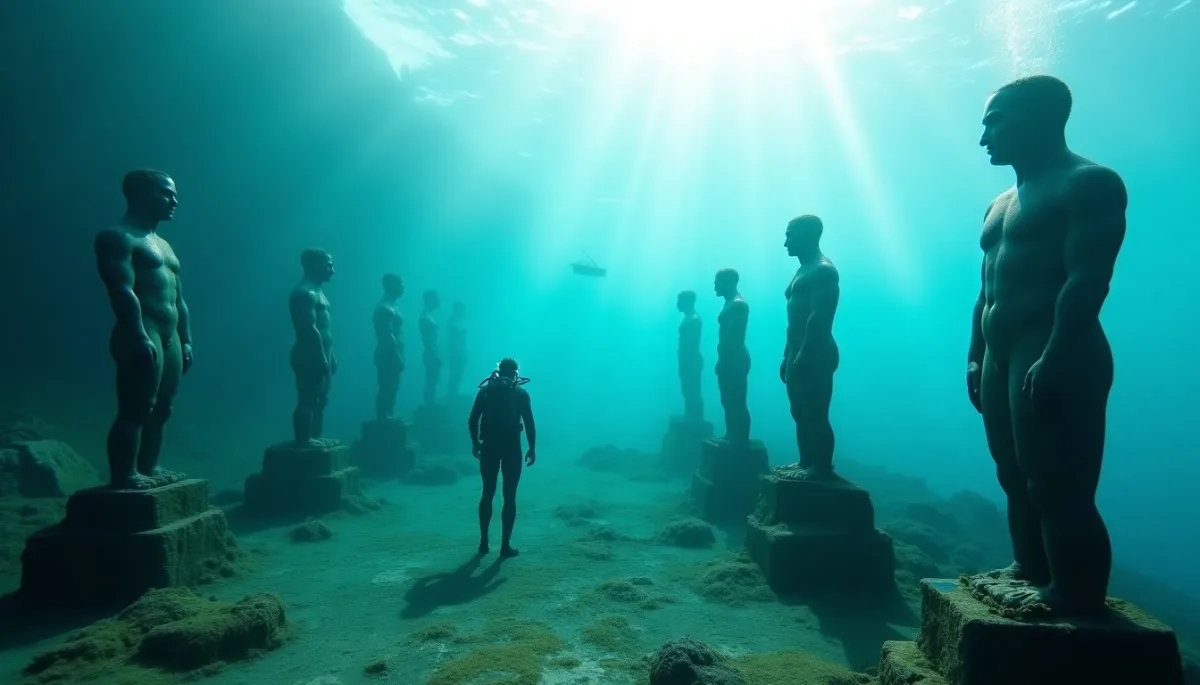
Imagine descending through turquoise light, the silhouette of the Esterel ridge on the horizon, and then encountering a row of human-sized figures standing calmly on the sandy bottom, their surfaces déjà colonized by tiny sponges and wrasses darting between shoulders. The water smells of salt and sun, and the usual clatter of the harbor feels far away.
Art that heals
The ecomuseum project in Cannes took shape publicly in 2024, with a series of installations placed off Pointe Croisette and near the Lerins archipelago. Local artists collaborated with marine biologists to design sculptures whose material and texture encourage the settlement of algae, bryozoans and juvenile fish.
These sculptures are not simple monuments. They are engineered modules, often made from pH-neutral cement and reinforced by voids and ledges where sessile organisms can attach. Over months, surfaces that were once bare become crusted with life, creating microhabitats that attract predators and prey alike.
For divers, the effect is immediate and cinematic. What might start as a monochrome installation quickly becomes a miniature ecosystem, offering both aesthetic surprise and measurable ecological value, notably increased fish abundance and complexity of substrate.
Why Cannes turned to statues
The Mediterranean basin faces mounting pressures, from warming waters to habitat loss. Along the Côte d'Azur, seagrass meadows of Posidonia oceanica, essential for carbon sequestration and as nursery grounds, have been damaged by anchoring and coastal development. Creating alternative hard substrate helps concentrate tourist anchoring and provides new shelter for reef species.
City officials in Cannes, in partnership with regional NGOs and universities, saw art-based reefing as a dual solution: cultural attraction plus ecological restoration. The project received municipal support and scientific oversight, aiming to combine sustainable tourism with measurable restoration outcomes.
Similar initiatives elsewhere, such as MUSA in Cancun or the Museo Atlántico in Lanzarote, have shown that submerged art can increase local biodiversity while attracting divers, thereby easing pressures on more fragile sites.
Challenges and next steps
No restoration is without trade-offs. Designers must balance aesthetic intent with ecological functionality. Some sculptures need periodic relocation if currents shift sediment, and ongoing monitoring is required to ensure invasive species do not exploit new hard surfaces.
Scientists involved in the Cannes ecomuseum run annual surveys, combining photo-quadrats and acoustic fish counts. Early reports, from 2025 monitoring campaigns, indicate rising densities of wrasses and gobies around the installations, and a decline in illegal anchoring in adjacent Posidonia beds.
Future plans include expanding the trail to link with protected zones around Île Sainte-Marguerite, setting rest periods for sites to recover, and developing educational dives for families and schools. The ambition is a living museum that evolves with its inhabitants, not a static collection.
Practical advice for visitors: choose a licensed dive operator in Cannes, check for environmentally minded briefings, avoid touching sculptures to preserve the fragile colonizers, and prefer non-anchor arrival options when visiting Lerins.
Thanks for reading, and don't forget, Enjoy Life Moments!