The power of empty space in relationships
🚀 Key Takeaways
- Core concept : The empty topic, or shared silence, is a space for reconnection.
- Practical tip : Try a five minute no-topic ritual at home, lights low, phones away.
- Did you know : John Cage's 4'33" reframed silence in art, with echoes in couple intimacy.
There is a peculiar intimacy in pauses.
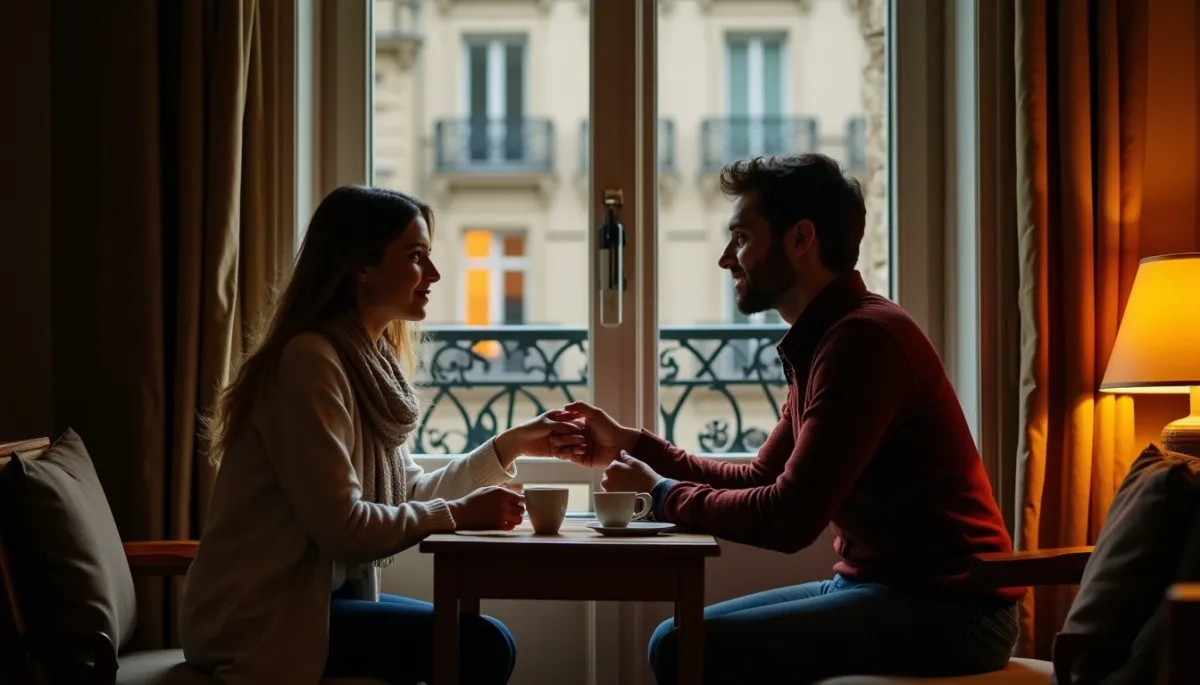
Imagine a small apartment above Rue Montorgueil in Paris, late evening. A couple sits at the window with two cups of tea, the radio soft, neither needing to fill the air. The city hums below, distant scooters and the shuttering of a bakery. They look at one another, hands almost touching. That quiet is not emptiness. It is a room where something else can grow.
When conversations stall, many partners panic and rush to fill the void with small talk. This article explores the consequences of habitual conversational filling, why the empty topic matters, and how to use silence to strengthen desire, care, and emotional safety.
Les conséquences visibles du vide partagé
Silence has concrete outcomes in relationships. For some couples it becomes a wedge, the slow drift toward the classic "we don't talk anymore". In Tokyo, New York or Madrid, partners report the same pattern: silence hardens into distance unless attended to. Therapists call it emotional withdrawal.
On the other hand, shared silence can produce closeness. I remember a reader from Buenos Aires telling how her and her partner sat for half an hour after a long argument, breathing together until tension eased. That pause prevented escalation and allowed empathy to return.
In sexual life, pauses also matter. Non-verbal intimacy can become more charged. A look across a dim cinema in London, hands meeting under the table in Lisbon, a slow shared massage in a small flat in Rome. These actions often speak louder than hurried apologies or forced conversation.
Ce qui provoque l'évitement du vide
Several causes push couples to fear silence. Cultural noise is one. Modern life rewards constant output, from social networks to news cycles. Many people internalize the idea that silence equals awkwardness, or even betrayal.
Psychology gives other explanations. Research by couples therapists like John Gottman highlights patterns such as criticism and stonewalling that prefer words or total withdrawal. When one partner floods with emotion, the other may retreat into silence to self-protect. The absence then becomes charged.
There are also linguistic and social reasons. Some languages and traditions prize extended conversation, others privilege shared presence without speech. Understanding that difference helps. The term tabula rasa (blank slate) can be useful here. Think of an empty topic as a blank slate where you can write new interactions deliberately.
Cependant, le vide peut être apprivoisé
Start small. A concrete exercise is the five minute no-topic ritual. Choose a time, put phones away, sit face to face or side by side, and breathe. No commentary, no problem solving. At first it feels strange. After several tries, many couples report an increased sense of safety and a reduction in reactivity.
Use the silence creatively. Turn it into a sensory practice. Touch each other's forearms, look for the micro-expressions, practice synchronized breathing. These actions transform empty space into attunement, what therapists call "co-regulation".
Be mindful of timing. Not every silence heals. After a recent betrayal, silence can be weaponized. If you suspect stonewalling or evasion, name it gently. Say something simple, as in "I notice we are quiet, I would like to understand." Naming distinguishes protective silence from hostile withdrawal.
Rituels, exemples et conseils pratiques
There are cultural templates to borrow. In Japan, the concept of ma denotes the space between notes, valued as meaningful. Musicians know John Cage's 4'33" premiered in 1952, a composition that reframed silence, showing how ambient sound could be an active element. Couples can borrow that aesthetic.
Practical ideas include shared walks without objectives, mutual hand massages before sleep, and "radio off" dinners. In therapy, couples often use the scout and soldier metaphor. Scout with curiosity, not soldiering with defense. Curiosity fills the space with discovery, not accusation.
Finally, don't confuse silence with avoidance. If patterns of isolation persist, seek help. A neutral therapist or a couples workshop in a known venue, for example the Tavistock Centre in London or a local relationship coach, can provide tools and accountability.
Empty topics are not a problem to fix, they are material to work with. Treated well, they become the scaffolding for tenderness, desire and trust.
Thanks for reading, and don't forget, Enjoy Life Moments!