Aimless walking: how flânerie fights the productivity obsession
🚀 Key Takeaways
- Core idea : Aimless walking restores attention and fuels creativity.
- Practical tip : Try a 20 to 40 minute walk with your phone on silent, follow curiosity not a map.
- Did you know : Thinkers from Baudelaire to Walter Benjamin, and modern researchers, celebrated wandering.
Just step outside. The city exhales, and you breathe with it.
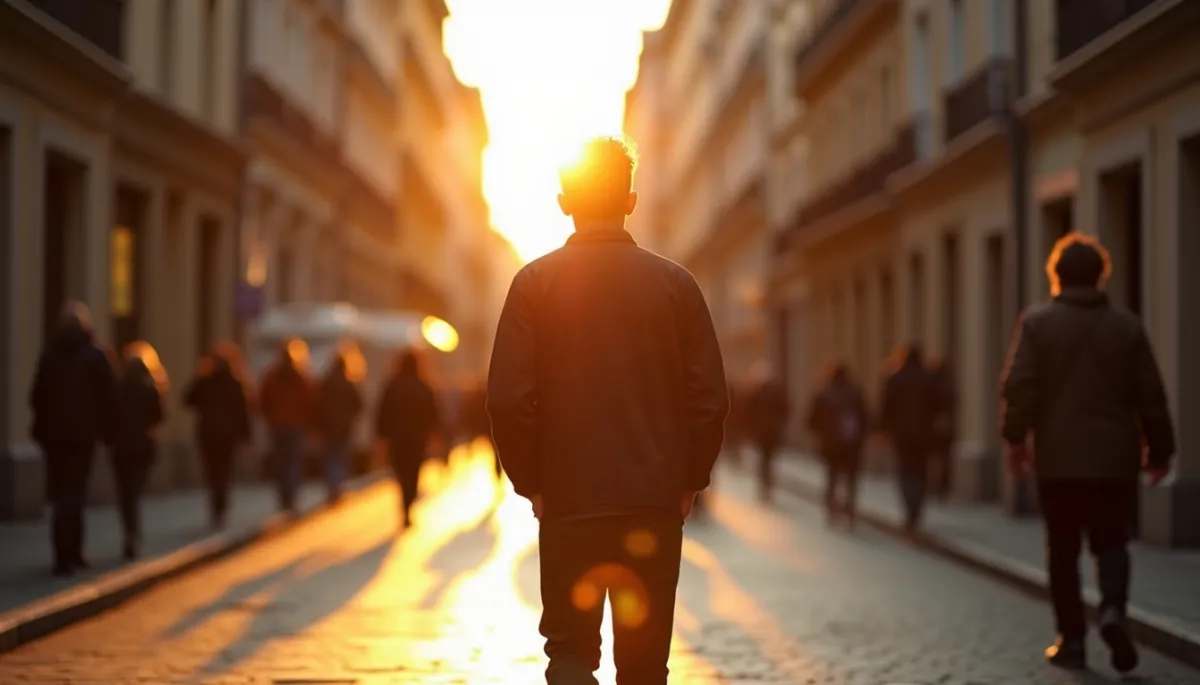
Imagine a late afternoon in Paris. A person leaves a café with no destination in mind, letting cobblestones, shop windows, and sunlight determine the route. They linger at a bookstand, cross a quiet square, pause to watch a dog chase a leaf. Time does not obey a calendar, it unfolds. This is flânerie in practice: slow, open, and unintimidated by schedules.
Rethinking output
We are speaking to a culture that equates worth with measurable output. From productivity apps to calendar optimization, modern life constantly asks for efficiency. Walking without a goal resists that logic, creating space where value is not immediately quantifiable.
Research supports benefits that are both mental and physical. In 2014, Marily Oppezzo and Daniel Schwartz published a study showing that walking increases divergent thinking, a marker of creativity. Physical activity guidelines from the WHO emphasize regular movement for health, and aimless walks count toward that total.
Beyond neuroscience, the revival of flânerie responds to a collective fatigue. Remote work blurred boundaries between home and office, while smartphones keep attention fragmented. Aimless walking is an intentional pause, a ritualized way to reclaim time from the tyranny of productivity metrics.
Roots and echoes
The flâneur is not a new figure. In mid-19th century Paris, writers such as Charles Baudelaire described the pleasure of observing urban life. In the early 20th century, Walter Benjamin used the arcades of Paris as a lens to study modernity and the art of strolling.
More recent voices have revived walking as a cultural practice. Rebecca Solnit's book Wanderlust (published in 2000) traces walking across eras and geographies, while contemporary leaders like Steve Jobs reportedly favored walking meetings to stimulate conversation and clarity.
Anecdotes illustrate how walking shapes thinking. Leonardo da Vinci reportedly walked to test ideas in nature, and many writers from Virginia Woolf to J.R.R. Tolkien mapped narratives while pacing. These stories show that wandering can be an engine of imagination, not mere idleness.
Practical resistance
There are tensions to acknowledge. Urban environments are not always walkable or safe, and the privilege to wander depends on time, health, and context. Not everyone can turn an afternoon into a stroll, and flânerie should not become another performance metric.
Still, simple adaptations make wandering accessible. Start small: detour through a park, take a different street, set aside a smartphone-free window. Aim for curiosity rather than goals, notice textures, sounds, and smells, and allow thoughts to move without forcing conclusions.
Try a short practice: once a day, walk 20 minutes without headphones, following whatever draws your attention. Bring a small notebook if ideas come. For meetings, suggest a walking discussion to break routine, as many creative teams do. The goal is not productivity but presence, and paradoxically, presence often improves problem solving.
Walking without purpose is an act of cultural dissent. It insists that time can be spent on being rather than doing, and that creativity, attention, and wellbeing thrive in unstructured movement. In a time when life is scheduled by the minute, the simple walk becomes a quiet revolution.
Thanks for reading, and don't forget, Enjoy Life Moments!