Socrates: the physician, philosopher and footballer who used the elegance of sport to defy a dictatorship
🚀 Key Takeaways
- Concept key : A doctor and captain who led the Democracia Corinthiana, linking sport and civic debate.
- Practical tip : Watch Brazil 1982 matches and visit the Corinthians museum to feel the era.
- Did you know : He captained Brazil at the 1982 World Cup in Spain, a team remembered for its flair.
He walked on the pitch like a man with a book in his head.
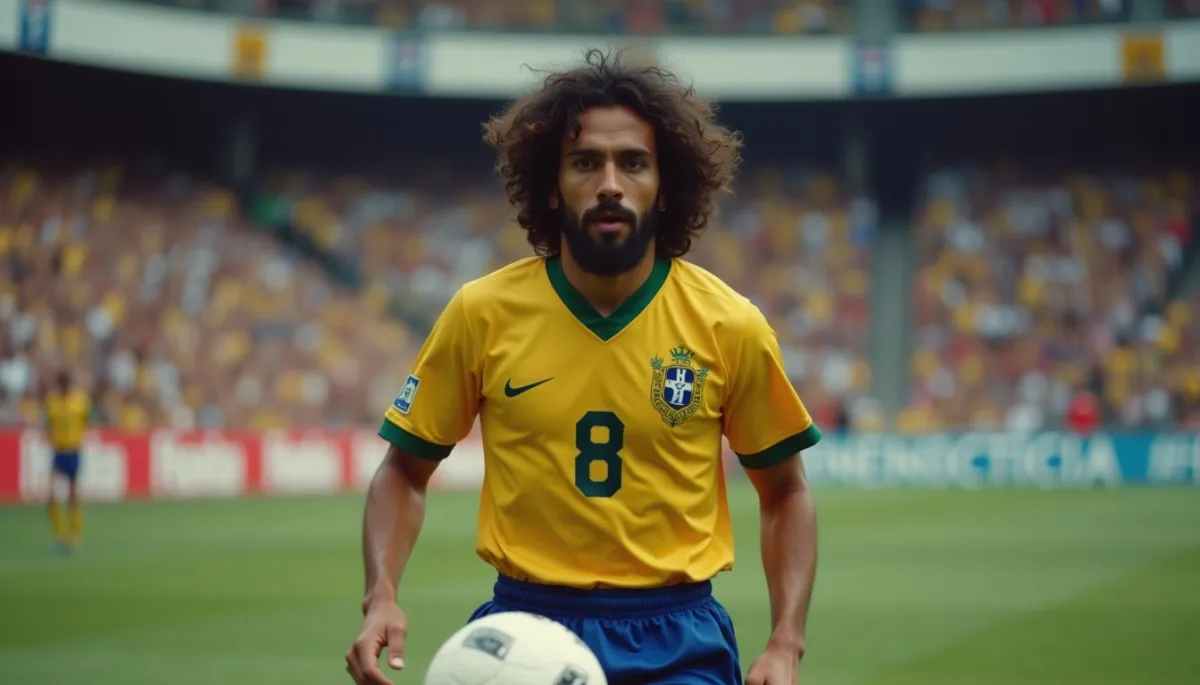
Imagine the Morumbi or Pacaembu stadium in the early 1980s: long hair, a black armband sometimes, the number eight on his back. The stands buzzed. Journalists wrote about his medical diploma, fans chanted his name, and between training sessions he debated politics with teammates in the locker room. It felt less like sport and more like a shared public square.
Elegance in play
Socrates Brasileiro Sampaio de Souza Vieira de Oliveira combined rare traits. Born in 1954 in Belém, he became a qualified physician while starting his professional career. He played as an advanced central midfielder, known for vision, long passes and an elegant stride.
He made his name at Botafogo de Ribeirão Preto and then at Sport Club Corinthians Paulista, where his football and personality truly bloomed. Internationally, he captained Brazil at the 1982 World Cup in Spain, a squad celebrated for its creative football even if it was eliminated by Italy.
On the pitch, he was tall, cerebral and paradoxically theatrical. His style earned him both praise among purists and attention from a wider audience who saw in him a new image of a footballer: intellectual, articulate and politically conscious.
Foot and freedom
His prominence coincided with a national crossroads. Brazil had been under a military regime since 1964, and the early 1980s saw growing demands for political opening. Within this context, Socrates and several teammates launched the Democracia Corinthiana, a player-led movement inside Corinthians between 1982 and 1984.
Democracia Corinthiana was not a slogan only. Players organized assemblies, voted on decisions ranging from merchandising to training schedules, and published their viewpoints publicly. Sócrates, with Wladimir and others, used the club as a laboratory of participation, showing that democratic practices could function in daily life.
The experiment resonated beyond club walls. It became symbolic during the Diretas Já campaign in 1984, which demanded direct presidential elections. Football, in that moment, was a microphone for civic debate and a way to contest authoritarian norms.
The doctor's paradoxes
Socrates embodied contradictions. He was a physician who often drank wine and enjoyed life in a way that made him a romantic figure. He was an elite thinker who remained immensely popular with the streets. He was a man of letters and a professional athlete, and that blend unsettled simple narratives.
There were tensions too. The national team that mesmerized in 1982 did not win a title; the political movement did not instantly topple a regime. Yet these apparent defeats amplified cultural memory. The image of players voting, discussing philosophy and speaking on TV carried a signal: sport could carry social meaning.
Socrates passed away on 4 December 2011 in São Paulo, aged 57, after health complications linked to liver disease. His death prompted a national reflection on his legacy: not only his goals or assists, but a life that treated football as a space for ideas.
Practical note. If you want to connect with his legacy, look for archived footage of Brazil 1982, interviews from the early 1980s, and visits to the Corinthians museum and Pacaembu. Bring curiosity and expect to find a mixture of tactics, poetry and political imagination.
Thanks for reading, and don't forget, Enjoy Life Moments!