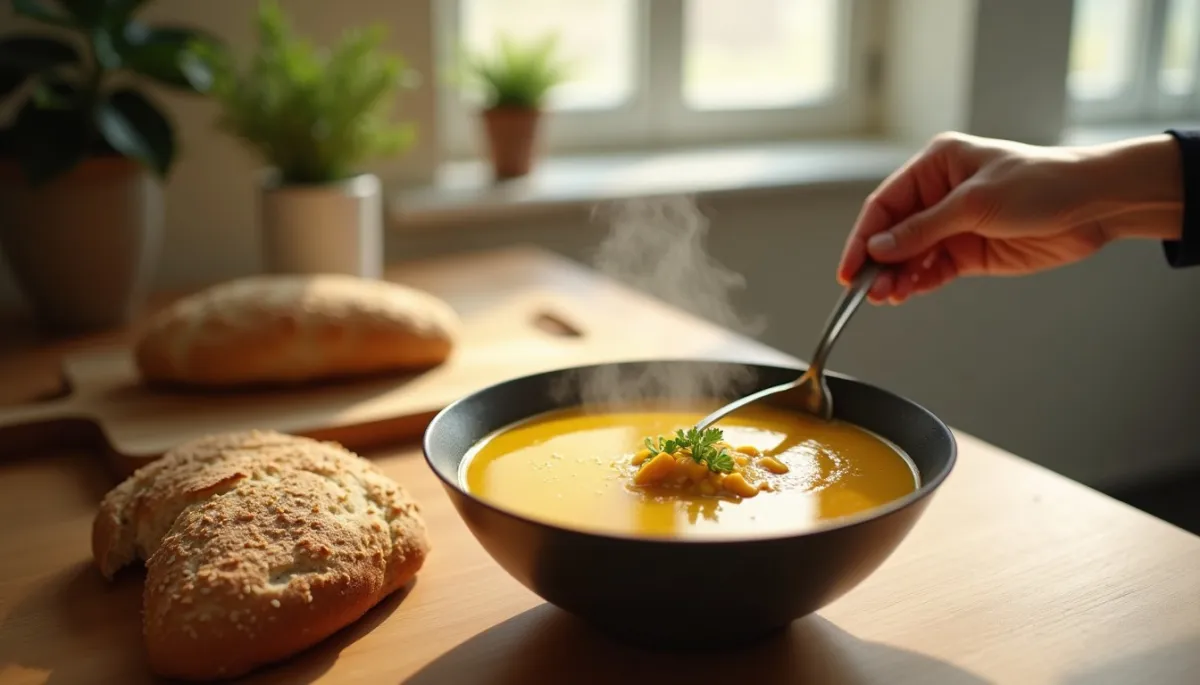
Current food trends: what you really need to think about them

Between marketing launches, technological innovations and the awakening of local regions, the food landscape is evolving faster than ever. Knowing how to sort through the noise has become a useful daily skill.
This article reviews the key movements — alternative proteins, locavorism, culinary nostalgia, kitchen tech and conscious eating — to help you embrace what's meaningful, without sacrificing pleasure or health.
Alternative proteins: food revolution or fad?
For several years, plant-based proteins and cultured meat have taken center stage: product innovation, massive investments and on-shelf offerings. While certain solutions provide a credible response to the climate challenge, their nutritional value and accessibility remain to be assessed on a case-by-case basis.
In terms of health, it is important to return to facts rather than slogans. The recommendations of specialists (see public health sources) remind us that protein diversification can be beneficial, but that industrial processing can mask less virtuous nutritional profiles. For an accessible summary, consult recognized scientific resources such as the Harvard T.H. Chan School of Public Health website Harvard Nutrition Source.
Local and seasonal: ethical choice or simple marketing argument?
The return to local and seasonality is often presented as the ecological and taste panacea. In reality, eating local can reduce certain impacts (transport, support for sectors), but does not automatically guarantee the best carbon footprint or nutritional quality.
Beyond the slogan, look at the transparency of the producers, the regeneration of the soil and the real seasonality of the products. The press and journalistic investigations remain valuable tools for verifying the commitments of players in the sector, including via general news media Le Monde which document these sectors.
Nostalgia, fermentation and world cuisines: a cuisine that looks to the past
The rediscovery of traditional techniques — fermentation, preservation, slow cooking — fuels slower and often more flavorful cuisine. These practices offer interesting taste and, sometimes, microbiological benefits, without being miracle solutions for all health problems.
At the same time, the appropriation of world cuisines enriches our plates, but raises the question of respect for cultures and the promotion of original artisans. Favor restaurants and producers who work with authenticity and transparency, and avoid purely commercial appropriations.
Tech and AI in the kitchen: duel between real usefulness and gadgets
AI and connected objects are revolutionizing meal planning, waste reduction and recipe optimization. Fridge management applications, nutritional personalization algorithms or food processors: the potential is real to save time and reduce waste.
However, not all innovations are worth the investment. Be wary of devices and services that promise spectacular gains without concrete returns. Test, read user feedback and promote interoperable and sustainable solutions rather than the compulsive purchase of an ephemeral gadget.
Conscious eating: eat well without feeling guilty
In 2026, the most promising trend remains conscious eating: favoring quality, variety and pleasure, while taking into account the social and environmental impact. It is a movement that reconciles mental health and diet, far from strict diets and anxiety-provoking injunctions.
Concretely, this involves simple actions: reducing waste, favoring minimally processed products, cooking at home when possible, and listening to your body. Balance is built on a daily basis, with common sense and without dogmas.
Thanks for reading, and don't forget, Enjoy Life Moments!